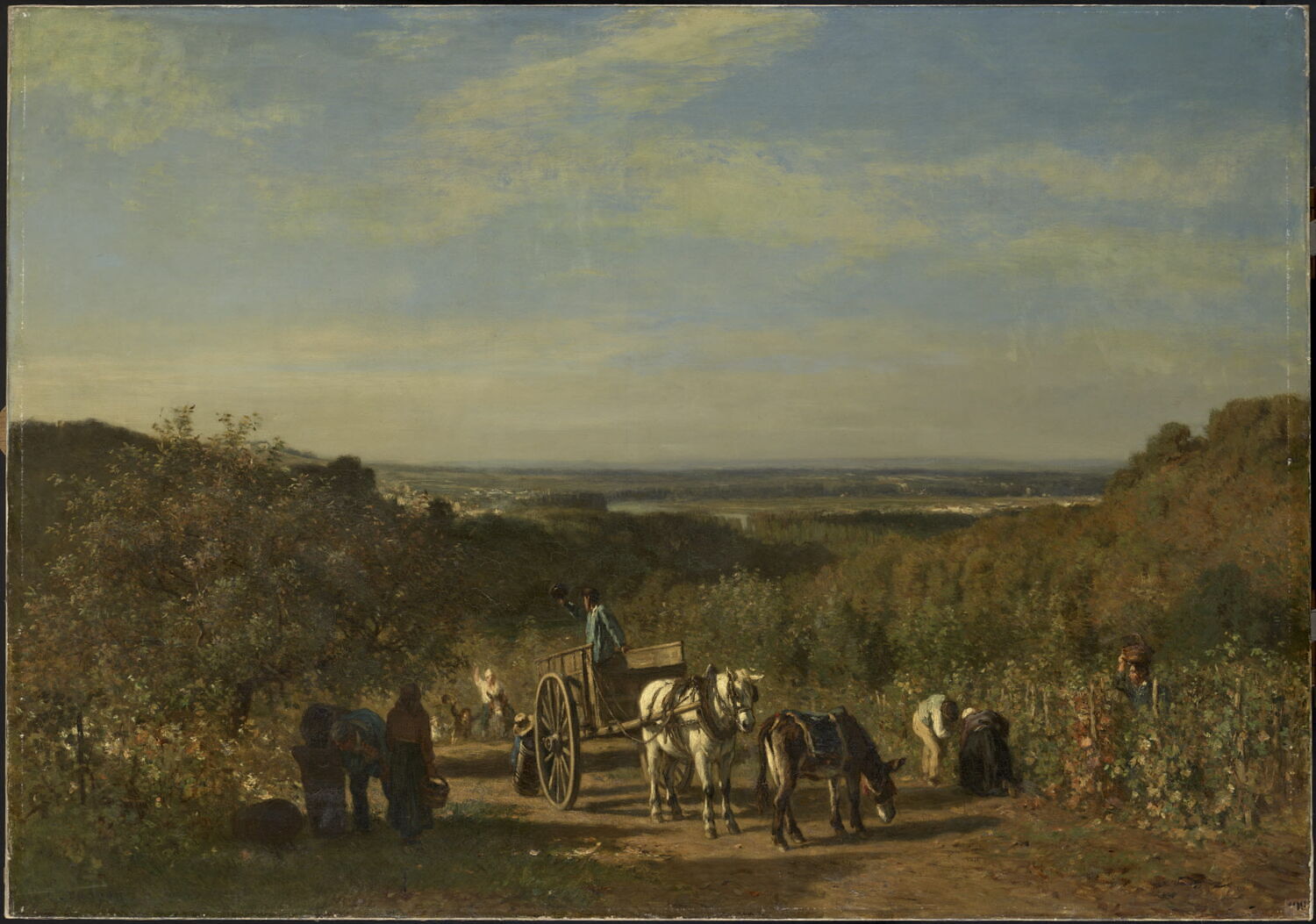
Sérusier, PaulDanimarca, 1864–1927
La Barrière
Si può ammirare?
Non si sa: il museo mantiene il riserbo

Museo d'Orsay
Parigi, Francia
Il proprietario è noto. Se oggi sia esposta, il museo non lo dice, e a indovinare non ci hanno insegnato.
- Ultimo cambio di stato
- Fonte
- I dati di collezione del museo stesso
Scheda
- Numero di inventario
- RF 1981 4
Fonti
- Wikidata · acquisita 6 giorni fa
- Immagine: Museo d'Orsay — Paul Sérusier · Public domain · Wikimedia Commons
Nel frattempo, nella vita di Sérusier, Paul
Tutta la vita1888
Salon of 1888: “The Workshop of a Breton Weaver”
He shows the canvas “The Workshop of a Breton Weaver” at the Salon; it receives an honorable mention, probably because of its conventionality, and his parents are reassured.
summer 1888
Pont-Aven: Gauguin and “The Talisman”
Having plucked up courage to approach Gauguin only on the eve of his departure, he is invited to paint a small landscape under Gauguin's guidance in the Pont-Aven woods, on the lid of a cigar box; so “The Talisman” is born, an exercise in Cloisonnism that approaches pure abstraction. Back in Paris he introduces Gauguin's ideas to his friends from the Académie Julian — Maurice Denis, Bonnard, Vuillard, Vallotton and Ranson, the future core of the Nabis: they do not accept the new principles in full but change their manner under their influence.
1889
Living with Gauguin at Le Pouldu
He visits Gauguin in Brittany several times and in 1889 settles with him at Le Pouldu for a long stay; from an academic student he becomes a modern painter.
1889
Meeting Filiger and de Haan
At Le Pouldu he meets other artists — Charles Filiger and the Dutchman Meijer de Haan.
early 1890s
Ideologist of the Nabis and a central figure of the early 1890s
He leads a whole movement, and many discoveries of Gauguin, who has left for Oceania, are attributed to him; the Nabis group (its name from the Hebrew word for “prophet”) proclaims a program of painterly Symbolism: emotions and symbols can be conveyed through the relationships of forms. The critic Albert Aurier calls him the first among the young artists in his article “The Symbolists” and promises him a great future.
1892
Meeting Charles Mackie
He meets and befriends the Scottish artist Charles Hodge Mackie while Mackie and his wife are honeymooning in France.