ART WIKI32.963 in sala
MappaCollezioneArtistiMuseiMostreRivista
Accedi

ART WIKI

Dove è appeso il capolavoro, e quando si può entrare.

Collezioni: Art Institute of Chicago, Cleveland Museum of Art, Ermitage, Galleria Tret'jakov, Getty Museum, Harvard Art Museums, Hirshhorn Museum and Sculpture Garden, Metropolitan Museum of Art, Minneapolis Institute of Art, Museo del Louvre, Museo Puškin delle belle arti, Museo russo, Museum of Modern Art, National Gallery of Art, National Museum of Asian Art, National Portrait Gallery, Rijksmuseum, Smithsonian American Art Museum, Statens Museum for Kunst, Victoria and Albert Museum, Villa Getty, Whitney Museum of American Art, Catalogo statale del fondo museale russo (274 musei), Europeana (19 musei), Wikidata (6 musei), Paris Musées (12 musei) e Joconde, la banca dati dei musei del Ministero della Cultura francese (495 musei). Le immagini appartengono ai titolari dei diritti.

Sezioni

  • Mappa
  • Ricerca
  • Collezione
  • Capolavori
  • Esposte ora
  • Artisti

Altro

  • Musei e gallerie
  • Mostre
  • Rivista
  • Da dove vengono i dati
  • Privacy e cookie
HomeMappaCatalogo
  1. Collezione/
  2. Cleveland Museum of Art/
  3. Kottabos Element of a Dancing Satyr
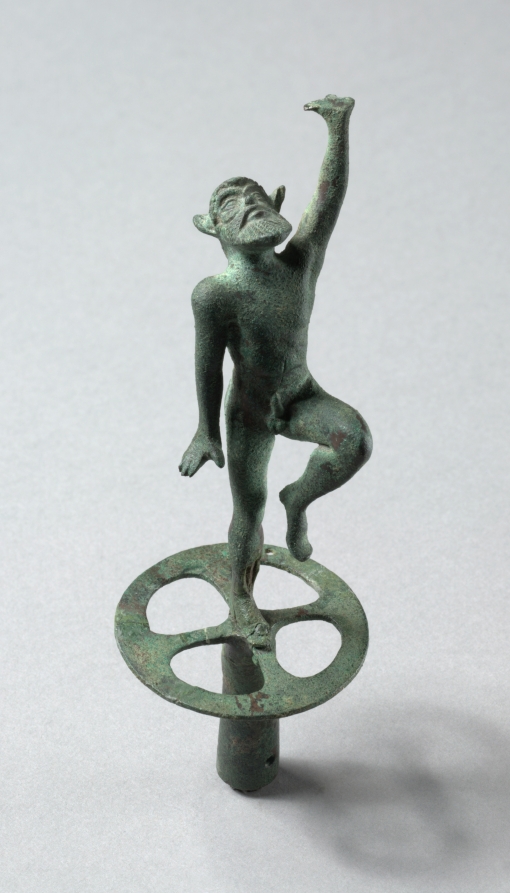
Kottabos Element of a Dancing Satyr, 470–450 BCE

Kottabos Element of a Dancing Satyr

470–450 BCE · Sculpture

Si può ammirare?

Sì, riceve visite

Cleveland Museum of Art

Cleveland, Stati Uniti

Sala102D Pre-Roman

Esposta al pubblico. Chi lo garantisce è indicato qui sotto.

Verificato
3 giorni fa
Ultimo cambio di stato
19 ago 2026
Fonte
Il museo
Sulla mappaPagina del museo

Sulla scultura

This diminutive dancing satyr, identifiable by his snub nose and equine ears (though without a tail), lifts his leg and reaches with an upstretched arm toward a dish, now lost. The disc and cylinder on which he stands likely rested atop a much taller post, with a larger disc or dish below, as preserved in more complete examples and illustrated on numerous ancient vases. In the drinking game kottabos, known by its Greek name but also popular in Etruria, the goal was to knock a dish off its precarious perch, in this case the hand of the dancing satyr, using only the wine dregs in your cup.

Cleveland Museum of Art

Scheda

Numero di inventario
1974.16

Nella stessa sala · 102D Pre-Roman, Cleveland Museum of Art

Pagina del museo

In catalogo

SculturaBronzoEtruscan

Fonti

  • Cleveland Museum of Art
  • Immagine: Cleveland Museum of Art — Museum open access
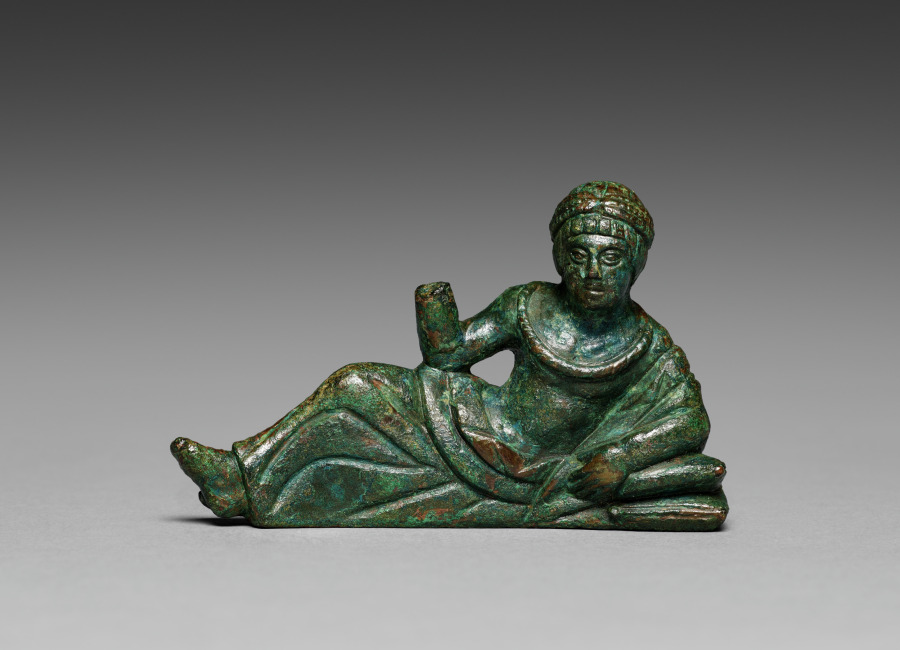
Vessel Ornament of Banqueter, probably 400–375 BCE

Vessel Ornament of Banqueter, probably 400–375 BCE

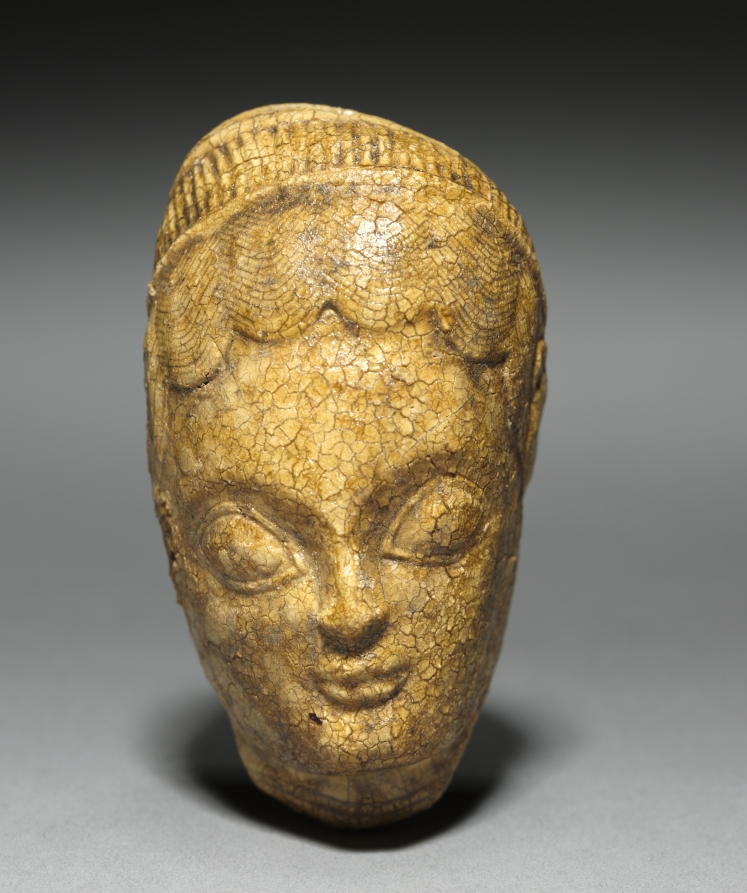
Head of a Woman, 600s BCE

Head of a Woman, 600s BCE

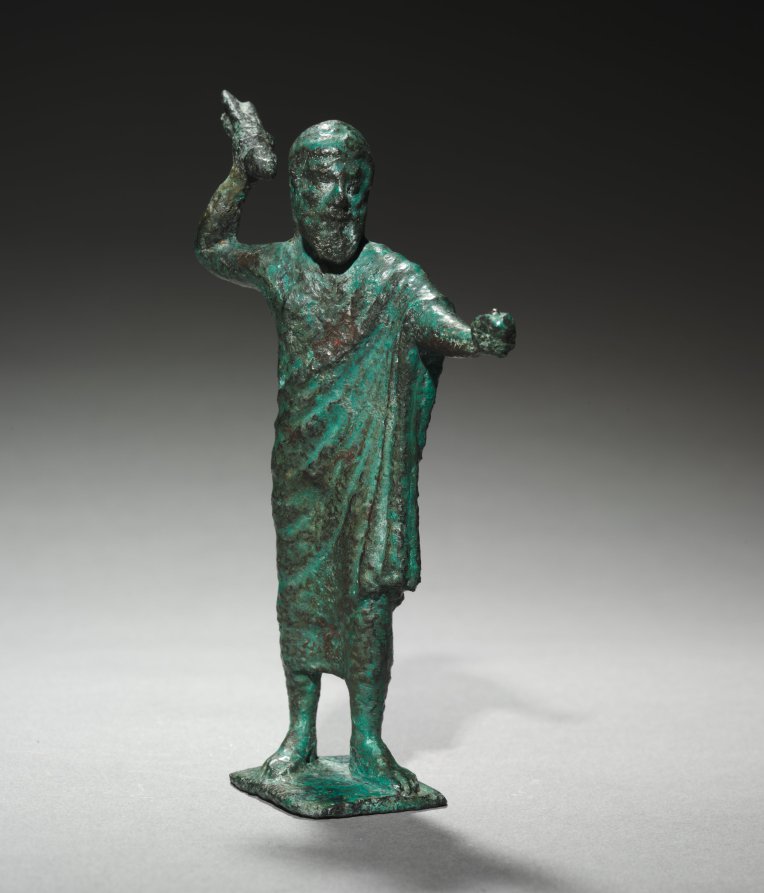
Statuette of Tinia (Zeus), c. 500 BCE, perhaps with modern patina

Statuette of Tinia (Zeus), c. 500 BCE, perhaps with modern patina

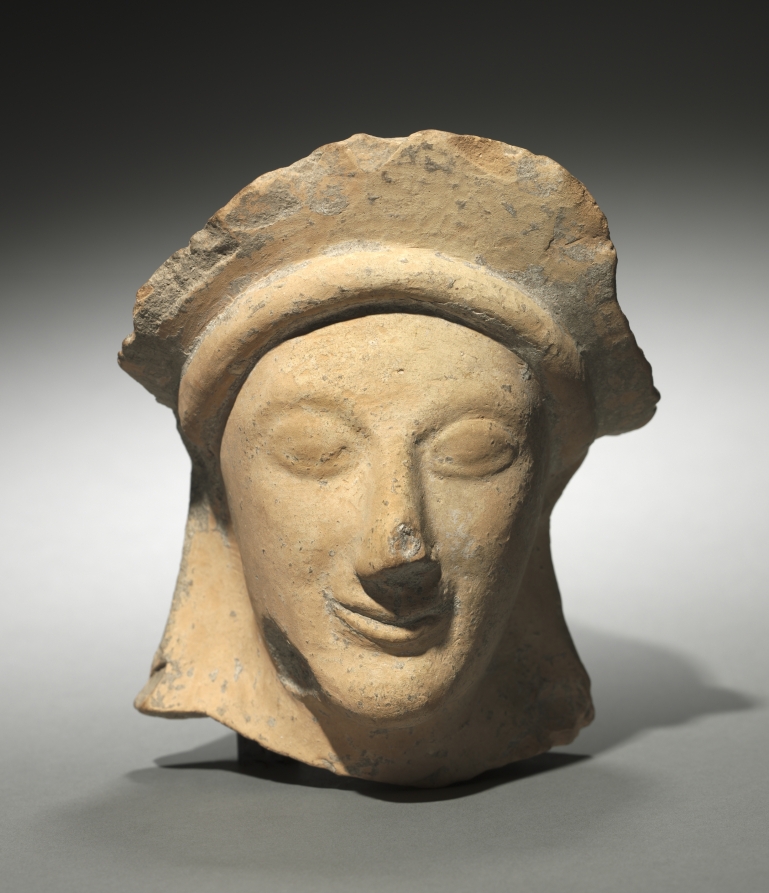
Woman's Head with Crown, 500s BCE

Woman's Head with Crown, 500s BCE

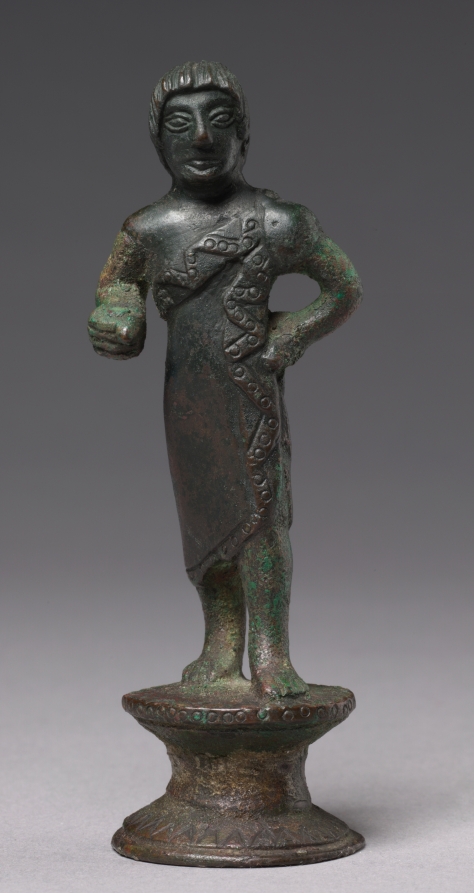
Statuette of a Youth, c. 520–500 BCE

Statuette of a Youth, c. 520–500 BCE

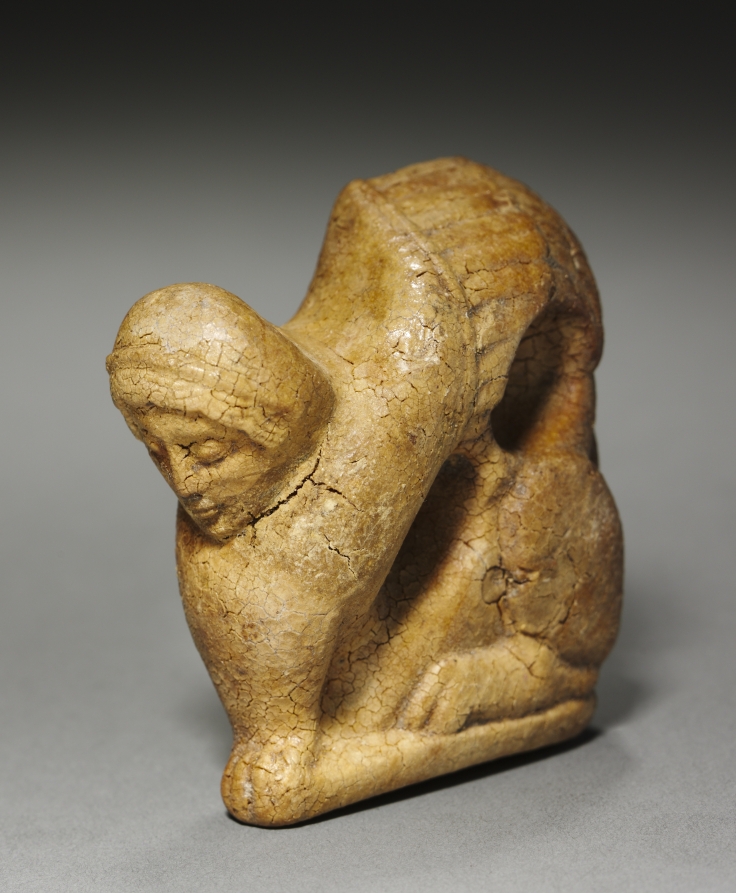
Sphinx, c. 500 BCE

Sphinx, c. 500 BCE

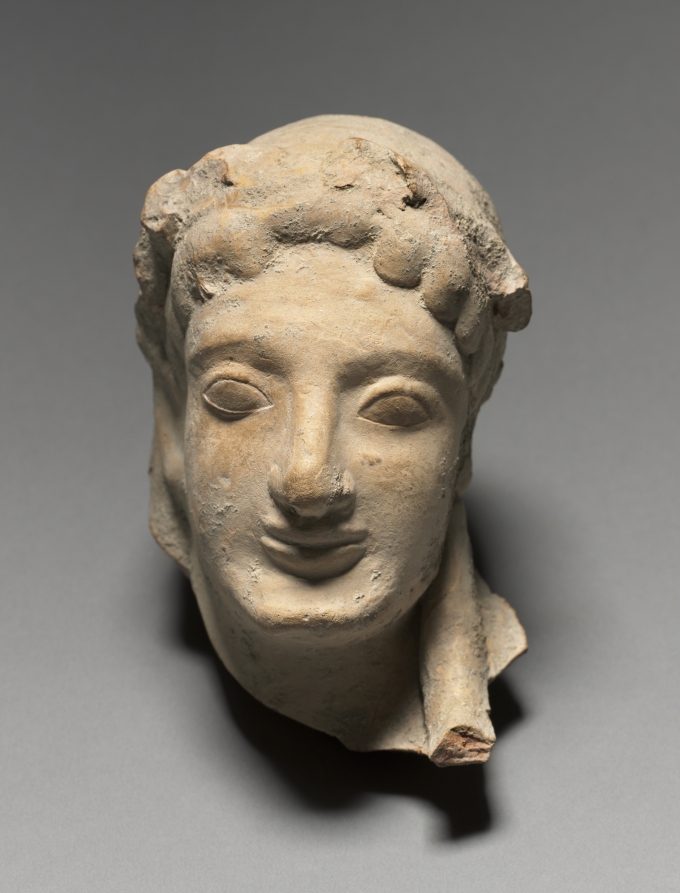
Head, 525 BCE

Head, 525 BCE

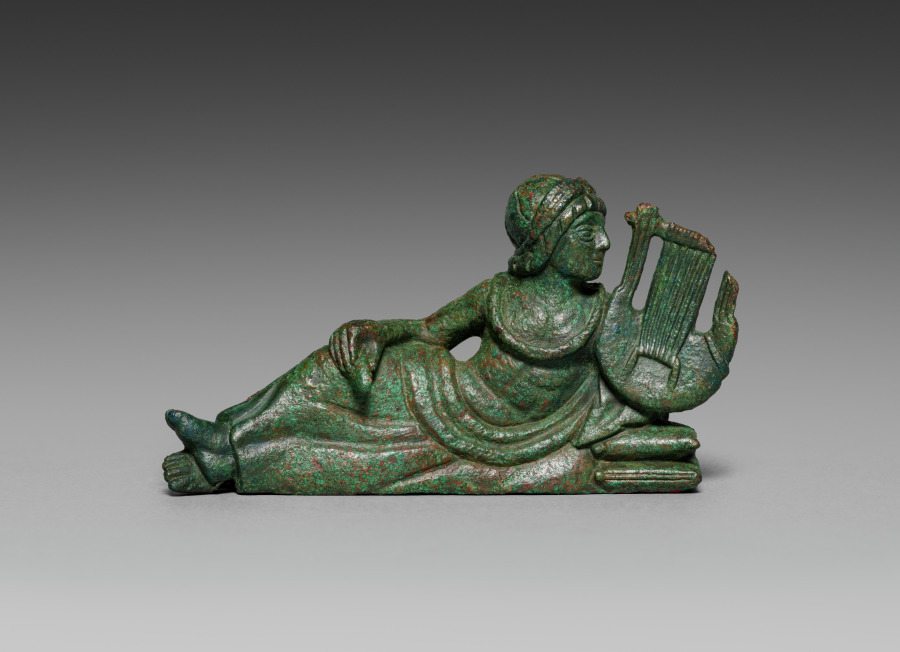
Vessel Ornament of Reclining Lyre-player, probably 400–375 BCE

Vessel Ornament of Reclining Lyre-player, probably 400–375 BCE