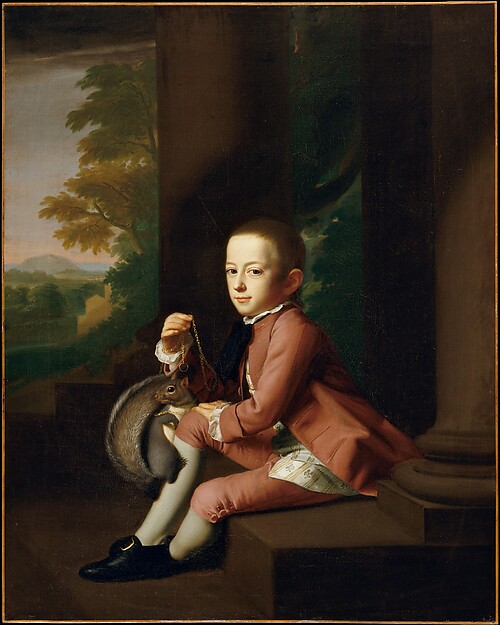
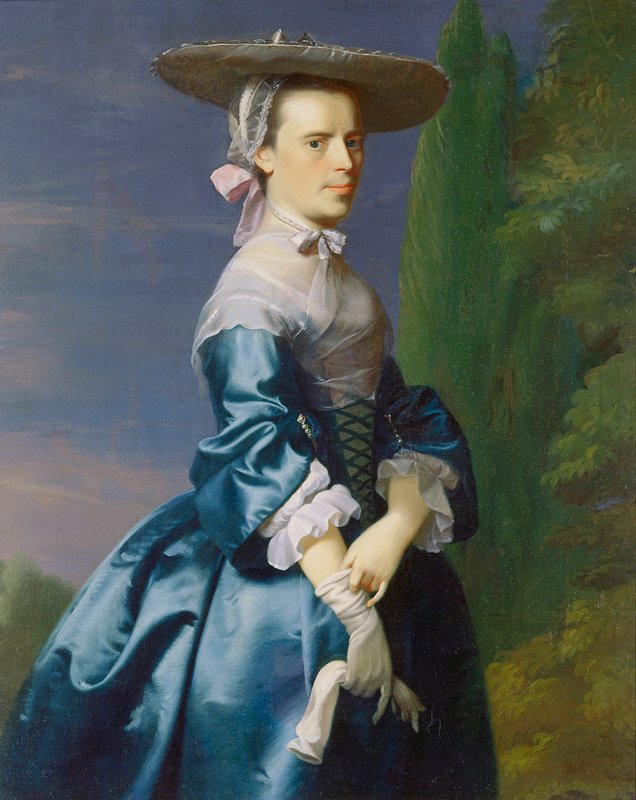
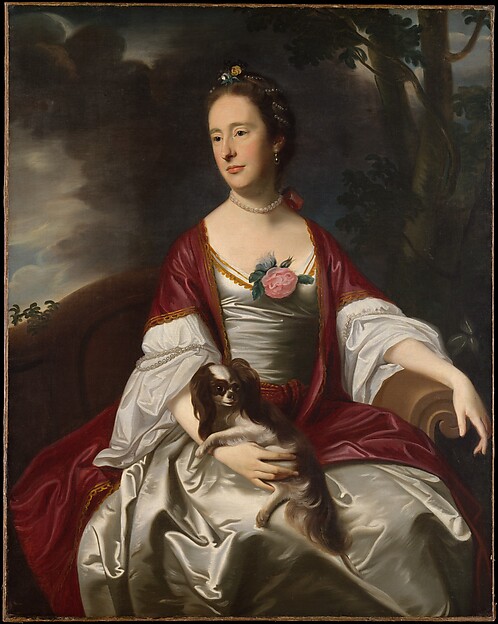
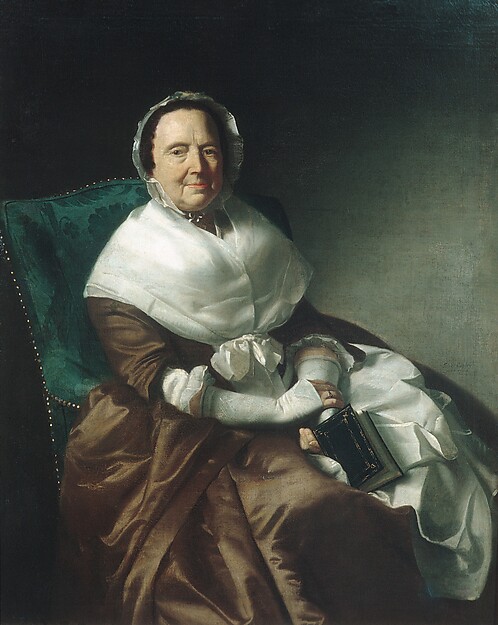
John Singleton CopleyStati Uniti, 1738–1815
John Adams (1735-1826)
Si può ammirare?
Sì, riceve visite

Harvard Art Museums
Cambridge, Stati Uniti
Sala2240, floor 2, European and American Art, 17th–19th century
Esposta al pubblico. Chi lo garantisce è indicato qui sotto.
- Verificato
- Ultimo cambio di stato
- Fonte
- I dati di collezione del museo stesso
About the painting
Portrait of John Adams is a 1783 portrait painting by the Anglo-American artist John Singleton Copley. It depicts the American lawyer, politician and diplomat John Adams. It was painted in London while Adams was in the British capital. He had recently been one of the negotiators in the Peace of Paris that ended the American War of Independence. He is shown at full-length, pointing towards a map and a globe, both displaying the newly created United States.
Read on
Copley was a Boston-born artist who had moved to England and become a leading portraitist and history painter. He planned to display the painting at the Royal Academy at Somerset House that year, but its subject matter was deemed too controversial due to the recent conflict. It was eventually displayed at the Royal Academy Exhibition of 1796. Adams became the second President of the United States in 1797. The painting remained in Copley's studio until his death in 1815 and was then shipped to Massachusetts. While his wife Abigail praised it as "a very good likeness" her husband considered it "a piece of vanity". Today the painting is in the collection of Harvard Art Museums, having been donated by Ward Nicholas Boylston in 1828.
In the museum's words
Before serving as the first vice president and the second president of the United States, Harvard alumnus John Adams served as the new nation’s first ambassador to Great Britain. Adams befriended Copley in London, and the two collaborated on this symbolic grand portrait that commemorates Adams’s role in securing peace through diplomacy during the Revolutionary War. Copley was delighted with how the work turned out and kept the work to promote his skills. At Copley’s death, the painting came to the Adams family farm. Abigail Adams praised the portrait of her husband as “a very good likeness,” whereas the president, embarrassed by his youthful bravado, deemed the work “a piece of vanity.”
Harvard Art Museums
Scheda
- Numero di inventario
- H74
In catalogo
Fonti
- Harvard Art Museums: the museum's own open data · acquisita 7 giorni fa
- Immagine: Harvard Art Museums — © President and Fellows of Harvard College
Nel frattempo, nella vita di John Singleton Copley
Tutta la vita1774–1815 · Luogo di lavoro
London
c. 1781
Chambers rebukes Copley over the private showing of his picture
“The Death of the Earl of Chatham” made Copley’s name as a history painter, but Sir William Chambers, in an open letter, objected to its being shown privately ahead of the Royal Academy exhibition, accusing the artist of purveying it like a raree-show to sell prints or raffle the picture. Copley wrote a caustic reply one morning and threw it into the fire that evening; engravings from the picture later sold well in England and America.
5 December 1782
The Stars and Stripes in Elkanah Watson’s portrait
After listening to George III’s speech formally acknowledging American independence, Copley paints the Stars and Stripes with a bold hand on a ship in the background of Elkanah Watson’s portrait. Watson himself imagined it to be the first American flag hoisted in Old England.