Francisco de ZurbaránSpagna, 1598–1664
Inmaculada Concepción
Si può vedere?
Non si sa
Dove si trova «Inmaculada Concepción» oggi? Collezione: Museo Lázaro Galdiano, Madrid. Non si sa.

Madrid, Spagna
Il proprietario è noto; non si sa se oggi sia esposta.
- Ultimo cambio di stato
- Fonte
- Il museo
Sul dipinto
Con le parole del museo — in spagnolo
La Virgen adolescente, vestida con túnica sencilla de color carmín violáceo y manto azul oscuro, se presenta de frente, con las manos juntoas sobre el pecho en gesto de oración y la cabeza levemenete inclinada hacia su derecha. Bajo sus pies, un racimo de cabezas de querubines y el creciente de la luna exigido por la iconografía. No hay ninguno de los atributos tradicionales, y del paisaje terrenal, apenas se advierten, en el ángulo inferior derecho, unas ramas de árbo. El celaje es de tono dorado.
Museo Lázaro Galdiano
Scheda
Che cosa raffigura
In catalogo
Fonti
- Museo Lázaro Galdiano
- Immagine: Museo Lázaro Galdiano — In Copyright
Nella vita di Francisco de Zurbarán
Tutta la vita1614–1658 · Luogo di lavoro
Seville
29 August 1628
The Mercedarians commission 22 paintings for their monastery
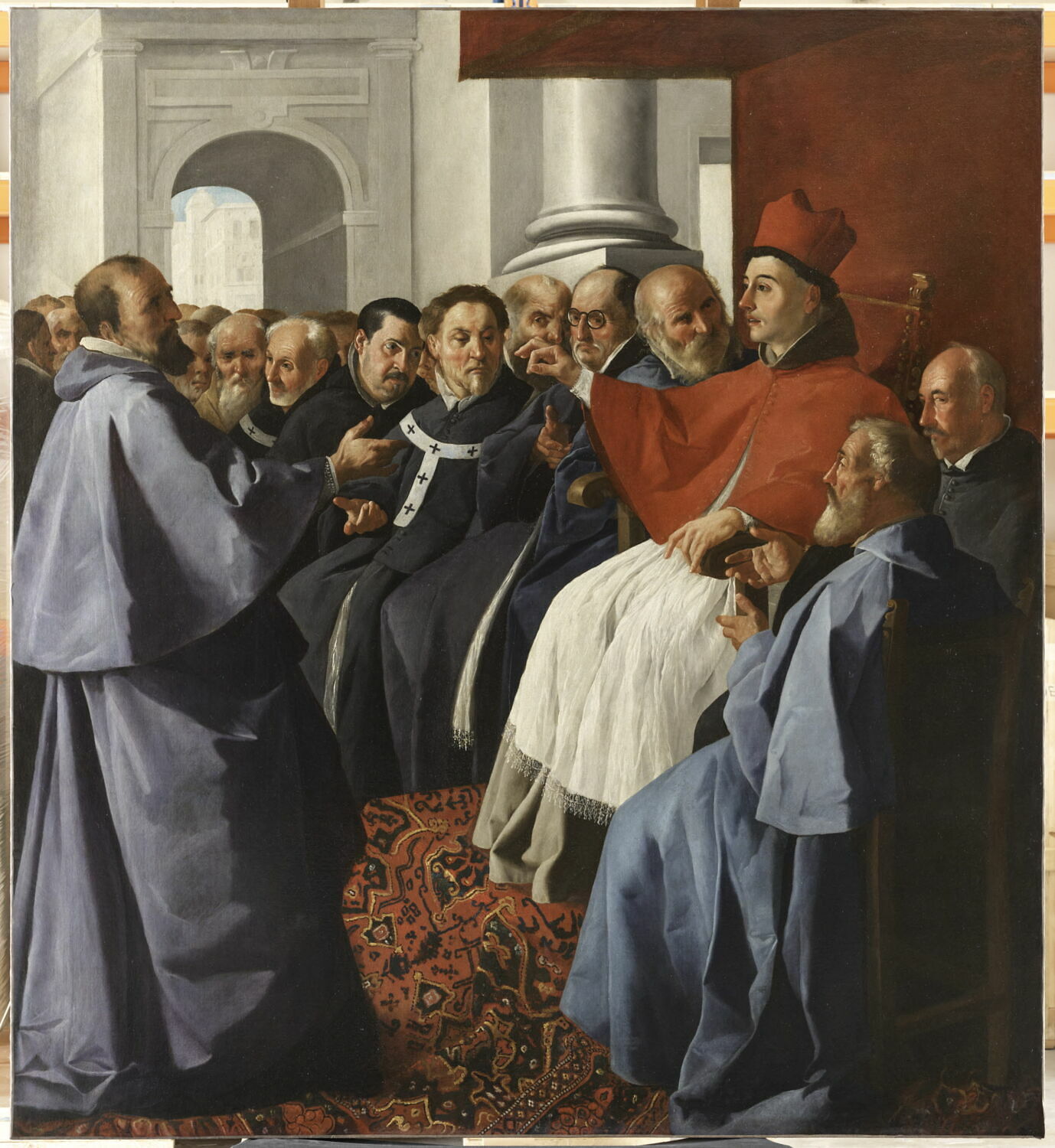
On 29 August 1628 the Mercedarians of Seville commission Zurbarán to produce 22 paintings for their monastery. Between 1628 and 1630 he paints a cycle on Saint Peter Nolasco and a cycle on the life of Saint Bonaventura.
1629
Invited to move to Seville
In 1629 the Elders of Seville, whose city stands to gain from his growing reputation, invite Zurbarán to relocate there permanently. He accepts and moves with his wife Beatriz de Morales, the three children of his first marriage, a relative called Isabel de Zurbarán and eight servants.
c. 1630
Appointed painter to Philip IV
Towards 1630 Zurbarán is appointed painter to Philip IV. There is a story that on one occasion the sovereign laid his hand on the artist’s shoulder, saying “Painter to the king, king of painters”.