ART WIKI32.963 in sala
MappaCollezioneArtistiMuseiMostreRivista
Accedi

ART WIKI

Dove è appeso il capolavoro, e quando si può entrare.

Collezioni: Art Institute of Chicago, Cleveland Museum of Art, Ermitage, Galleria Tret'jakov, Getty Museum, Harvard Art Museums, Hirshhorn Museum and Sculpture Garden, Metropolitan Museum of Art, Minneapolis Institute of Art, Museo del Louvre, Museo Puškin delle belle arti, Museo russo, Museum of Modern Art, National Gallery of Art, National Museum of Asian Art, National Portrait Gallery, Rijksmuseum, Smithsonian American Art Museum, Statens Museum for Kunst, Victoria and Albert Museum, Villa Getty, Whitney Museum of American Art, Catalogo statale del fondo museale russo (274 musei), Europeana (19 musei), Wikidata (6 musei), Paris Musées (12 musei) e Joconde, la banca dati dei musei del Ministero della Cultura francese (495 musei). Le immagini appartengono ai titolari dei diritti.

Sezioni

  • Mappa
  • Ricerca
  • Collezione
  • Capolavori
  • Esposte ora
  • Artisti

Altro

  • Musei e gallerie
  • Mostre
  • Rivista
  • Da dove vengono i dati
  • Privacy e cookie
HomeMappaCatalogo
  1. Collezione/
  2. Kupferstich-Kabinett/
  3. In Grauppen bei Teplitz
In Grauppen bei Teplitz, Otto Wagner, 1818–1861
Otto Wagner, ritrattoOtto WagnerAustria, 1841–1918

In Grauppen bei Teplitz

1818–1861 · Drawing

Si può ammirare?

Non si sa

Kupferstich-Kabinett

Dresda, Germania

Il proprietario è noto; non si sa se oggi sia esposta.

Ultimo cambio di stato
27 set 2026
Fonte
Il museo
Sulla mappaPagina del museo

Scheda

In catalogo

Disegni e acquerelliNeoclassicismoRomanticismoXIX secolo

Fonti

  • Kupferstich-Kabinett
  • Immagine: Kupferstich-Kabinett — In Copyright

Nel frattempo, nella vita di Otto Wagner

Tutta la vita
  1. 13 luglio 1841

    Birth in Penzing

    Born in Penzing — then a suburb of Vienna next to the imperial residence of Schönbrunn — to Rudolf Simeon Wagner, a prosperous notary of the Hungarian royal court chancellery, and Susanne von Helfersdorfer, née Hübner.

  2. c. 1846

    The death of his father

    His father died of a lung disease when Otto was five. The family was left in want, yet his mother, Susanne, managed to give her son a good education.

  3. from 1850

    Schooling in Vienna and at Kremsmünster

    From 1850 Wagner spends two years at the Vienna Academic Gymnasium, then attends the Benedictine gymnasium at Kremsmünster Abbey in Upper Austria.

  4. 1857–1860

    The Vienna Polytechnic Institute

    In 1857 Wagner enters the Vienna Polytechnic Institute, where he studies mathematics, physics, descriptive geometry, technology and drawing. Some accounts extend his studies to 1862, others have them ending in 1860, when he left for Berlin.

  5. 1860–1861

    The Berlin Building Academy

    On finishing his studies in Vienna Wagner goes to Berlin and studies at the Royal Building Academy under Carl Ferdinand Busse, a pupil of Karl Friedrich Schinkel, the leader of the German school of neoclassical and neo-Gothic architecture.

  6. 1862

    Joins Ludwig von Förster’s office

    Wagner joins the architectural office of Ludwig von Förster, whose studio designed much of the new architecture along the Ringstraße. The first part of his career, lasting until about 1880, was spent on that boulevard; he described his own style of those years as “a sort of free Renaissance”.
Altre opere di Otto Wagner

Tutte le opere
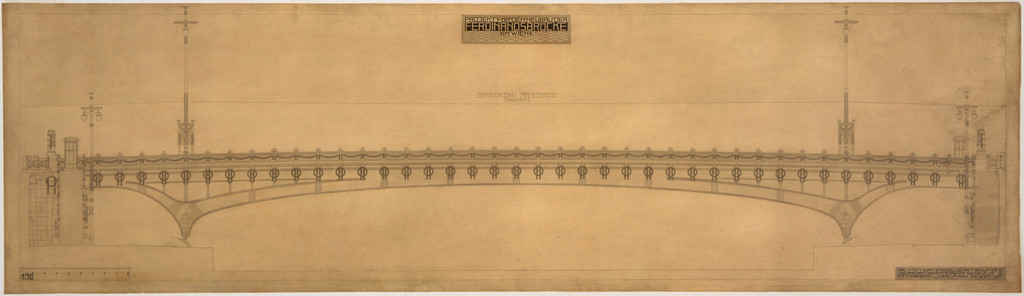
Ferdinandsbrücke Project, Vienna, Austria (Elevation, preliminary version), Otto Wagner, 1896

Ferdinandsbrücke Project, Vienna, Austria (Elevation, preliminary version)

1896 · Non esposta · Museum of Modern Art

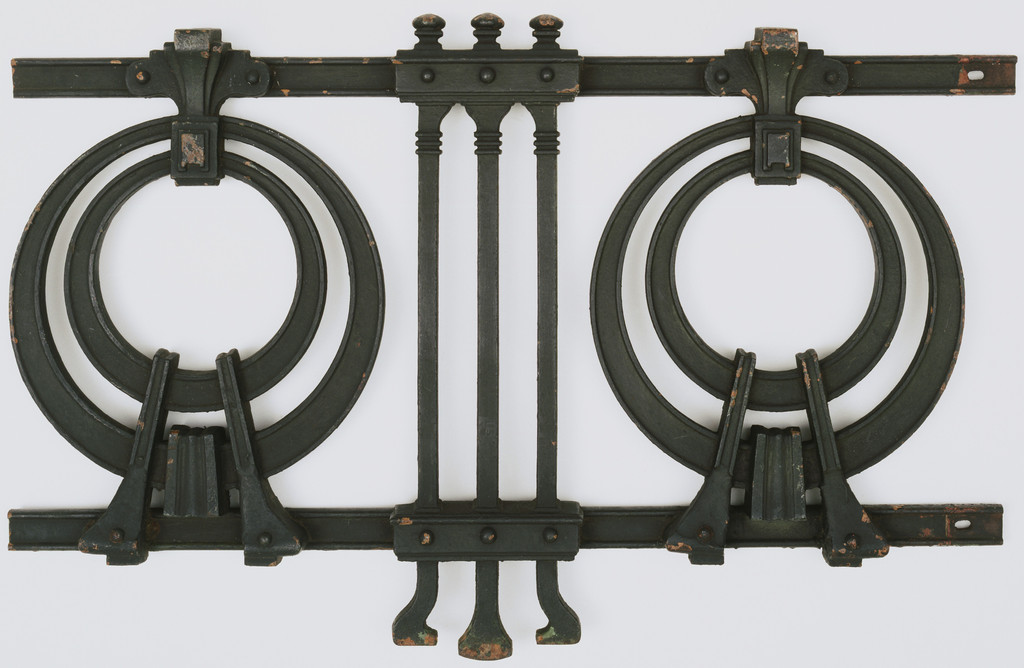
Railing, Otto Wagner, 1899

Railing

1899 · Non esposta · Museum of Modern Art

In Meissen, Otto Wagner, 19th century

In Meissen

19th century · Non esposta · Harvard Art Museums

Cottage Door, Otto Wagner, 19th century

Cottage Door

19th century · Non esposta · Harvard Art Museums

Up in the Black Forest, Otto Wagner, 19th century

Up in the Black Forest

19th century · Non esposta · Harvard Art Museums

German Town, Otto Wagner, 19th century

German Town

19th century · Non esposta · Harvard Art Museums

Cottages, Otto Wagner, 19th century

Cottages

19th century · Non esposta · Harvard Art Museums

Alter Ziehbrunnen mit Überdachung, Otto Wagner

Alter Ziehbrunnen mit Überdachung

Kupferstich-Kabinett