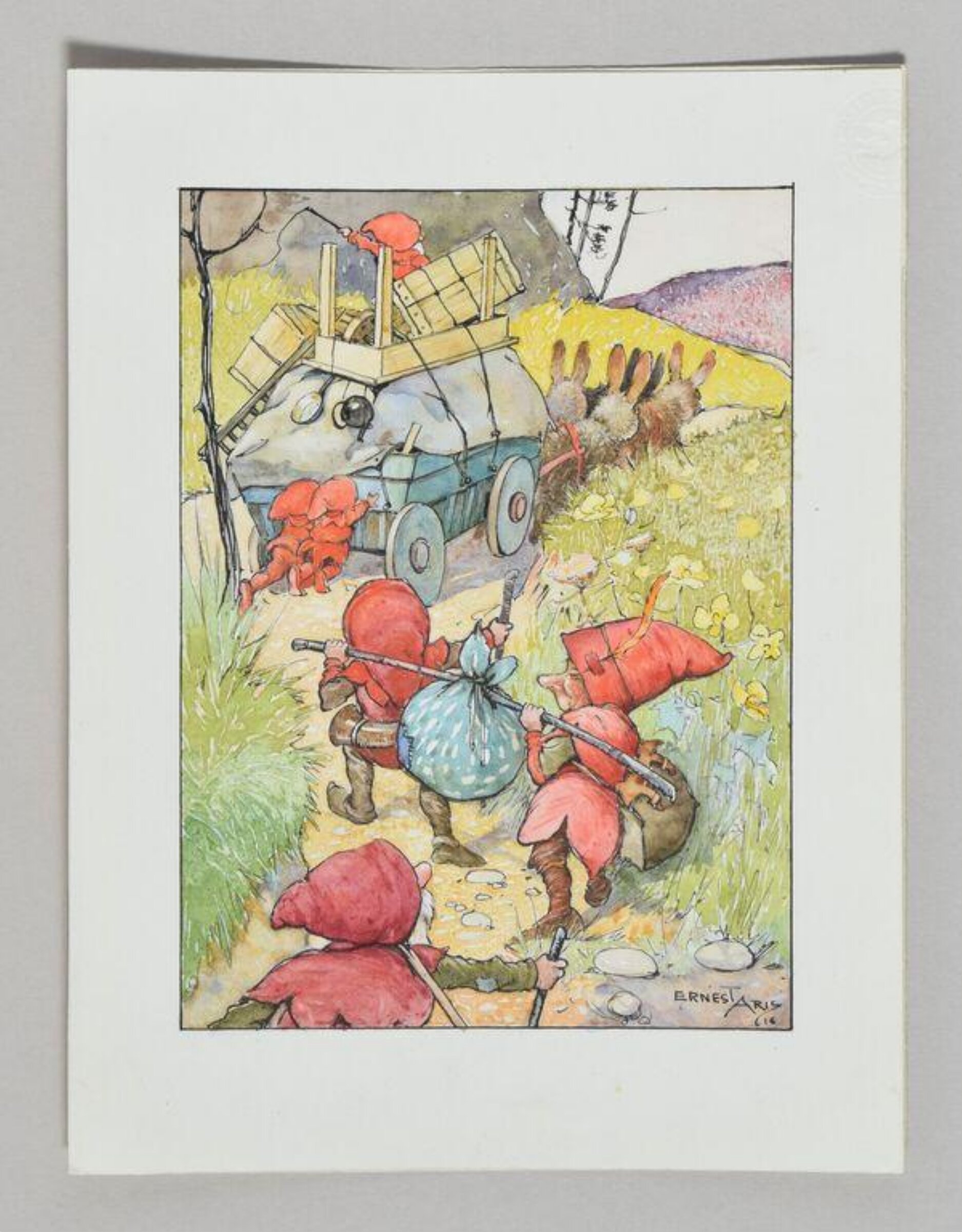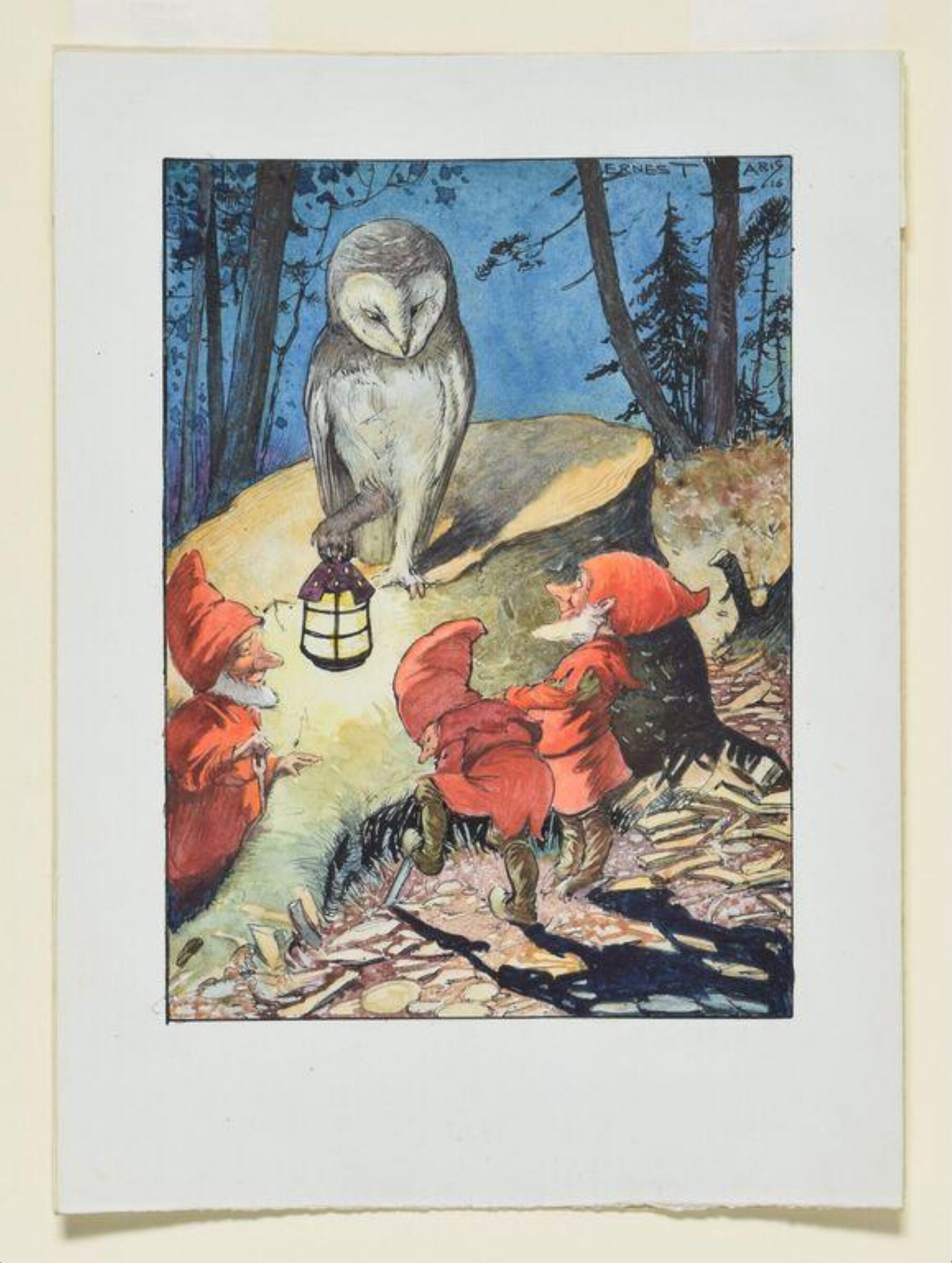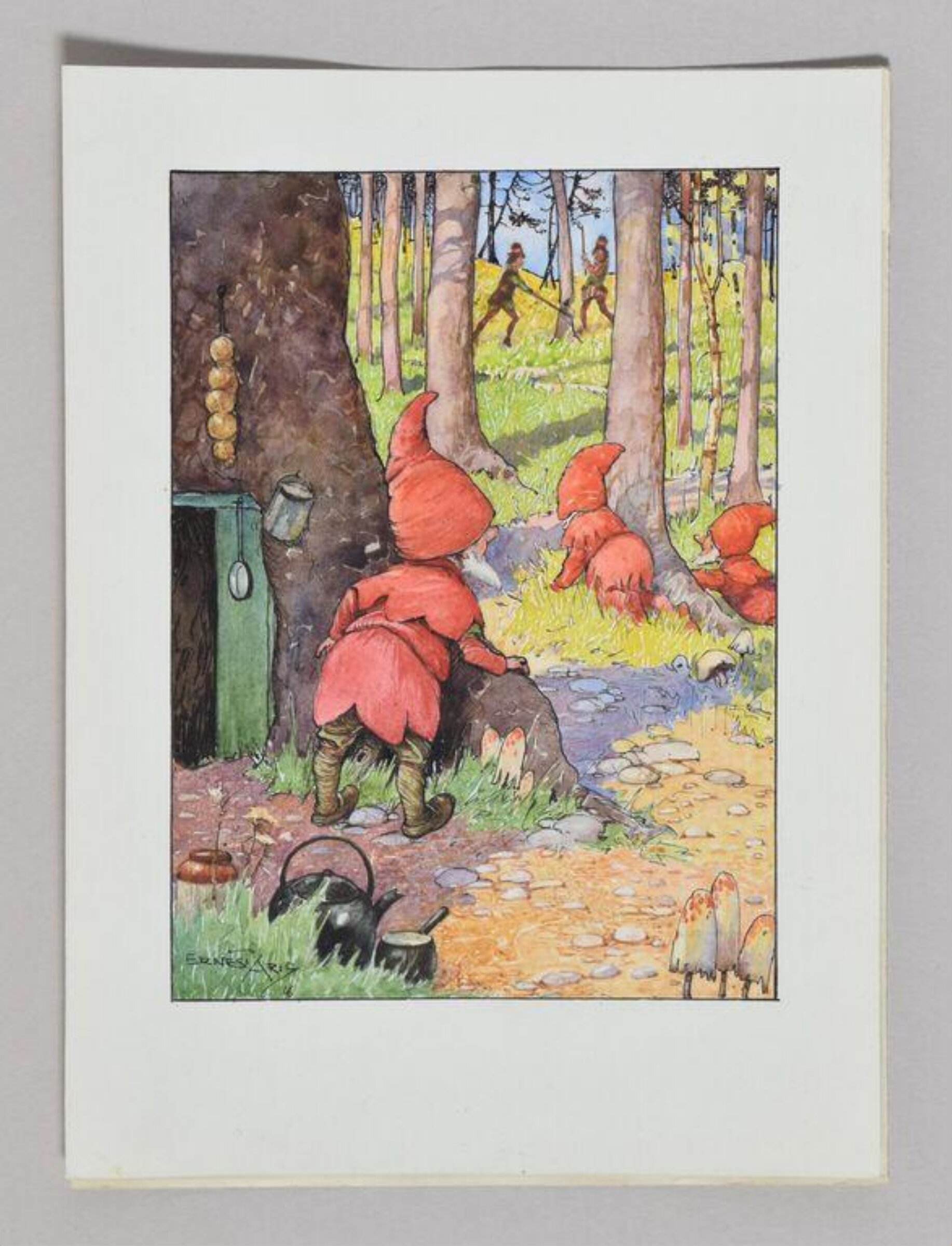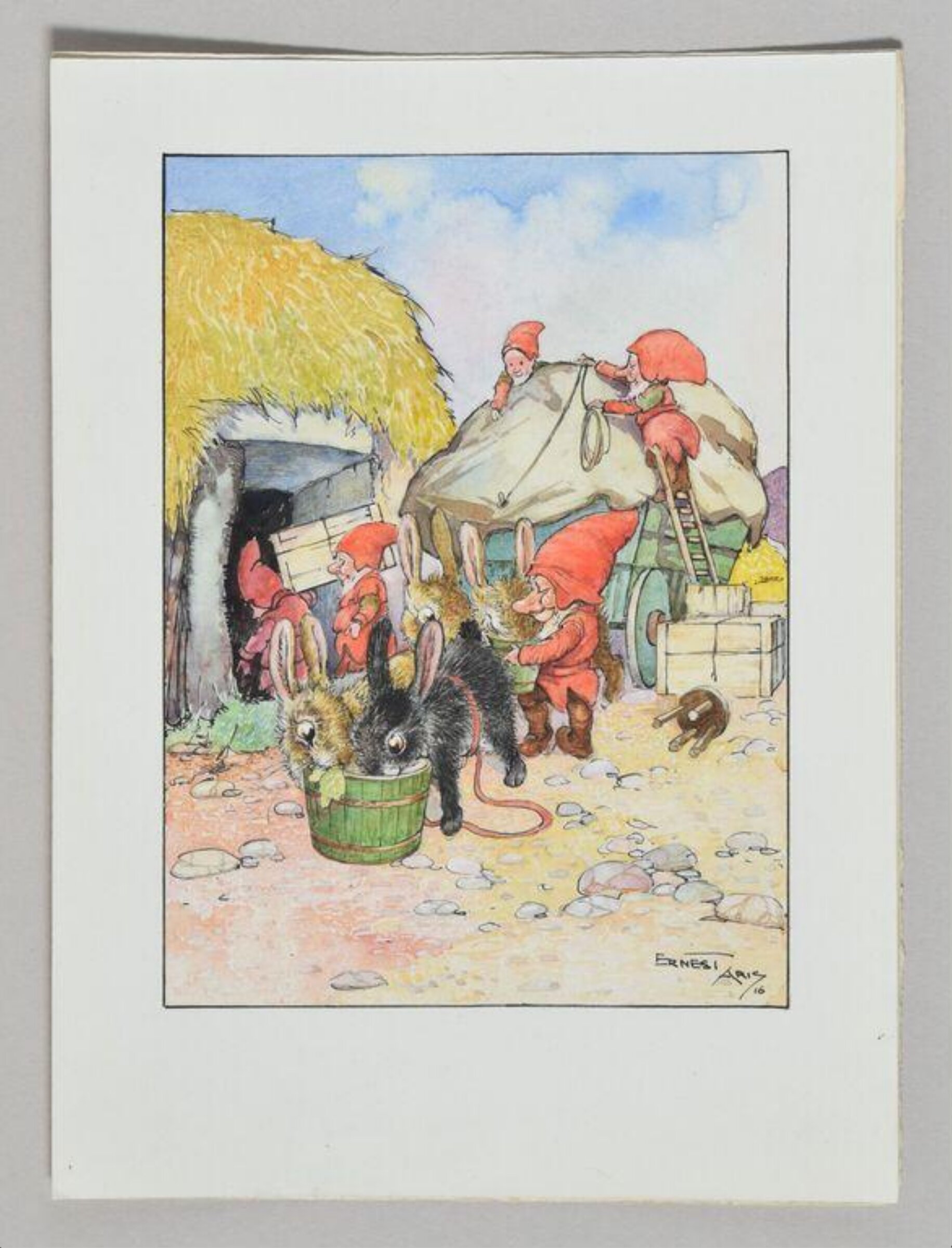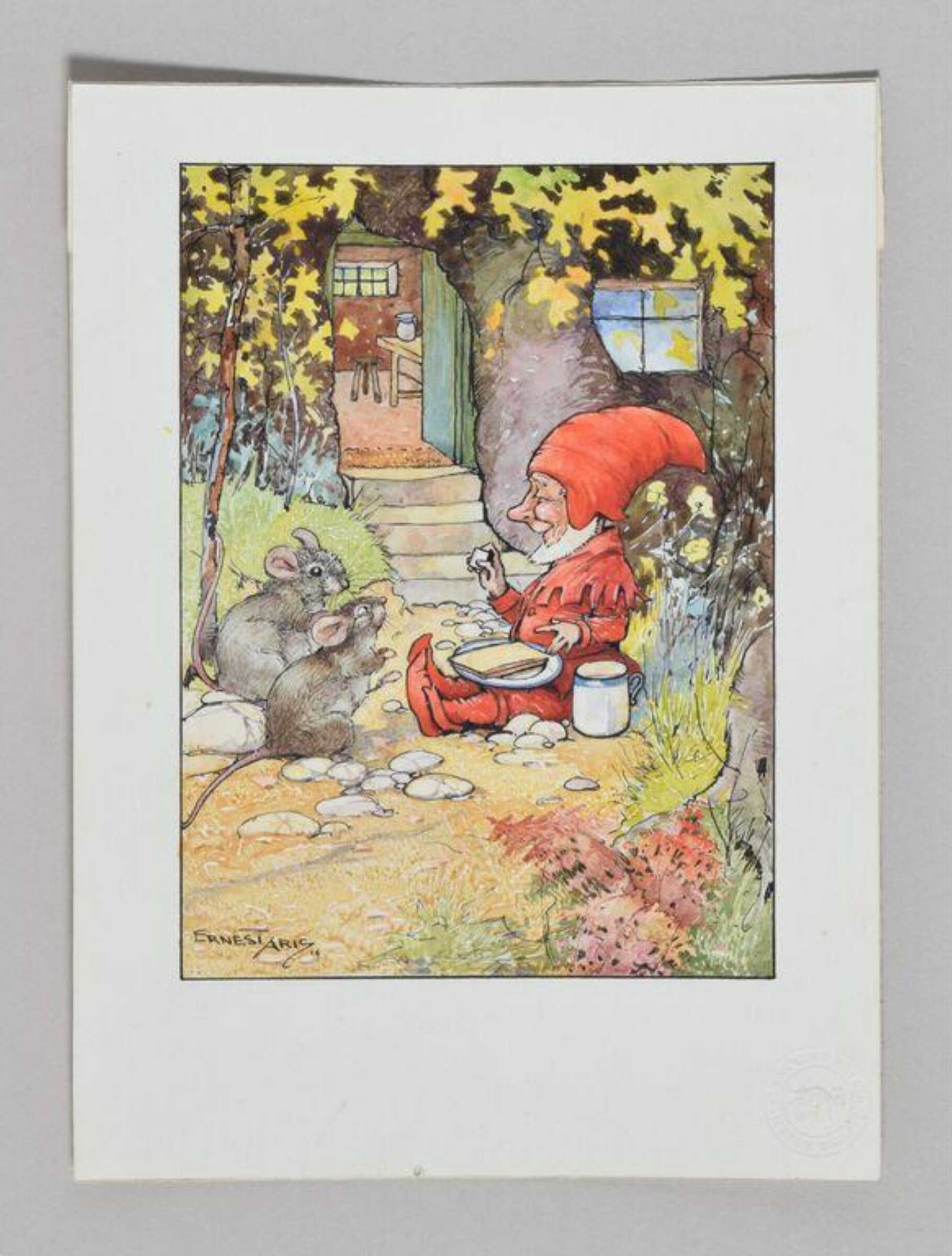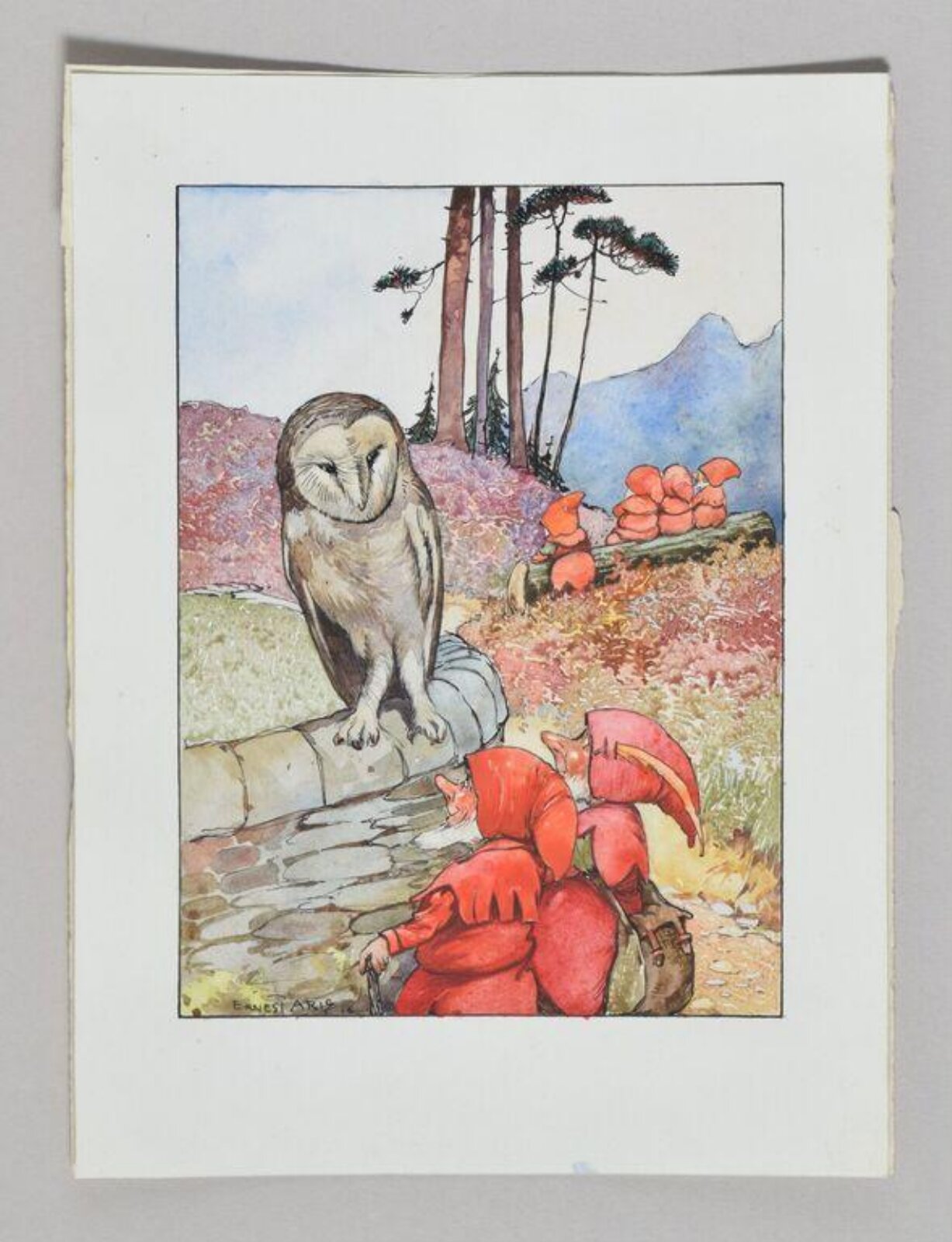
Illustration to The Oakmen
Si può vedere?
Non esposta al momento
Dove si trova «Illustration to The Oakmen» oggi? Collezione: Victoria and Albert Museum, Londra. Non esposta al momento. Verificato 25 settembre 2026.

Londra, Regno Unito
Appartiene alla collezione, ma al momento non è esposta.
- Verificato
- Ultimo cambio di stato
- Fonte
- Il museo
Sull’opera
Ernest Aris (1882-1963) was a highly prolific commercial illustrator in the first half of the 20th century. He studied at the Bradford School of Art and, later, at the Royal College of Art in London. He began his career as a portrait artist and art teacher, working in watercolour and charcoal and wash, and exhibited his work at the Royal Academy, Royal Society of British Artists and the Royal Institute of Painters in Watercolours. By 1909, Ernest was illustrating for magazines such as The Graphic and writing and illustrating children’s books. He wrote and illustrated over 170 books (the majority published by Humphrey Milford and Hodder and Stoughton) and contributed illustrations to a further 250 titles. His illustrations were also used for advertisements, cigarette cards, games, jigsaw puzzles and seaside postcards. In 1934 Cadbury’s commissioned Aris to design the Cococubs, a collection of animal characters to be given away free with their children’s cocoa. It was hailed as one of the greatest advertising schemes of the time, with an estimated 300,000 children collecting them.
Leggi
Beatrix Potter had always illustrated her own stories but by 1916 her eyesight was beginning to fail and her hands were growing stiff. She urged her publisher to find ‘some second string’ to execute the illustrations to her stories. Her original story- letter about the oakmen was written for one of her husband's nieces, Nancy Nicholson. Keen to retain the credit for the design of the illustrations herself, Potter collaborated with a commercial artist, Ernest Aris, who she hoped would 'draw to order’. Potter concealed from Aris both the text of her story and her own identity; she sent pencil sketches of her designs, annotated with instructions for their completion. Aris returned his completed illustrations, commenting that Potter's designs were ‘charming little ideas’ and her composition was, ‘in most cases’, good.
However, he instructed Potter that her proposed colour scheme was ‘a little on the sombre side’ and that clean, bright colours are ‘essential for children’. It is very likely that Aris knew the origin of his commission; in any case, his remarks must have irritated Potter who would not have welcomed criticism from a commercial illustrator.
Due to some doubts as to the originality of the story, The Oakmen was never published. In any case, the collaboration between Potter and Aris broke down when Potter's publisher, Frederick Warne & Co., accused Aris's publishers of plagiarism: his latest book, The Treasure Seekers (1916), featured a rabbit called Peter. Aris claimed in his defence that he had never heard of The Tale of Peter Rabbit (1902) and impertinently requested a signed copy from Potter. Potter replied, 'I regret that I am unable to believe that your statements are truthful. Coincidence has a long arm but there are limits to coincidences'. She retorted, 'Your work has considerably technical facility but no originality'. Despite the obvious bad feeling between the two, their collaboration is unlikely to have been a success.
Aris had a business-like approach to the art of illustration in which he claimed he was ‘governed’ by a set of ‘commandments’. Potter, on the other hand, was a highly instinctive artist who believed the secret of her success lay in her refusal to work to order: ‘The more spontaneous the pleasure – the more happy the result’.
Victoria and Albert Museum
Scheda
- Numero di inventario
- BP.607(3a)
In catalogo
Fonti
- Victoria and Albert Museum
- Immagine: Victoria and Albert Museum — © Victoria and Albert Museum, London