William HogarthInghilterra, 1697–1764
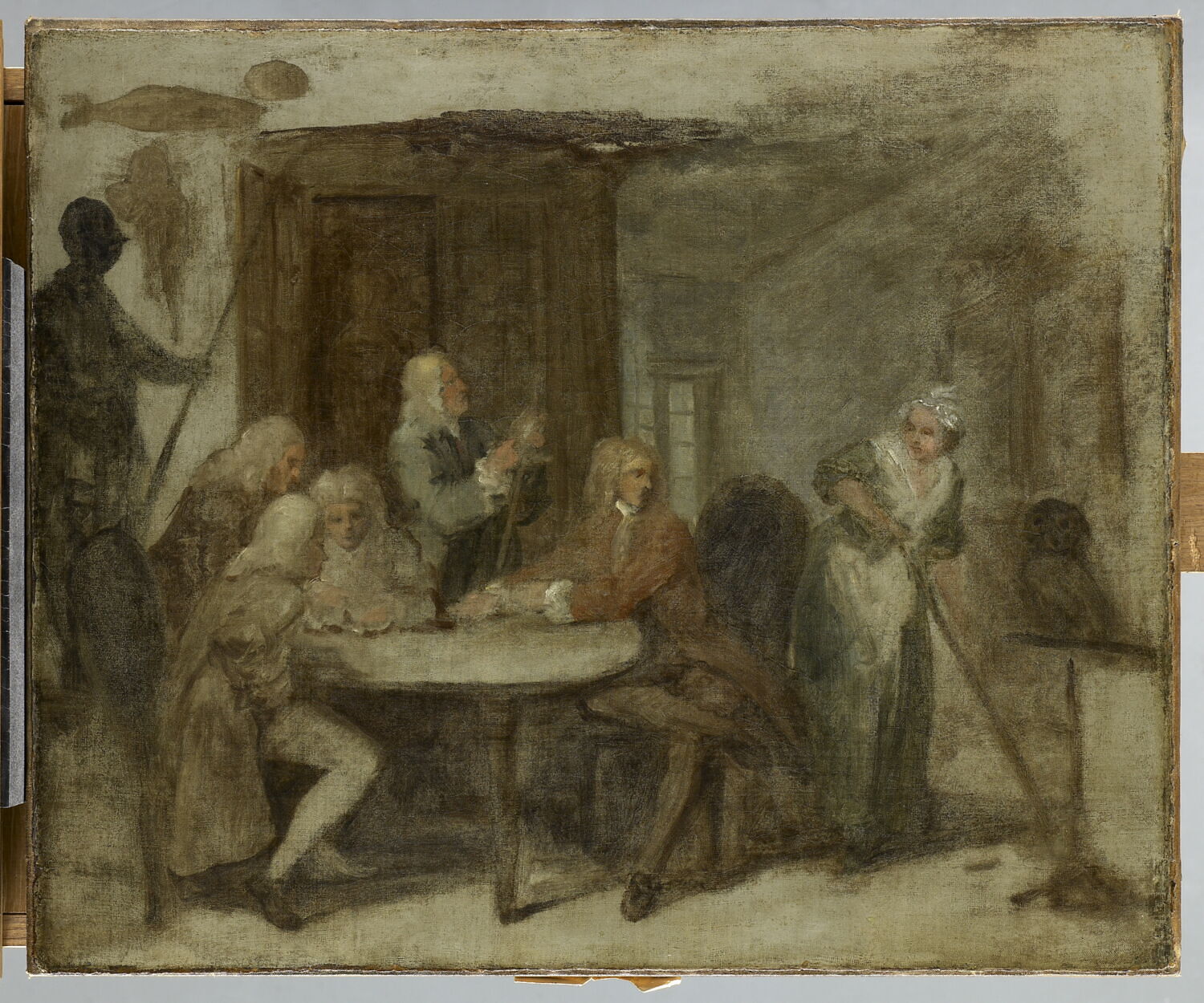
Hudibras confronteert apotheker Sidrophel
Si può vedere?
Non si sa
Dove si trova «Hudibras confronteert apotheker Sidrophel» oggi? Collezione: Rijksmuseum, Amsterdam. Non si sa.

Amsterdam, Paesi Bassi
Il proprietario è noto; non si sa se oggi sia esposta.
- Fonte
- Il museo
Sull’opera
Con le parole del museo — in olandese
Tekst in het Engels in de ondermarge. In de apotheek verschillende curiosa zoals een menselijk skelet en homunculus of foetus in een pot, globe, meetinstrumenten en reptielen, amfibieën en andere dieren opgehangen aan de muur en het plafond. Ralpho staat in de deuropening.
Rijksmuseum
Scheda
- Numero di inventario
- RP-P-OB-18.750
Che cosa raffigura
In catalogo
Fonti
- Rijksmuseum
- Immagine: Rijksmuseum — public domain
Nella vita di William Hogarth
Tutta la vita1712–1764 · Luogo di lavoro
London
1724
Meeting fifteen-year-old Jane Thornhill
In 1724 Hogarth met Thornhill’s daughter Jane, then fifteen; five years later they would marry in secret.
from November 1724
Sir James Thornhill’s school
Shortly after it opened, in November 1724, Hogarth enrolled in a drawing school in Covent Garden run by Sir James Thornhill, serjeant painter to George I; he later claimed that even as an apprentice he carried in his head Thornhill’s paintings for St Paul’s Cathedral and Greenwich Hospital. He abandoned the earlier academy.
23 March 1729
A secret wedding to Jane Thornhill
Not hoping for Sir James’s consent — he saw the match as unequal, Hogarth being a rather obscure artist then — William and Jane married in secret at Paddington Church. Jane and her mother helped to reconcile him with his father-in-law: they hung the first paintings of “A Harlot’s Progress” in his house, and on learning the artist’s name Sir James admitted that a man who could produce such pictures could also keep a wife without a dowry.
1735
Founds the St Martin’s Lane Academy
In 1735 Hogarth founded the St Martin’s Lane Academy in London — in essence a drawing studio that grew out of a circle of painters, draughtsmen and engravers who met at Slaughter’s coffee house on St Martin’s Lane. It became a forerunner of the Royal Academy of Arts and spread new artistic ideas in England.
25 June 1735
“Hogarth’s Act”: copyright for engravings
When the success of the two series produced numerous pirated copies, Hogarth lobbied Parliament for a law protecting engravers: the Engravers’ Copyright Act, known as “Hogarth’s Act”, became law on 25 June 1735 — the first copyright law to cover visual works and to recognise the authorial rights of an individual artist.