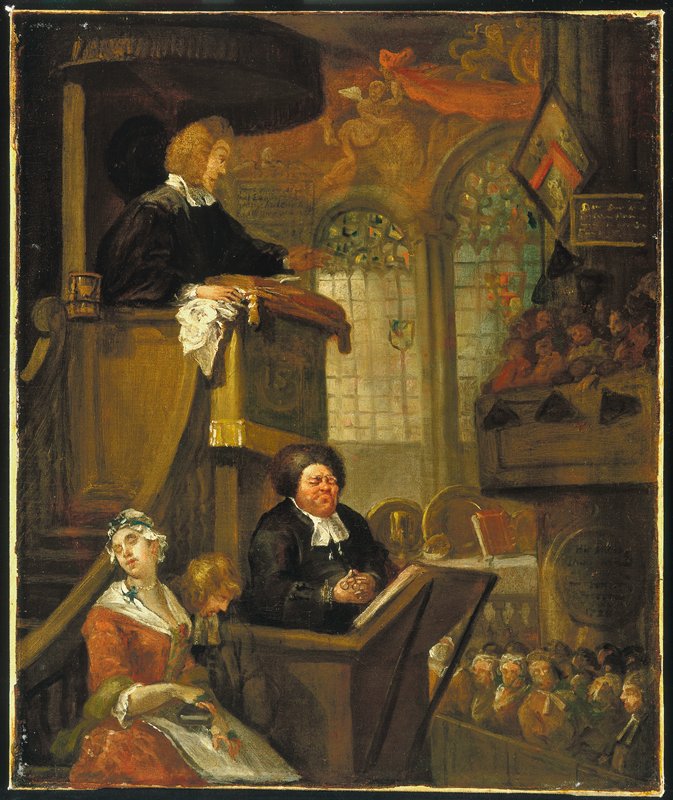
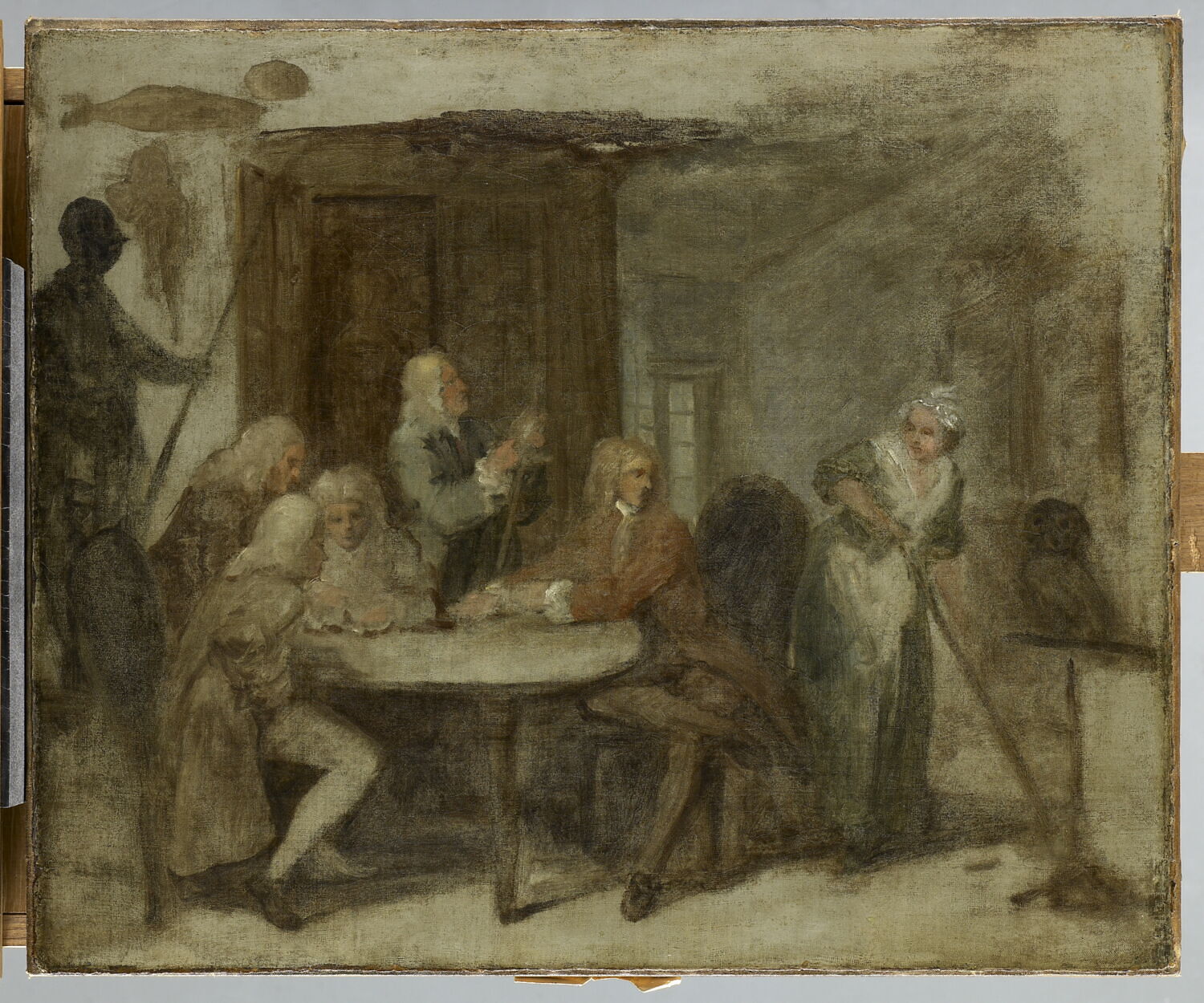
William HogarthInghilterra, 1697–1764
Hooggeplaatste mannen schrikken op
Si può vedere?
Non si sa
Dove si trova «Hooggeplaatste mannen schrikken op» oggi? Collezione: Rijksmuseum, Amsterdam. Non si sa.

Amsterdam, Paesi Bassi
Il proprietario è noto; non si sa se oggi sia esposta.
- Fonte
- Il museo
Scheda
- Numero di inventario
- RP-P-OB-18.751
Che cosa raffigura
In catalogo
Fonti
- Rijksmuseum
- Immagine: Rijksmuseum — public domain
Nella vita di William Hogarth
Tutta la vita1712–1764 · Luogo di lavoro
London
1724
Meeting fifteen-year-old Jane Thornhill
In 1724 Hogarth met Thornhill’s daughter Jane, then fifteen; five years later they would marry in secret.
from November 1724
Sir James Thornhill’s school
Shortly after it opened, in November 1724, Hogarth enrolled in a drawing school in Covent Garden run by Sir James Thornhill, serjeant painter to George I; he later claimed that even as an apprentice he carried in his head Thornhill’s paintings for St Paul’s Cathedral and Greenwich Hospital. He abandoned the earlier academy.
23 March 1729
A secret wedding to Jane Thornhill
Not hoping for Sir James’s consent — he saw the match as unequal, Hogarth being a rather obscure artist then — William and Jane married in secret at Paddington Church. Jane and her mother helped to reconcile him with his father-in-law: they hung the first paintings of “A Harlot’s Progress” in his house, and on learning the artist’s name Sir James admitted that a man who could produce such pictures could also keep a wife without a dowry.
1735
Founds the St Martin’s Lane Academy
In 1735 Hogarth founded the St Martin’s Lane Academy in London — in essence a drawing studio that grew out of a circle of painters, draughtsmen and engravers who met at Slaughter’s coffee house on St Martin’s Lane. It became a forerunner of the Royal Academy of Arts and spread new artistic ideas in England.
25 June 1735
“Hogarth’s Act”: copyright for engravings
When the success of the two series produced numerous pirated copies, Hogarth lobbied Parliament for a law protecting engravers: the Engravers’ Copyright Act, known as “Hogarth’s Act”, became law on 25 June 1735 — the first copyright law to cover visual works and to recognise the authorial rights of an individual artist.