ART WIKI32.979 in sala
MappaCollezioneArtistiMuseiMostreRivista
Accedi

ART WIKI

Dove è appeso il capolavoro, e quando si può entrare.

Collezioni: Art Institute of Chicago, Cleveland Museum of Art, Ermitage, Galleria Tret'jakov, Getty Museum, Harvard Art Museums, Hirshhorn Museum and Sculpture Garden, Metropolitan Museum of Art, Minneapolis Institute of Art, Museo del Louvre, Museo Puškin delle belle arti, Museo russo, Museum of Modern Art, National Gallery of Art, National Museum of Asian Art, National Portrait Gallery, Rijksmuseum, Smithsonian American Art Museum, Statens Museum for Kunst, Victoria and Albert Museum, Villa Getty, Whitney Museum of American Art, Catalogo statale del fondo museale russo (274 musei), Europeana (19 musei), Wikidata (6 musei), Paris Musées (12 musei) e Joconde, la banca dati dei musei del Ministero della Cultura francese (495 musei). Le immagini appartengono ai titolari dei diritti.

Sezioni

  • Mappa
  • Ricerca
  • Collezione
  • Capolavori
  • Esposte ora
  • Artisti

Altro

  • Musei e gallerie
  • Mostre
  • Rivista
  • Da dove vengono i dati
  • Privacy e cookie
HomeMappaCatalogo
  1. Collezione/
  2. Metropolitan Museum of Art/
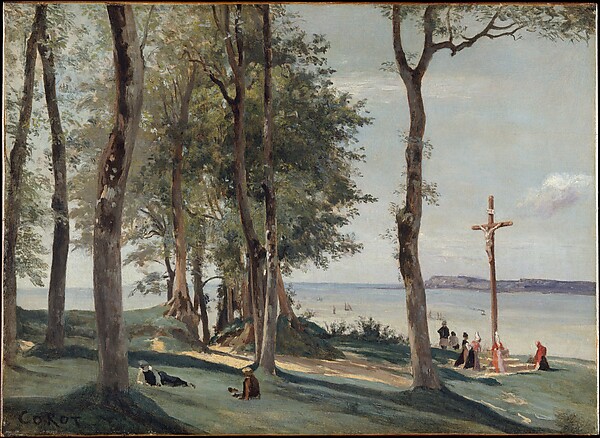
  3. Honfleur: Calvary
Honfleur: Calvary, Camille Corot, ca. 1830

Honfleur: Calvary

ca. 1830 · Painting

Scheda

ca. 1830
17961875
Numero di inventario
1974.3

Nel frattempo, nella vita di Camille Corot

Tutta la vita
  1. 1825–1828

    First trip to Italy

    With his parents' support Corot went to Italy to study the Renaissance masters and draw the crumbling monuments of antiquity; his parents' condition was that he paint a self-portrait for them, his first. In three years he completed over 200 drawings and 150 paintings, worked and travelled with several young French painters, and spent most of his time around Rome and in the Italian countryside.

  2. 1825–1828

    A vow to landscape: no marriage for the sake of painting

    Although strongly attracted to Italian women, Corot wrote that he had only one goal in life, to make landscapes, and that this firm resolution kept him from a serious attachment, that is, from marriage. He did in fact forsake any long-term relationships with women and remained very close to his parents even in his fifties.

  3. 1828–1834

    Chasing the Salon: Normandy, portraits and first commissions

    Between his first and second Italian trips Corot concentrated on preparing large landscapes for the Salon, often adapting his Italian oil sketches, reworked in the studio, according to Neoclassical principles. Away from the studio he travelled throughout France, returned to the Normandy coast and to Rouen, painted portraits of friends and relatives and received his first commissions; one of the most successful, a portrait of his niece Laure Sennegon in powder blue, was later donated to the Louvre.

  4. spring 1829

    Spring in Barbizon: the Forest of Fontainebleau

    In the spring of 1829 Corot came to Barbizon to paint in the Forest of Fontainebleau, where he had first painted at Chailly in 1822; he returned in the autumn of 1830 and the summer of 1831, making drawings and oil studies. There he met the members of the Barbizon school: Théodore Rousseau, Paul Huet, Constant Troyon, Jean-François Millet and the young Charles-François Daubigny.

Altre opere di Camille Corot

Tutte le opere

Nella stessa sala · Gallery 802, Metropolitan Museum of Art

Pagina del museo

Sullo stesso tema · Human Figures

Tutte le opere sul tema
  • 1831–1833

    A cool reception at the Salon and a decision to return to Italy

    Corot exhibited one portrait and several landscapes at the Salon in 1831 and 1833. The critics received them coolly, and having failed to satisfy them with his Neoclassical themes, he decided to return to Italy.

  • Camille Corot, ritrattoCamille CorotFrancia, 1796–1875

    Si può ammirare?

    Sì, riceve visite

    Metropolitan Museum of Art

    New York, Stati Uniti

    Sala802

    Esposta al pubblico. Chi lo garantisce è indicato qui sotto.

    Verificato
    3 giorni fa
    Ultimo cambio di stato
    26 set 2026
    Fonte
    Il museo
    Sulla mappaPagina del museo

    Che cosa raffigura

    Human FiguresLandscapeCristoCross

    In catalogo

    DipintiOlioPittura franceseRomanticismoXIX secolo

    Fonti

    • Metropolitan Museum of Art
    • Immagine: Metropolitan Museum of Art — Open Access (CC0)
    Hagar in the Wilderness, Camille Corot, 1835

    Hagar in the Wilderness

    1835 · Metropolitan Museum of Art

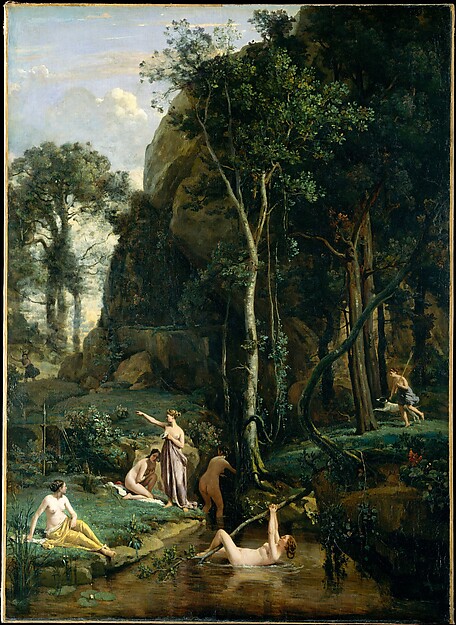
    Diana and Actaeon (Diana Surprised in Her Bath), Camille Corot, 1836

    Diana and Actaeon (Diana Surprised in Her Bath)

    1836 · Metropolitan Museum of Art

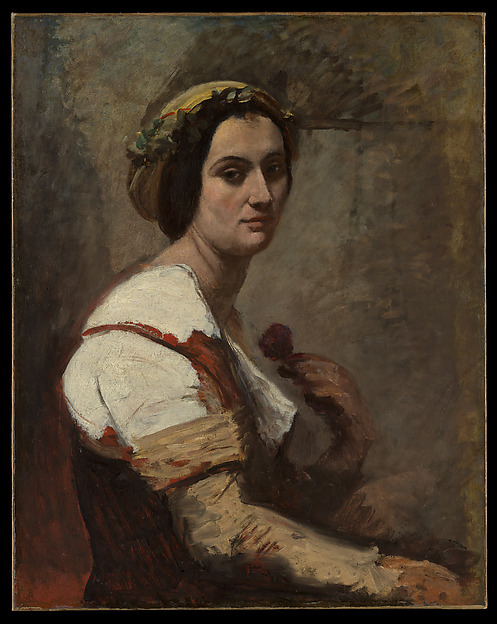
    Sibylle, Camille Corot, ca. 1870

    Sibylle

    ca. 1870 · Metropolitan Museum of Art

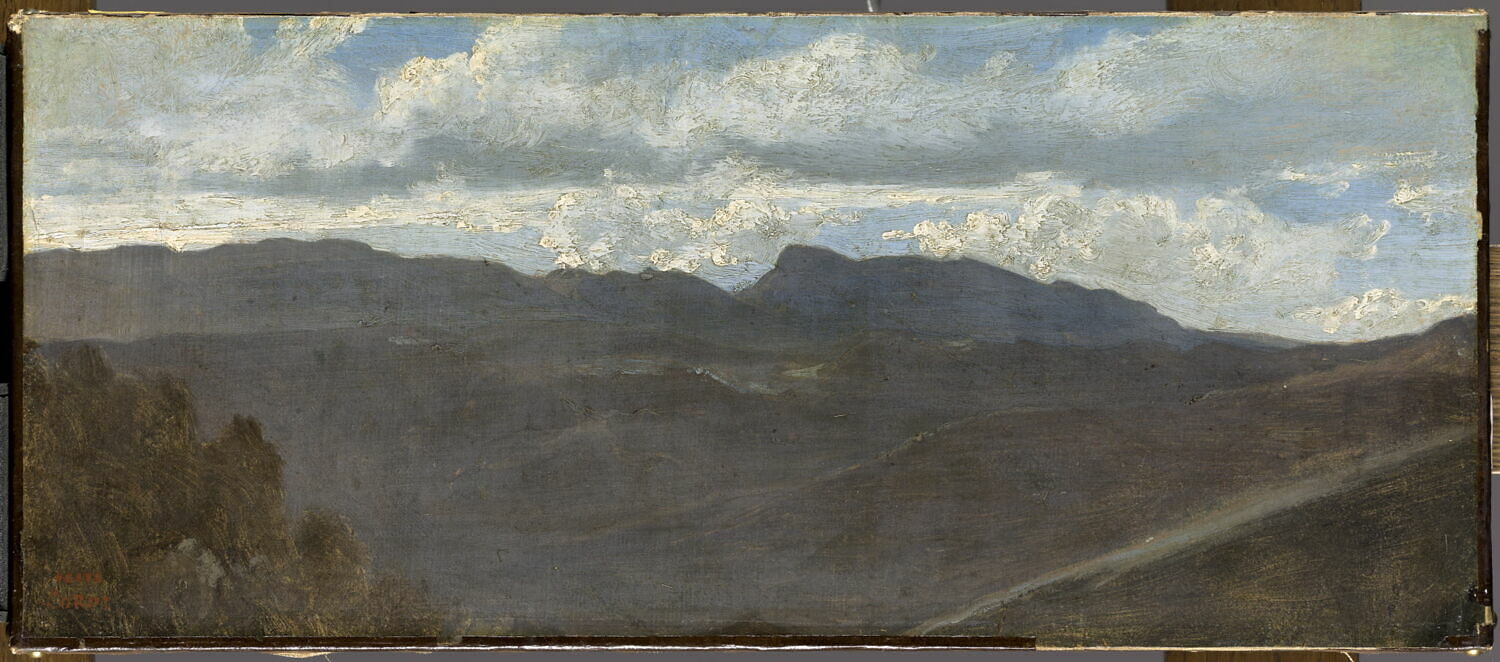
    Mountainous Landscape, Camille Corot

    Mountainous Landscape

    Metropolitan Museum of Art

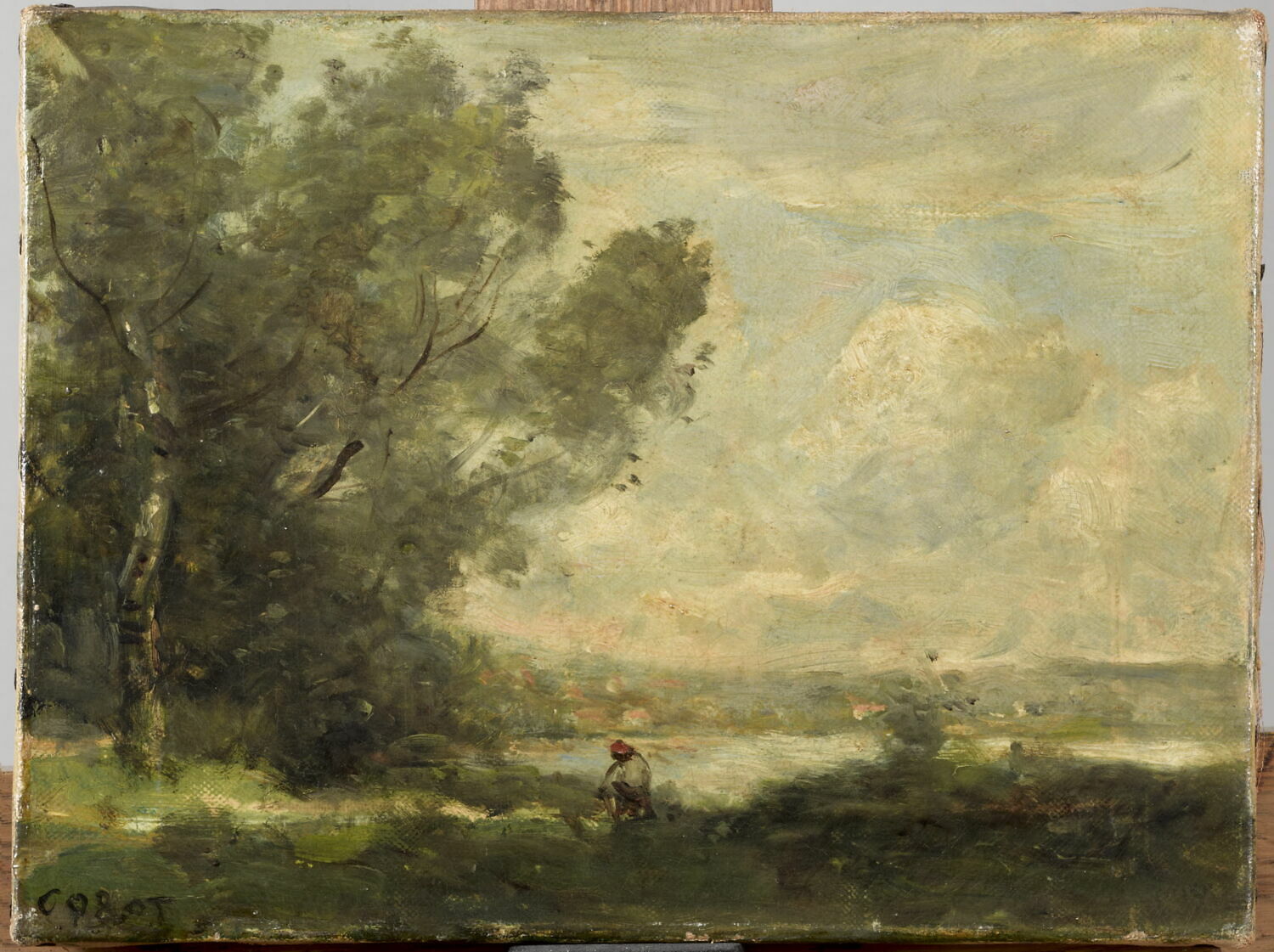
    Paysage., Corot, Jean-Baptiste Camille, 2e quart du XIXe siècle (1632)

    Paysage.

    2e quart du XIXe siècle (1632) · Museo del Louvre

    The Island and Bridge of San Bartolomeo, Rome, Jean-Baptiste-Camille Corot, 1825/1828

    The Island and Bridge of San Bartolomeo, Rome

    1825/1828 · National Gallery of Art

    Italian Peasant Boy, Jean-Baptiste-Camille Corot, 1825/1827

    Italian Peasant Boy

    1825/1827 · National Gallery of Art

    Panorama de la campagne romaine. Les monts Prenestini vus d'Olevano., Corot, Jean-Baptiste Camille, 2e quart du XIXe siècle (1825 - 1850)

    Panorama de la campagne romaine. Les monts Prenestini vus d'Olevano.

    2e quart du XIXe siècle (1825 - 1850) · Museo del Louvre

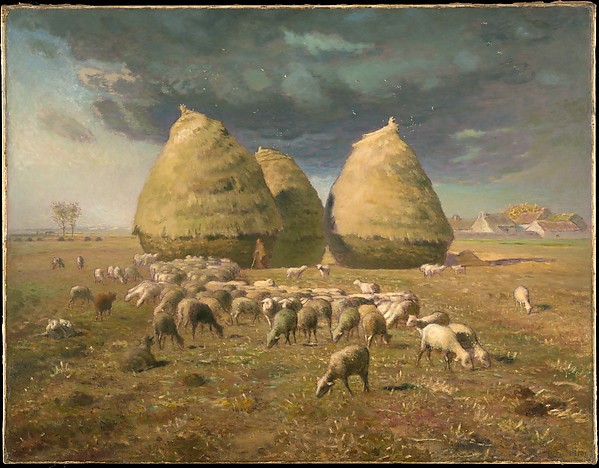
    Haystacks: Autumn, Jean-François Millet, ca. 1874

    Jean François Millet

    Haystacks: Autumn, ca. 1874

    Hagar in the Wilderness, Camille Corot, 1835

    Camille Corot

    Hagar in the Wilderness, 1835

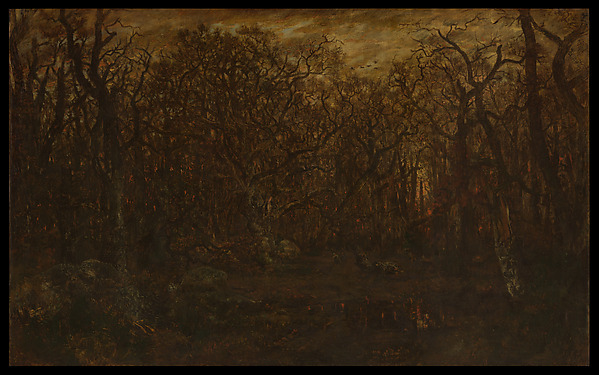
    The Forest in Winter at Sunset, Théodore Rousseau, ca. 1846–67

    Théodore Rousseau

    The Forest in Winter at Sunset, ca. 1846–67

    Evening: Landscape with an Aqueduct, Théodore Géricault, 1818

    Théodore Géricault

    Evening: Landscape with an Aqueduct, 1818

    Autumn Landscape with a Flock of Turkeys, Jean-François Millet, 1872–73

    Jean François Millet

    Autumn Landscape with a Flock of Turkeys, 1872–73

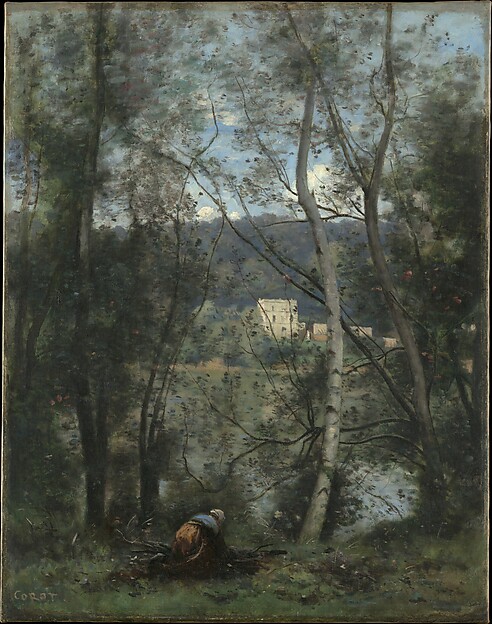
    A Woman Gathering Faggots at Ville-d'Avray, Camille Corot, ca. 1871–74

    Camille Corot

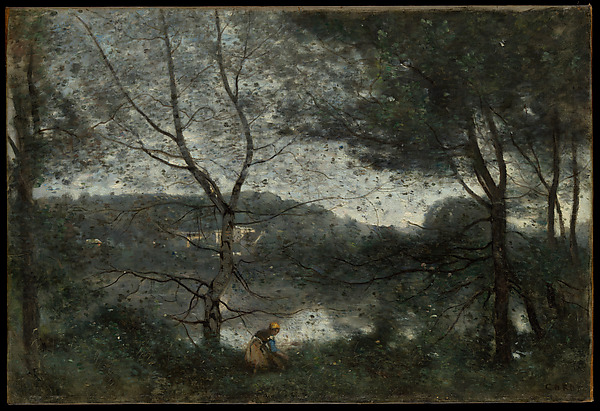
    A Woman Gathering Faggots at Ville-d'Avray, ca. 1871–74

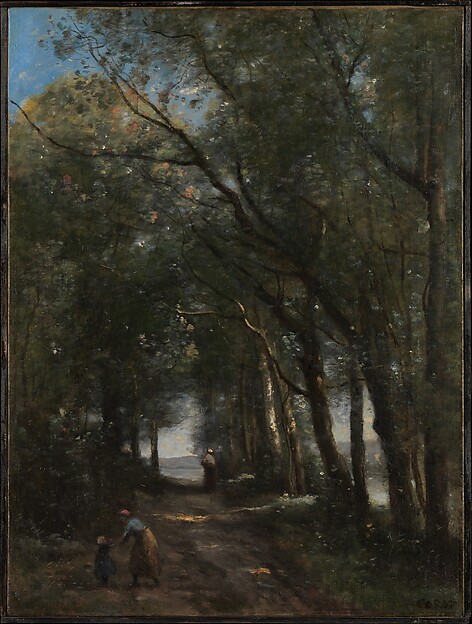
    A Lane through the Trees, Camille Corot, ca. 1870–73

    Camille Corot

    A Lane through the Trees, ca. 1870–73

    Ville-d'Avray, Camille Corot, 1870

    Camille Corot

    Ville-d'Avray, 1870

    Nasturtiums with the Painting "Dance" I, Henri Matisse, 1912

    Henri Matisse

    Nasturtiums with the Painting "Dance" I, 1912

    Metropolitan Museum of Art

    A Road in Louveciennes, Auguste Renoir, ca. 1870

    Pierre-Auguste Renoir

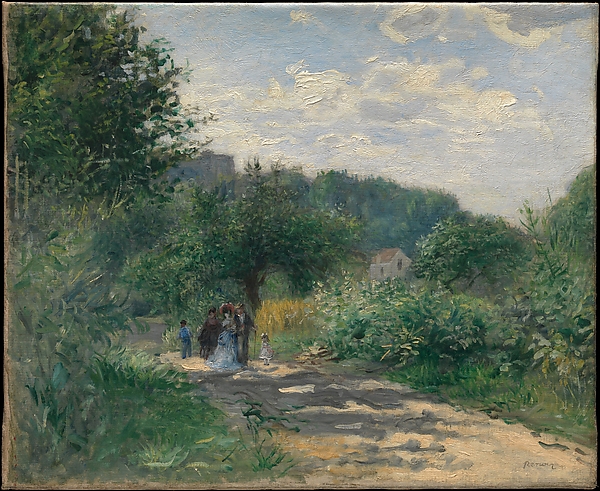
    A Road in Louveciennes, ca. 1870

    Metropolitan Museum of Art

    La Masseuse, Edgar Degas, modeled perhaps ca. 1895, cast 1920

    Edgar Degas

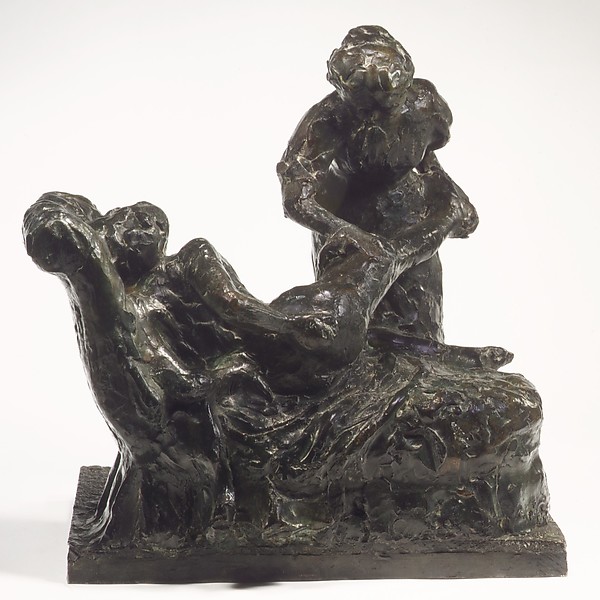
    La Masseuse, modeled perhaps ca. 1895, cast 1920

    Metropolitan Museum of Art

    The Apple Pickers, Edgar Degas, modeled ca. 1881–83, cast 1920

    Edgar Degas

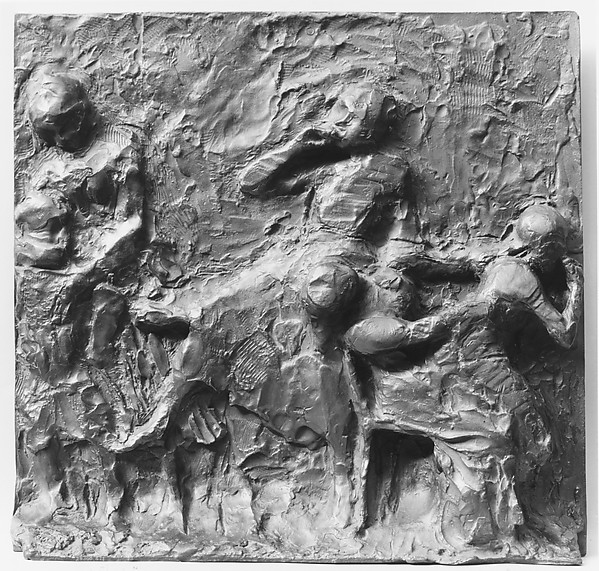
    The Apple Pickers, modeled ca. 1881–83, cast 1920

    Metropolitan Museum of Art

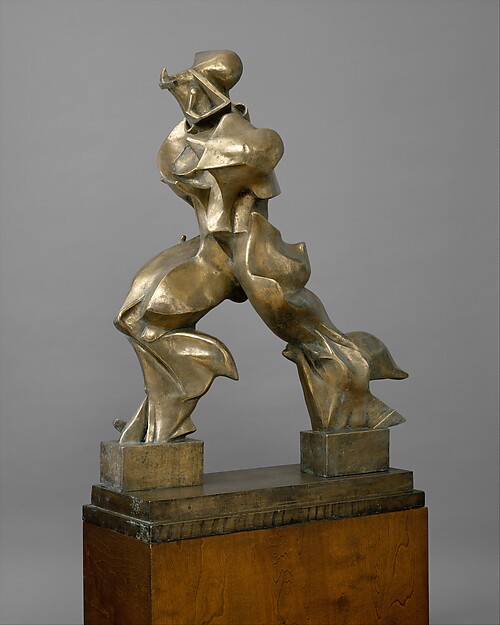
    Unique Forms of Continuity in Space, Umberto Boccioni, 1913, cast 1950

    Umberto Boccioni

    Unique Forms of Continuity in Space, 1913, cast 1950

    Metropolitan Museum of Art

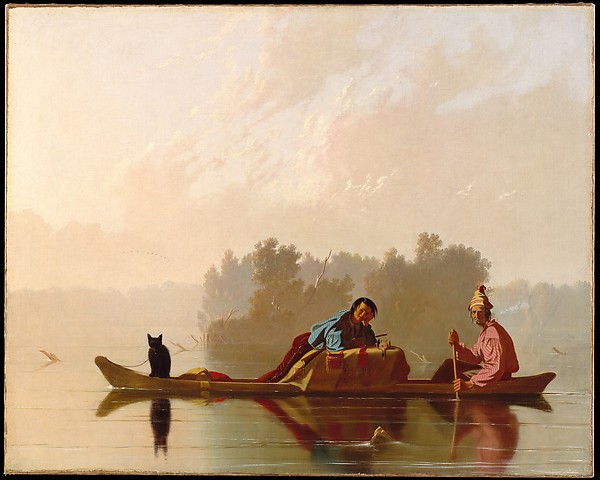
    Fur Traders Descending the Missouri, George Caleb Bingham, 1845

    George Caleb Bingham

    Fur Traders Descending the Missouri, 1845

    Metropolitan Museum of Art

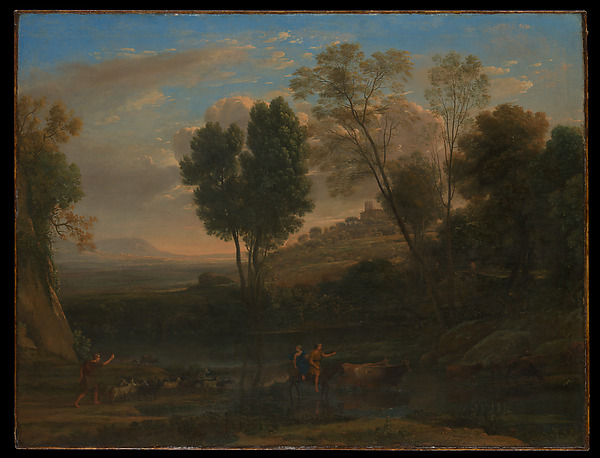
    Sunrise, Claude Lorrain, possibly 1646–47

    Claude Lorrain

    Sunrise, possibly 1646–47

    Metropolitan Museum of Art

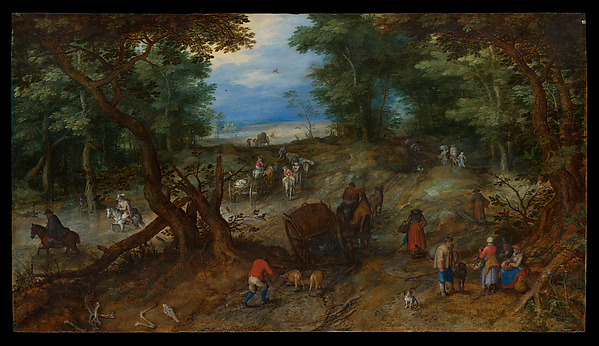
    A Woodland Road with Travelers, Jan Brueghel the Elder, 1607

    Jan Brueghel

    A Woodland Road with Travelers, 1607

    Metropolitan Museum of Art