ART WIKI32.963 in sala
MappaCollezioneArtistiMuseiMostreRivista
Accedi

ART WIKI

Dove è appeso il capolavoro, e quando si può entrare.

Collezioni: Art Institute of Chicago, Cleveland Museum of Art, Ermitage, Galleria Tret'jakov, Getty Museum, Harvard Art Museums, Hirshhorn Museum and Sculpture Garden, Metropolitan Museum of Art, Minneapolis Institute of Art, Museo del Louvre, Museo Puškin delle belle arti, Museo russo, Museum of Modern Art, National Gallery of Art, National Museum of Asian Art, National Portrait Gallery, Rijksmuseum, Smithsonian American Art Museum, Statens Museum for Kunst, Victoria and Albert Museum, Villa Getty, Whitney Museum of American Art, Catalogo statale del fondo museale russo (274 musei), Europeana (19 musei), Wikidata (6 musei), Paris Musées (12 musei) e Joconde, la banca dati dei musei del Ministero della Cultura francese (495 musei). Le immagini appartengono ai titolari dei diritti.

Sezioni

  • Mappa
  • Ricerca
  • Collezione
  • Capolavori
  • Esposte ora
  • Artisti

Altro

  • Musei e gallerie
  • Mostre
  • Rivista
  • Da dove vengono i dati
  • Privacy e cookie
HomeMappaCatalogo
  1. Collezione/
  2. Rijksmuseum/
  3. Het wakende oog
Het wakende oog, Jacques Callot, 1621 - 1635

Het wakende oog

1621 - 1635 · Print

Sull’opera

Con le parole del museo — in olandese

Voorstelling van een omheining waarbinnen schapen grazen; ernaast ligt een waakhond en staat een oog op een stok. Boven en onder deze prent Latijnse en Franse teksten in boekdruk. Dit blad is onderdeel van de embleemserie 'Kloosterleven in emblemen'. De tweede staat van deze serie behelst naast een geïllustreerde titelpagina en 26 emblemen nog een titelpagina en een blad met opdracht, beide in boekdruk zonder afbeelding.

Rijksmuseum

Scheda

1621 - 1635
15921635
Numero di inventario
RP-P-OB-4959

Nel frattempo, nella vita di Jacques Callot

Tutta la vita
  1. 1614–1621

    At the court of Cosimo II de’ Medici

    Under Parigi’s direction Callot works at the court of the Grand Duke of Tuscany Cosimo II de’ Medici in the Uffizi, designing festivals and theatrical performances — later these give him themes for his series of grotesque prints; during his Florentine years he becomes an independent master and often works for the Medici.

  2. 1621

    Returns to Nancy after the death of Cosimo II

    After the death of Grand Duke Cosimo II de’ Medici, Callot responds to Duke Charles IV of Lorraine’s wish to see him at his court and returns to Lorraine, where he is received with flattering honours; staying in Nancy, he sends his prints all over Europe, and Rembrandt becomes a keen collector of them.

  3. 1627

    In the Netherlands at Infanta Isabella’s invitation

    At the invitation of the Infanta Isabella Callot visits the Netherlands; views of Holland, like those of Italy and France, and characteristic portraits of soldiers, circus performers and actors are reflected in his work.

  4. 1627

    Van Dyck paints his portrait in Brussels

    In Brussels Callot meets Anthony van Dyck, who paints his portrait; it is later engraved by Lucas Vorsterman and enters the famous “Iconography”.

  5. 1629–1630

    Declines to serve Louis XIII

    King Louis XIII of France offers Callot a place at his court, but the artist declines; by one account, as a patriot of Lorraine he could not forgive the king for the devastation of his homeland by French troops.

Altre opere di Jacques Callot

Tutte le opere

Sotto lo stesso tetto: Rijksmuseum

Pagina del museo

Sullo stesso tema · Pecora

Tutte le opere sul tema
  • 25 marzo 1635

    Died

  • Jacques Callot, ritrattoJacques CallotFrancia, 1592–1635

    Si può ammirare?

    Non si sa

    Rijksmuseum

    Amsterdam, Paesi Bassi

    Il proprietario è noto; non si sa se oggi sia esposta.

    Fonte
    Il museo
    Sulla mappaPagina del museo

    Che cosa raffigura

    PecoraWatch-dog, dog watchingEyesHerd, flock

    In catalogo

    StampeBaroccoXVII secolo

    Fonti

    • Rijksmuseum
    • Immagine: Rijksmuseum — public domain
    Lust, Jacques Callot, 17th century

    Lust

    17th century · Harvard Art Museums

    Temptation of Saint Anthony, Jacques Callot, 17th century

    Temptation of Saint Anthony

    17th century · Harvard Art Museums

    Envy, Jacques Callot, 17th century

    Envy

    17th century · Harvard Art Museums

    Pardon des Rochelois, Jacques Callot, 17th century

    Pardon des Rochelois

    17th century · Harvard Art Museums

    Pride, Jacques Callot, 17th century

    Pride

    17th century · Harvard Art Museums

    Anger, Jacques Callot, 17th century

    Anger

    17th century · Harvard Art Museums

    Descente dans l'île de Ré, Jacques Callot, 17th century

    Descente dans l'île de Ré

    17th century · Harvard Art Museums

    Gluttony, Jacques Callot, 17th century

    Gluttony

    17th century · Harvard Art Museums

    Self-portrait, Vincent van Gogh, 1887

    Vincent van Gogh

    Self-portrait, 1887

    La Corniche near Monaco, Claude Monet, 1884

    Claude Monet

    La Corniche bij Monaco, 1884

    De Nachtwacht, Rembrandt van Rijn, 1642

    Rembrandt van Rijn

    Ronda di notte, 1642

    Portrait of a Woman, Probably Maria Trip (1619-1683), Rembrandt van Rijn, 1639

    Rembrandt van Rijn

    Ritratto di Maria Trip, 1639

    Still Life with Peacocks, Rembrandt van Rijn, c. 1639

    Rembrandt van Rijn

    Still Life with Peacocks, c. 1639

    Landscape with a Stone Bridge, Rembrandt van Rijn, c. 1638

    Rembrandt van Rijn

    Landscape with a Stone Bridge, c. 1638

    Man in Oriental Dress, Rembrandt van Rijn, 1635

    Rembrandt van Rijn

    Man in Oriental Dress, 1635

    Portrait of Haesje Jacobsdr van Cleyburg, Rembrandt van Rijn, 1634

    Rembrandt van Rijn

    Portrait of Haesje Jacobsdr van Cleyburg, 1634

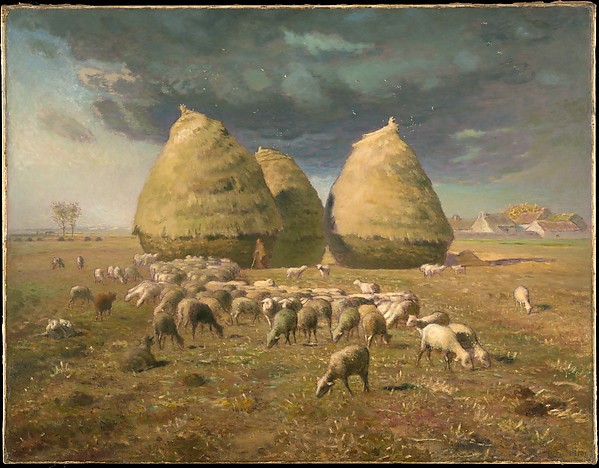
    Haystacks: Autumn, Jean-François Millet, ca. 1874

    Jean François Millet

    Haystacks: Autumn, ca. 1874

    Metropolitan Museum of Art

    Landscape with a Hay Barn and a Flock of Sheep, Rembrandt van Rijn, 1652

    Rembrandt van Rijn

    Landscape with a Hay Barn and a Flock of Sheep, 1652

    Non esposta · National Gallery of Art

    Christ Driving the Money Changers from the Temple, Rembrandt van Rijn, 1635

    Rembrandt van Rijn

    Christ Driving the Money Changers from the Temple, 1635

    Non esposta · National Gallery of Art

    Landscape with a Hay Barn and a Flock of Sheep, Rembrandt van Rijn, 1652

    Rembrandt van Rijn

    Landscape with a Hay Barn and a Flock of Sheep, 1652

    Non esposta · National Gallery of Art

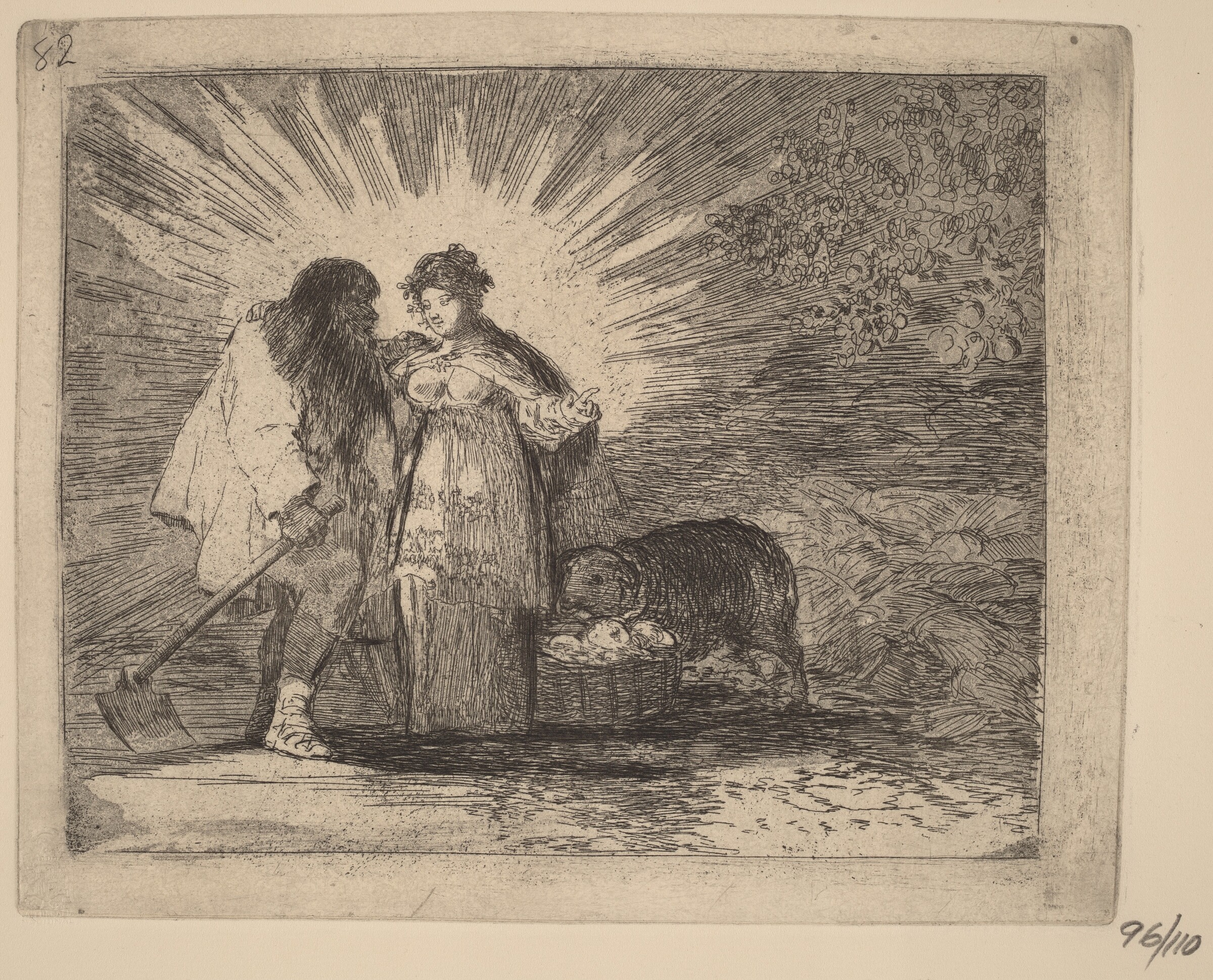
    Esto es lo verdadero (This Is the Truth), Francisco Goya, 1810/1820

    Francisco de Goya

    Esto es lo verdadero (This Is the Truth), 1810/1820

    Non esposta · National Gallery of Art

    The Wolf Turned Shepherd, Marc Chagall, 1927/1930

    Marc Chagall

    The Wolf Turned Shepherd, 1927/1930

    Non esposta · National Gallery of Art

    The Horse Wishing to be Revenged on the Stag, Marc Chagall, 1927/1930

    Marc Chagall

    The Horse Wishing to be Revenged on the Stag, 1927/1930

    Non esposta · National Gallery of Art

    The Shepherd and His Flock, Marc Chagall, 1927/1930

    Marc Chagall

    The Shepherd and His Flock, 1927/1930

    Non esposta · National Gallery of Art