Gustave CourbetFrancia, 1819–1877
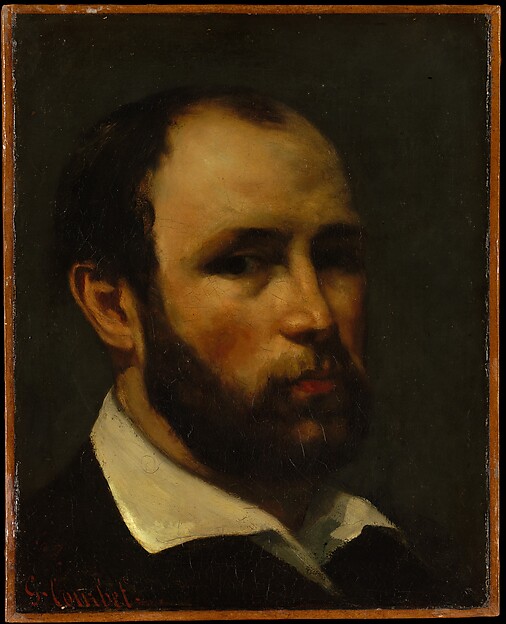
Hector Berlioz
Si può ammirare?
Non si sa

Parigi, Francia
Il proprietario è noto; non si sa se oggi sia esposta.
- Ultimo cambio di stato
- Fonte
- Il museo
Scheda
- Numero di inventario
- RF 2320
In catalogo
Fonti
- Wikidata
- Immagine: Museo d'Orsay — Gustave Courbet · Public domain · Wikimedia Commons
Nel frattempo, nella vita di Gustave Courbet
Tutta la vita1848
Salon of 1848: seven paintings accepted, none sold
In 1848 all seven works Courbet submitted to the jury were shown at the Salon, but he did not manage to sell a single painting.
by 1848
First supporters among younger critics
By 1848 Courbet had gained supporters among the younger critics, the Neo-romantics and Realists, notably Champfleury.
1848
The funeral of his grand-uncle at Ornans
In September 1848 Courbet attended the funeral of his grand-uncle at Ornans. The mourners, the townspeople, later became the models for the huge canvas “A Burial at Ornans”.
1849
Gold medal at the Salon of 1849
Courbet's first Salon success came with “After Dinner at Ornans”, reminiscent of Chardin and Le Nain; it earned him a gold medal and was purchased by the state. The medal exempted his works from jury approval at the Salon until 1857, when the rule changed.
1850
A letter to a friend: “the life of a savage”
In 1850 Courbet wrote to a friend that in so very civilized a society he had to live the life of a savage, to be free even of governments, and to address himself directly to the people, who had his sympathies. He linked his idea of realism in art to political anarchism.
1850–1851
Salon of 1850–1851: “A Burial at Ornans”
At the Salon of 1850–1851 Courbet showed “The Stone Breakers”, “The Peasants of Flagey” and “A Burial at Ornans”: the canvas, about 3 by 6.7 metres, drew both praise and fierce denunciation, with critics accusing him of a deliberate pursuit of ugliness. Courbet became a celebrity, spoken of as a genius, a “terrible socialist” and a “savage”.