ART WIKI32.963 in sala
MappaCollezioneArtistiMuseiMostreRivista
Accedi

ART WIKI

Dove è appeso il capolavoro, e quando si può entrare.

Collezioni: Art Institute of Chicago, Cleveland Museum of Art, Ermitage, Galleria Tret'jakov, Getty Museum, Harvard Art Museums, Hirshhorn Museum and Sculpture Garden, Metropolitan Museum of Art, Minneapolis Institute of Art, Museo del Louvre, Museo Puškin delle belle arti, Museo russo, Museum of Modern Art, National Gallery of Art, National Museum of Asian Art, National Portrait Gallery, Rijksmuseum, Smithsonian American Art Museum, Statens Museum for Kunst, Victoria and Albert Museum, Villa Getty, Whitney Museum of American Art, Catalogo statale del fondo museale russo (274 musei), Europeana (19 musei), Wikidata (6 musei), Paris Musées (12 musei) e Joconde, la banca dati dei musei del Ministero della Cultura francese (495 musei). Le immagini appartengono ai titolari dei diritti.

Sezioni

  • Mappa
  • Ricerca
  • Collezione
  • Capolavori
  • Esposte ora
  • Artisti

Altro

  • Musei e gallerie
  • Mostre
  • Rivista
  • Da dove vengono i dati
  • Privacy e cookie
HomeMappaCatalogo
  1. Collezione/
  2. Minneapolis Institute of Art/
  3. Greeting
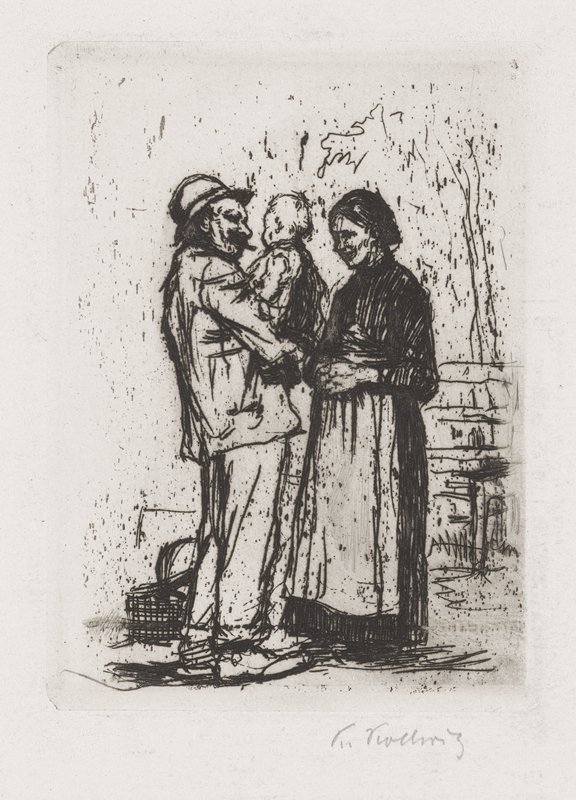
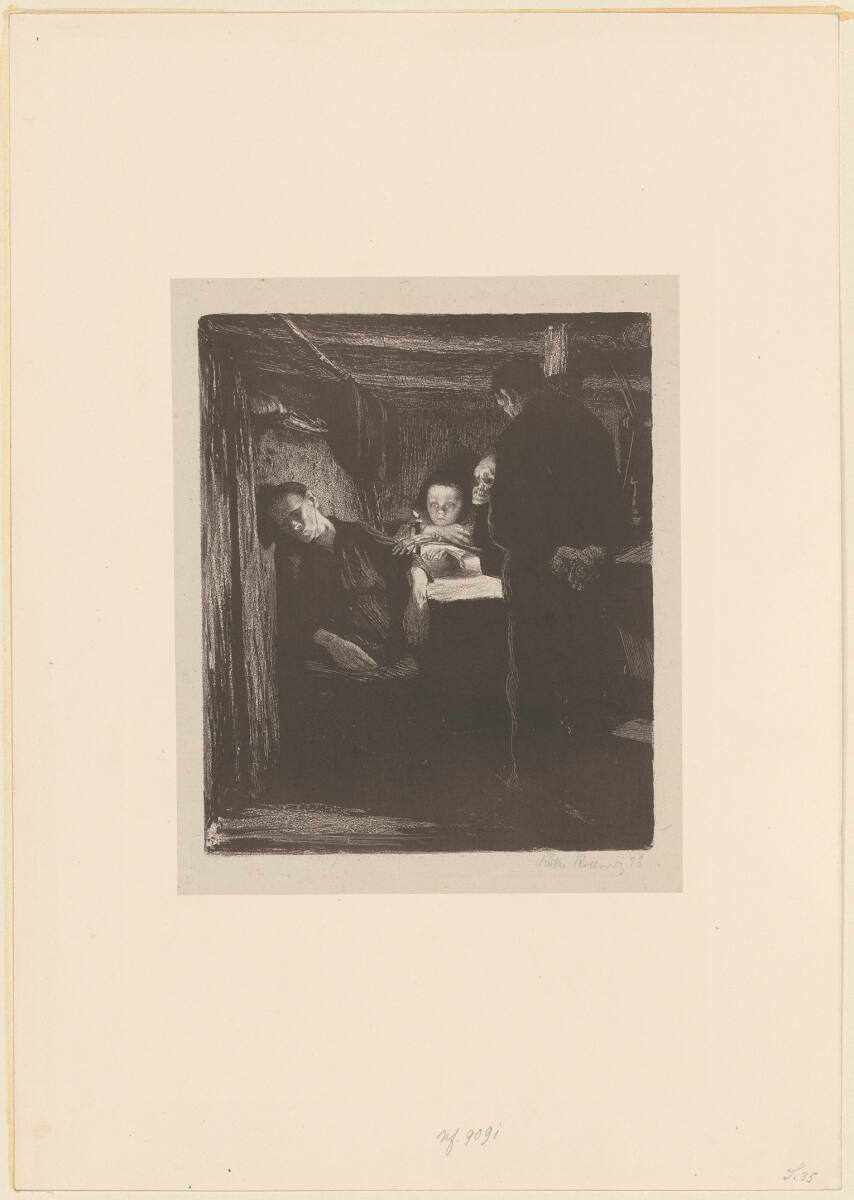
Greeting, Käthe Kollwitz, 1892
Käthe Kollwitz, ritrattoKäthe KollwitzGermania, 1867–1945

Greeting

1892 · Print · 11.75 × 8.89 cm

Si può ammirare?

Al momento non riceve

Minneapolis Institute of Art

Minneapolis, Stati Uniti

Appartiene alla collezione, ma al momento non è esposta.

Verificato
3 giorni fa
Ultimo cambio di stato
25 set 2026
Fonte
Il museo
Sulla mappaPagina del museo

Scheda

1892 · a 25 anni
18671945
Numero di inventario
P.361

In catalogo

StampeAcquaforteImpressionismoXIX secoloGermania

Fonti

  • Minneapolis Institute of Art
  • Immagine: Minneapolis Institute of Art — © Minneapolis Institute of Art

Nel frattempo, nella vita di Käthe Kollwitz

Tutta la vita
  1. 1890

    Back in Königsberg: her first studio

    In 1890 she returned to Königsberg, rented her first studio and went on depicting the harsh labour of the working class, a subject that inspired her work for years.

  2. 1890

    Her first etchings

    Her first etchings date from 1890, the technique in which she would later make sheets of The Weavers and the whole Peasant War cycle.

  3. 1891

    Marries the physician Karl Kollwitz

    She married Karl Kollwitz, a doctor who tended the poor of Berlin; the couple moved into a large apartment that remained her home until it was destroyed in the Second World War. Her husband’s nearby practice supplied motifs from the lives of workers, which, in her own words, she found beautiful.

  4. 13 giugno 1891

    Married: Karl Kollwitz

  5. 1892

    Birth of her son Hans

    In 1892 Käthe and Karl Kollwitz’s elder son, Hans, was born.

  6. 1892–1896

    Hauptmann’s “The Weavers” inspires a new cycle

    Between the births of her sons Hans and Peter she saw Gerhart Hauptmann’s play The Weavers, about the failed revolt of the Silesian weavers in Langenbielau in 1844. It inspired her to drop a series of etchings she had planned to illustrate Émile Zola’s Germinal and to produce a cycle on the weavers instead.
Altre opere di Käthe Kollwitz

Tutte le opere
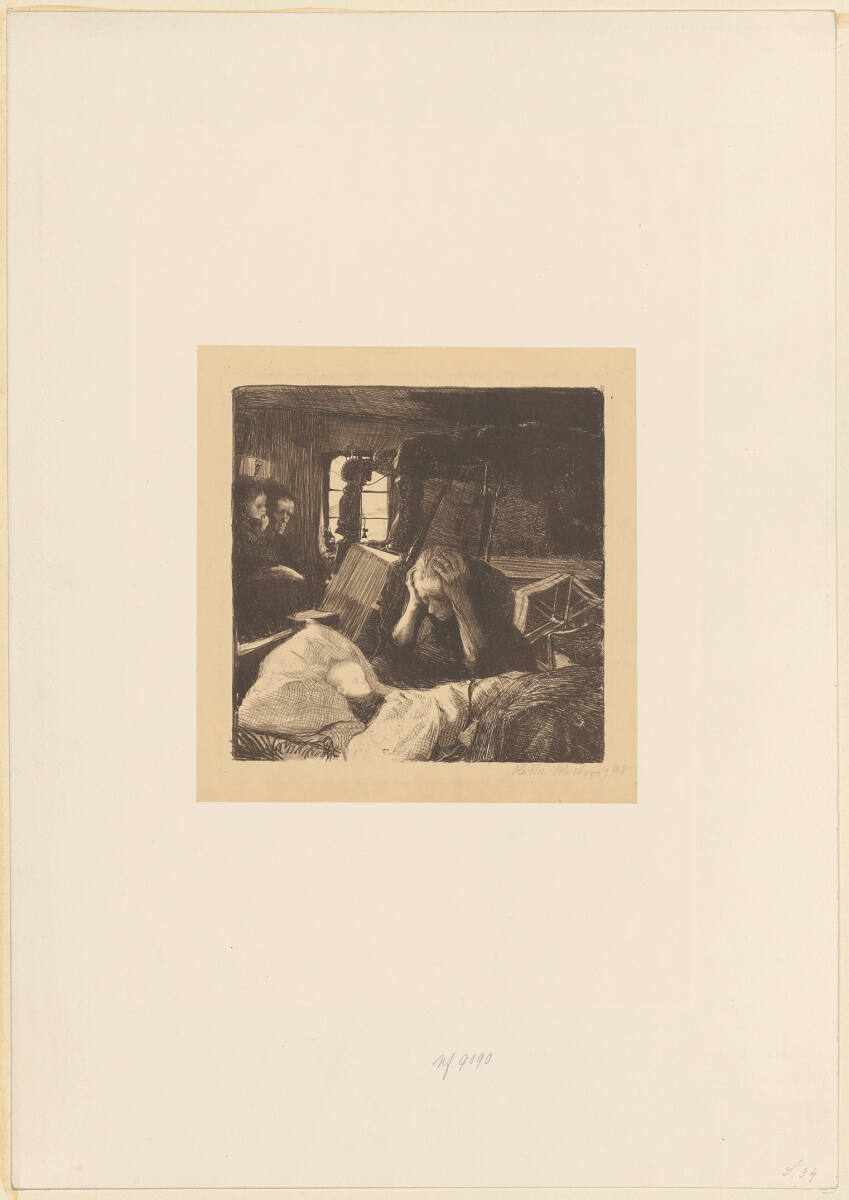
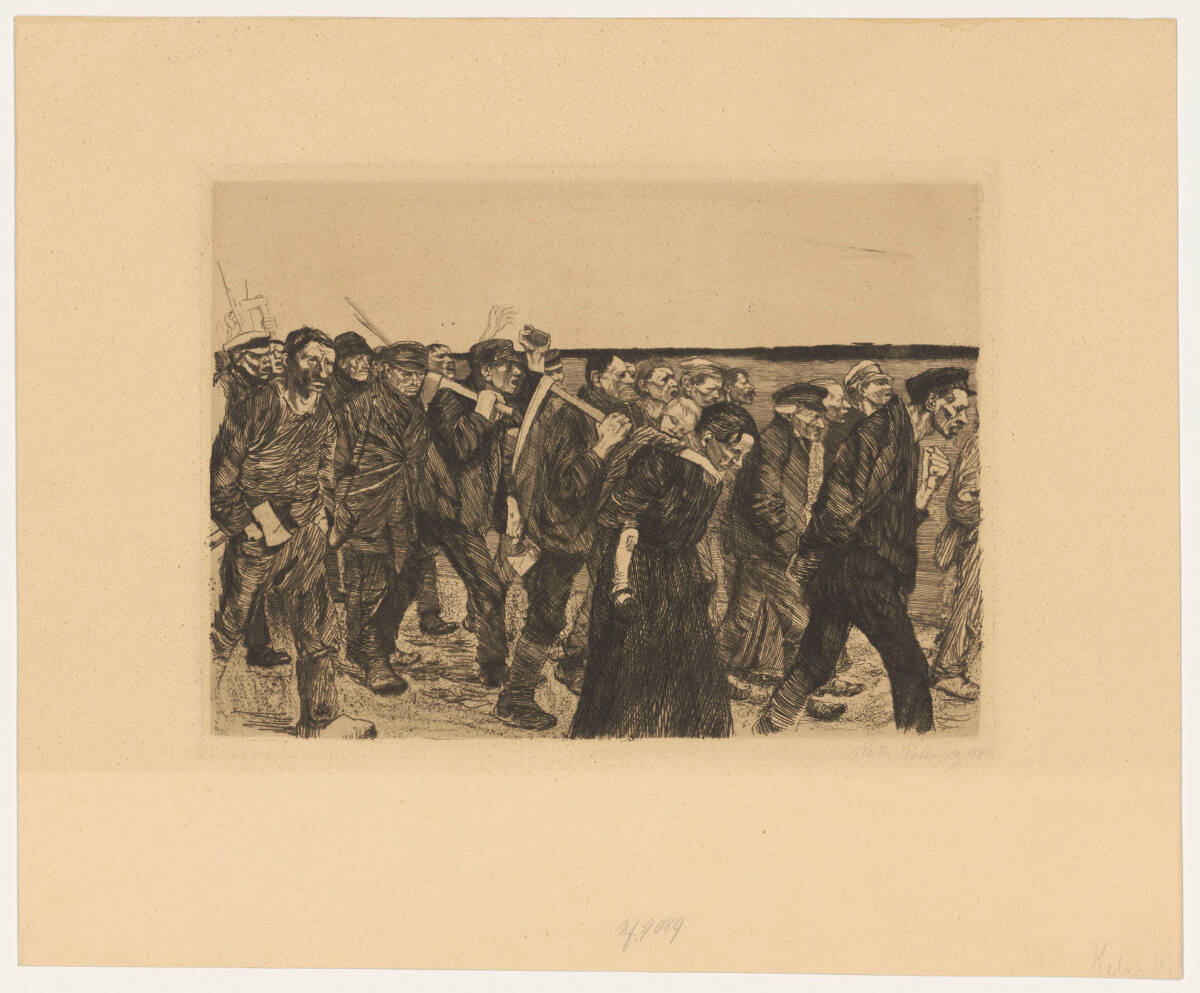
Weberzug (Ein Weberaufstand, Blatt 4), Käthe Kollwitz

Weberzug (Ein Weberaufstand, Blatt 4)

Albertina

Tod (Ein Weberaufstand; Blatt 2), Käthe Kollwitz

Tod (Ein Weberaufstand; Blatt 2)

Albertina

Not (Ein Weberaufstand; Blatt 1), Käthe Kollwitz

Not (Ein Weberaufstand; Blatt 1)

Albertina

Beim Arzt (Drei Flugblätter gegen den Wucher, Blatt 3), Käthe Kollwitz

Beim Arzt (Drei Flugblätter gegen den Wucher, Blatt 3)

Albertina

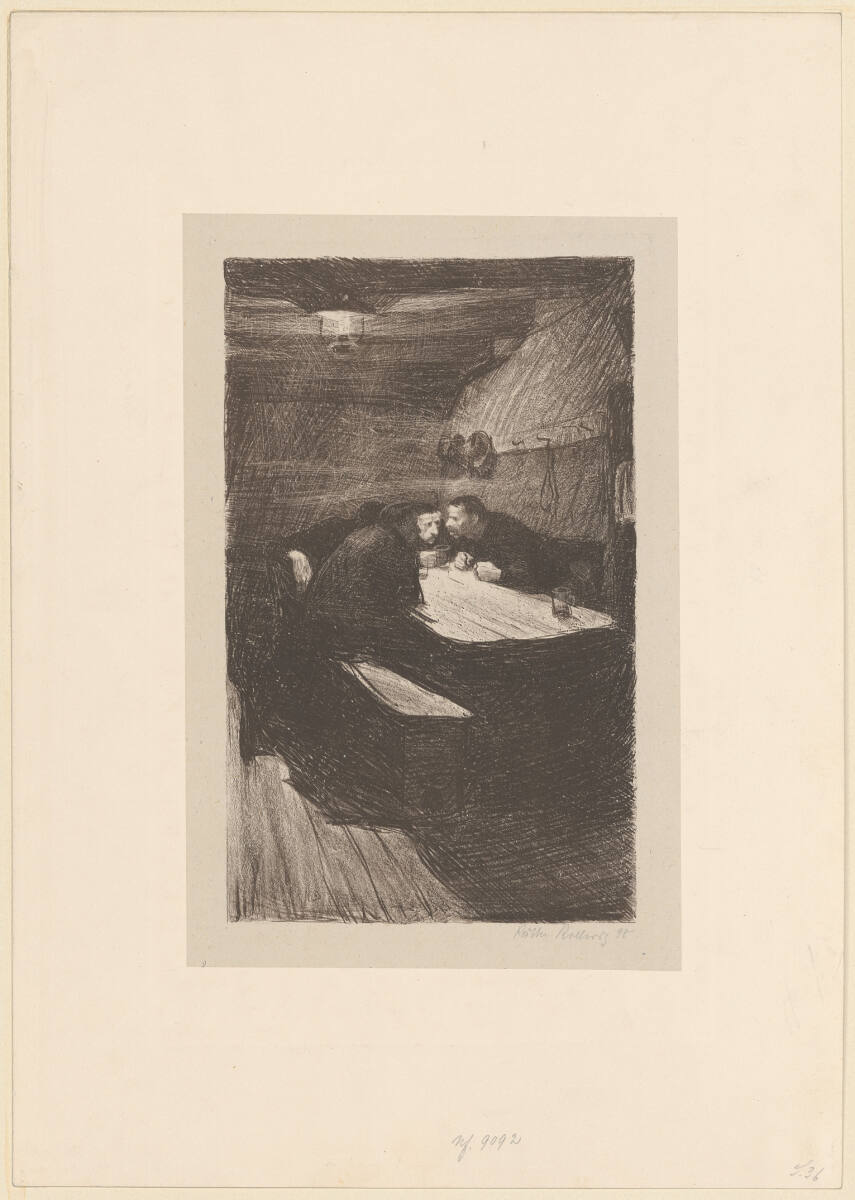
Beratung (Ein Weberaufstand; Blatt 3), Käthe Kollwitz

Beratung (Ein Weberaufstand; Blatt 3)

Albertina

Die Carmagnole, Käthe Kollwitz

Die Carmagnole

Albertina

Zertretene, Käthe Kollwitz

Zertretene

Kupferstich-Kabinett

Selbstbildnis und Studie zu einer Szene aus Germinal, Käthe Kollwitz

Selbstbildnis und Studie zu einer Szene aus Germinal

Kupferstich-Kabinett

Sotto lo stesso tetto: Minneapolis Institute of Art

Pagina del museo
Olive Trees, Vincent van Gogh, 1889

Vincent van Gogh

Olive Trees, 1889

Grainstack, Sun in the Mist, Claude Monet, 1891

Claude Monet

Grainstack, Sun in the Mist, 1891

Lucretia, Rembrandt van Rijn, 1666

Rembrandt van Rijn

Lucretia, 1666

Self-Portrait with Dr. Arrieta, Francisco José de Goya y Lucientes, 1820

Francisco de Goya

Goya curato dal dottor Arrieta, 1820

Study for Improvisation V, Vassily Kandinsky, 1910

Vasily Kandinsky

Study for Improvisation V, 1910

Tahitian Landscape, Paul Gauguin, 1891

Paul Gauguin

Tahitian Landscape, 1891

Chestnut Trees at Jas de Bouffan, Paul Cézanne, c. 1885–86

Paul Cézanne

Chestnut Trees at Jas de Bouffan, c. 1885–86

The Union of England and Scotland (Charles I as the Prince of Wales), Peter Paul Rubens, 1633–34

Peter Paul Rubens

The Union of England and Scotland (Charles I as the Prince of Wales), 1633–34