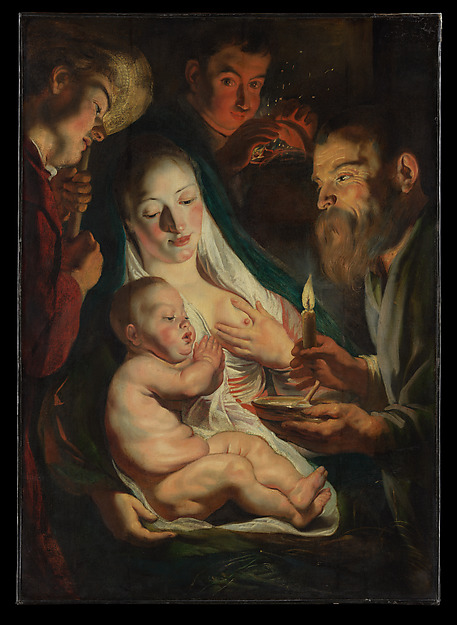
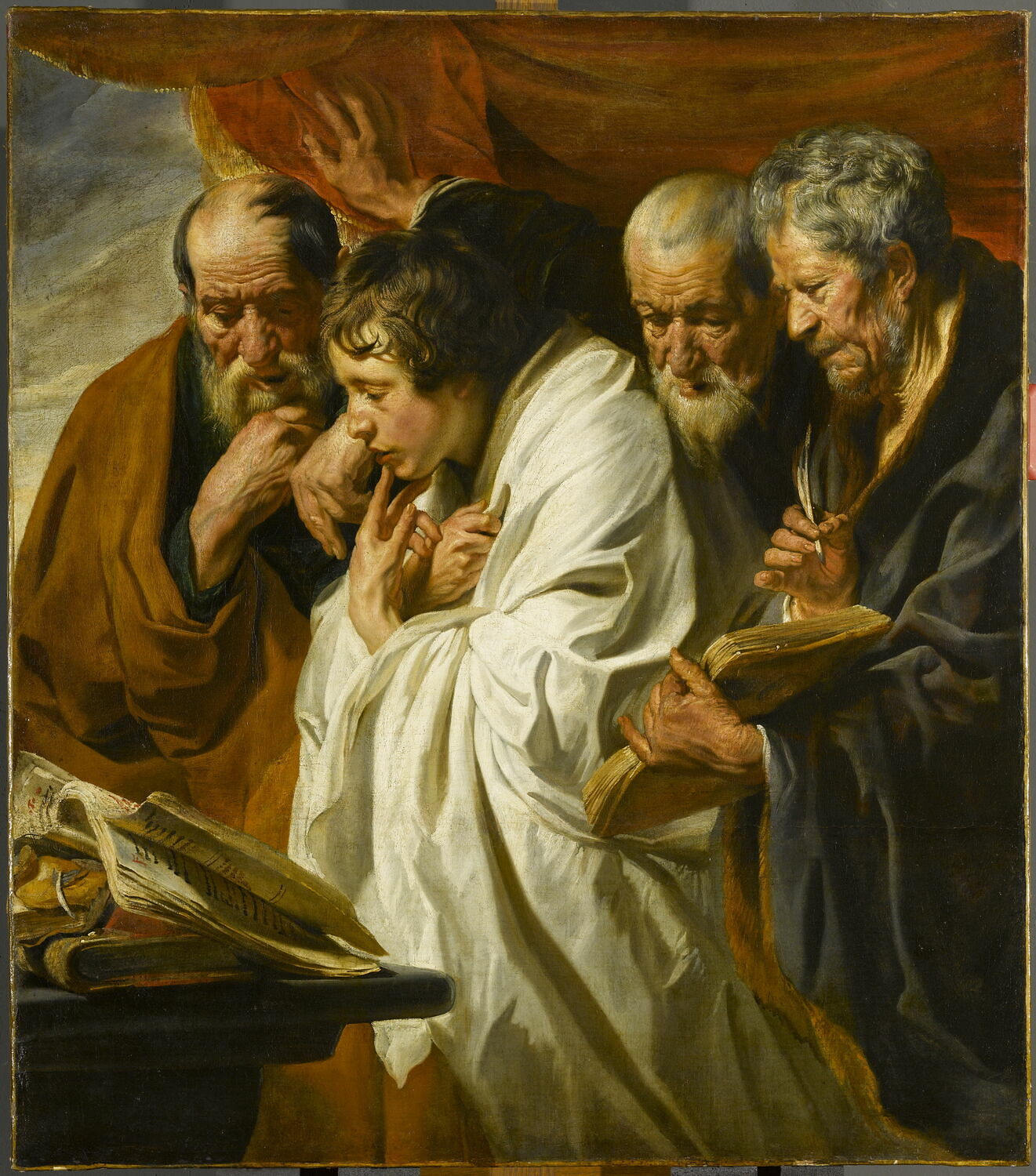
Jacques JordaensFiandre, 1593–1678
Graflegging
Si può ammirare?
Non si sa: il museo mantiene il riserbo

Rijksmuseum
Amsterdam, Paesi Bassi
Il proprietario è noto. Se oggi sia esposta, il museo non lo dice, e a indovinare non ci hanno insegnato.
- Fonte
- I dati di collezione del museo stesso
Scheda
- Numero di inventario
- RP-T-00-437
What it shows
Fonti
- Rijksmuseum: the museum's own open data · acquisita 5 giorni fa
- Immagine: Rijksmuseum — public domain
Nel frattempo, nella vita di Jacques Jordaens
Tutta la vita1621–1667
His workshop: fifteen pupils in the guild records
Between 1621 and 1667 the guild registered fifteen pupils with Jordaens (the best known being Jan Boeckhorst), and six more are named in court documents; his son Jacob and his cousin Arnoldus also trained with him. His fame drew foreigners: after 1642 the Polish painter Aleksander Jan Tricius became his pupil, and in 1645 Queen Christina of Sweden meant to send her protégé Georg Waldau, but the threat of war in Flanders prevented it.
1651–1658
Fined for “heretical” writings
The schout (chief law officer) of Antwerp fined Jordaens 200 pounds and 15 shillings for his “scandalous”, that is heretical, writings (other accounts give 1651–1659 and speak of “heretical” works). As a famous master he was tolerated as long as he did not speak openly on matters of faith.
1652–1678
Late years: a grey-blue palette
In the final years of his career his creative powers declined: he abandoned vibrant colours for a grey-blue palette with dull brown accents and applied paint so thinly that the canvas showed through. The exceptions were the religious paintings made after his conversion to Protestantism and the Cupid and Psyche series for his own house.
1659
Death of his wife Catharina
Catharina was buried in the Protestant cemetery at Putte, a village just north of the present Belgian border; the painter and his daughter Elisabeth would later be buried there under a single tombstone.
1661
Lunettes for Amsterdam's new Town Hall
Already an old man, Jordaens, along with other painters, was commissioned to paint large lunettes for the newly built Amsterdam Town Hall: two biblical subjects (“David and Goliath”, “Samson Defeats the Philistines”) and two scenes from Dutch history (“A Roman Camp under Attack by Night”, “Peace between the Romans and the Batavians”).