 Nicholas RoerichRussia, 1874–1947
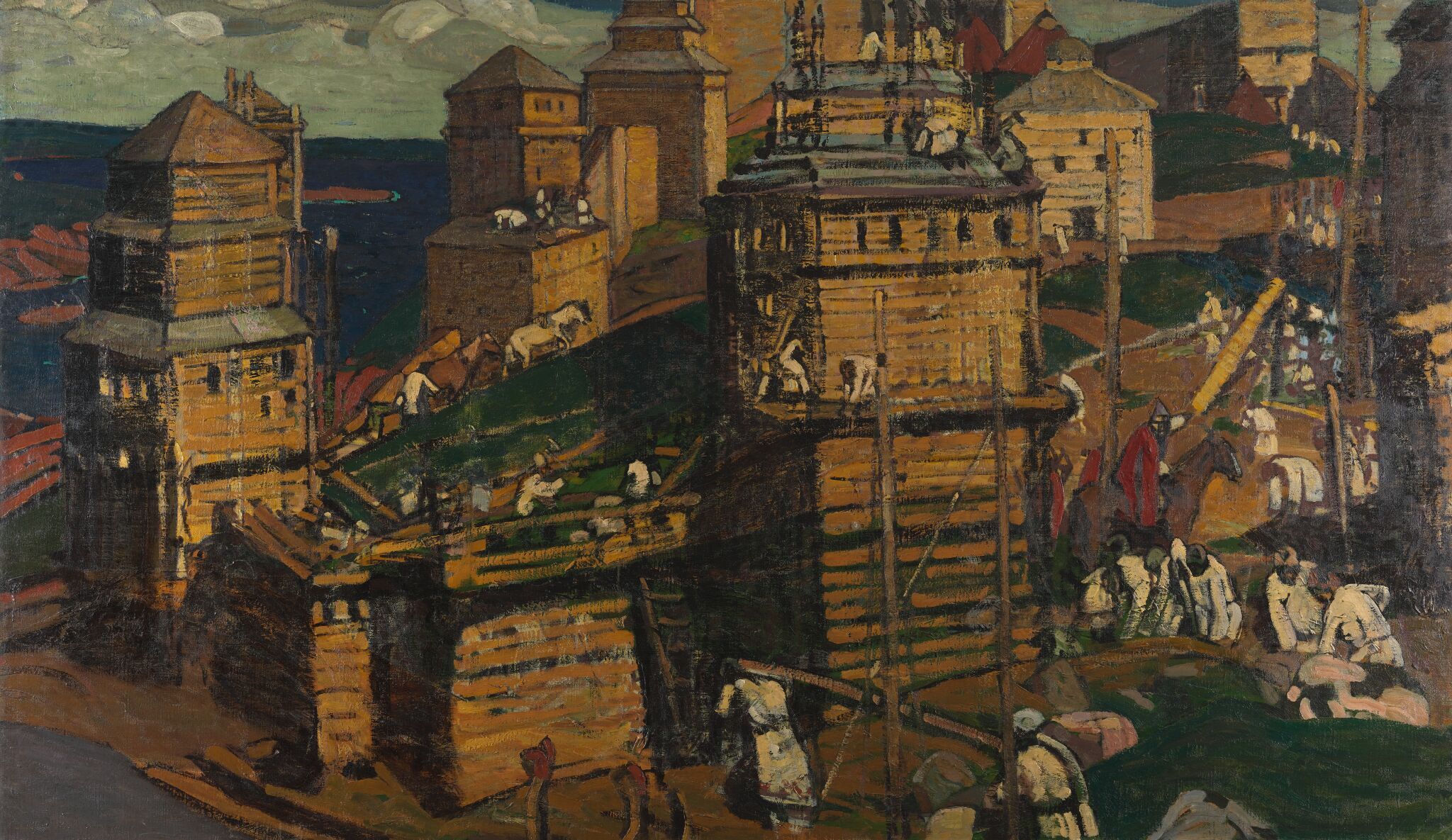
Город строят
Si può ammirare?
Non si sa

Galleria Tret'jakov
Mosca, Russia
Il proprietario è noto; non si sa se oggi sia esposta.
- Fonte
- Il museo
Sul dipinto
Con le parole del museo — in russo
Ученик Архипа Ивановича Куинджи в Петербургской Академии художеств, Рерих продолжил свое художественное образование в Академии Кормона в Париже, а по возвращении в Россию был избран на должность секретаря Императорского общества поощрения художеств, которое через несколько лет возглавил. При этом он был страстным археологом, знатоком старины, стремящимся в новом, ХХ веке обратить взоры художественной публики на седое прошлое родной страны и познакомить иностранных зрителей с Русью доисторической. «Я хочу выхолить русскую живопись, – писал он основателю художественного объединения «Мир искусства» Александру Бенуа, – вычистить ее и, главное, поднести ее Западу, возвеличить ее на Западе».
Continua a leggere
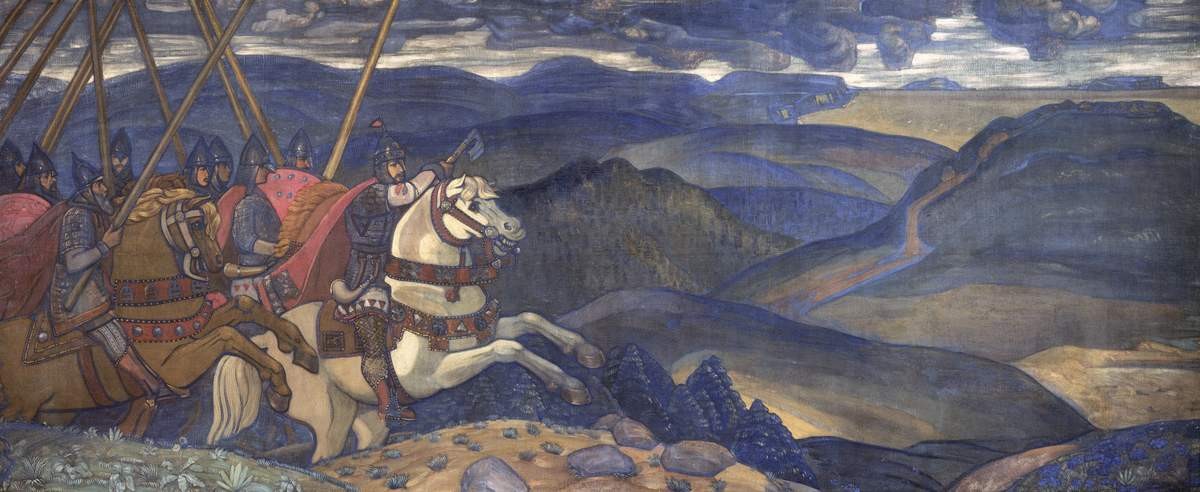
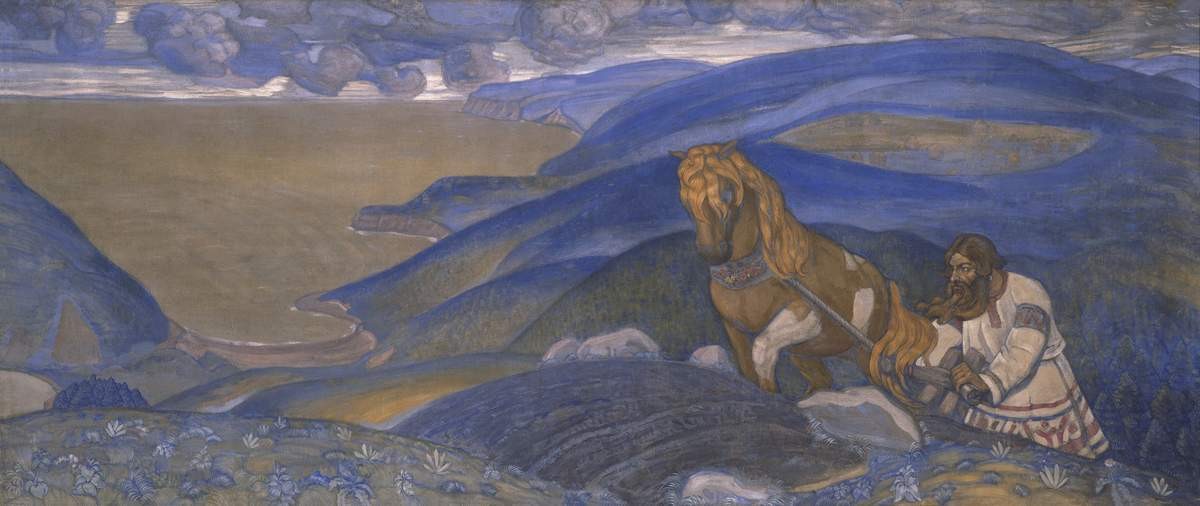
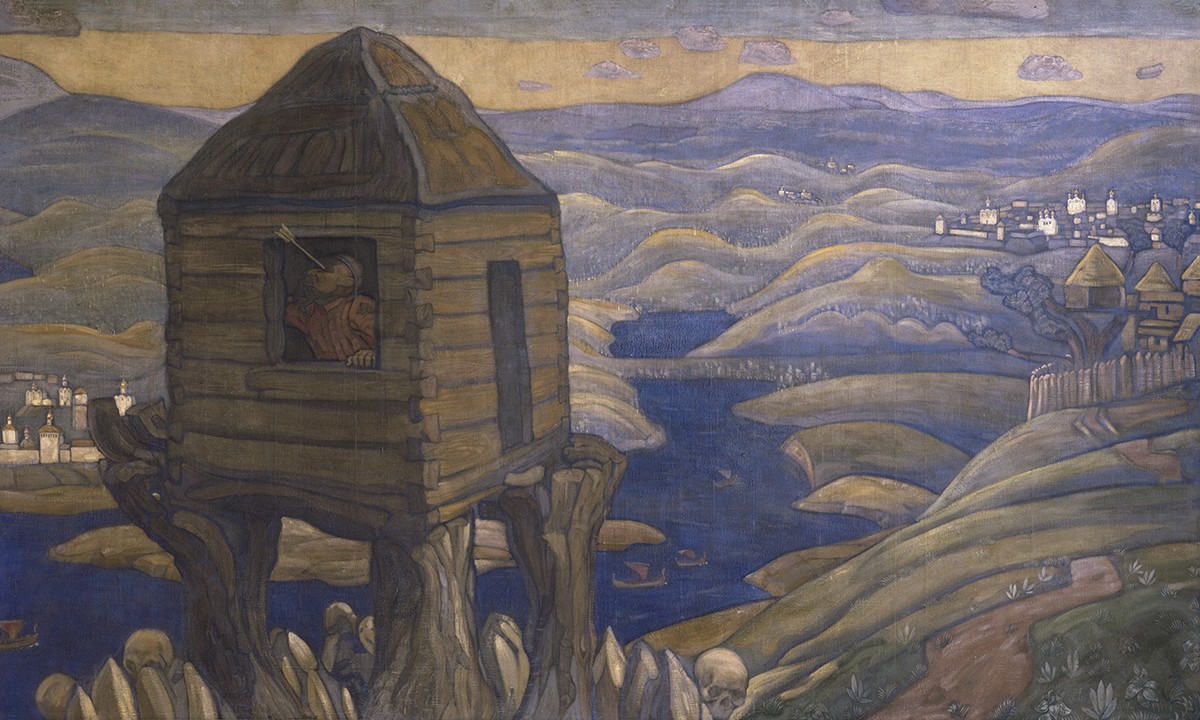
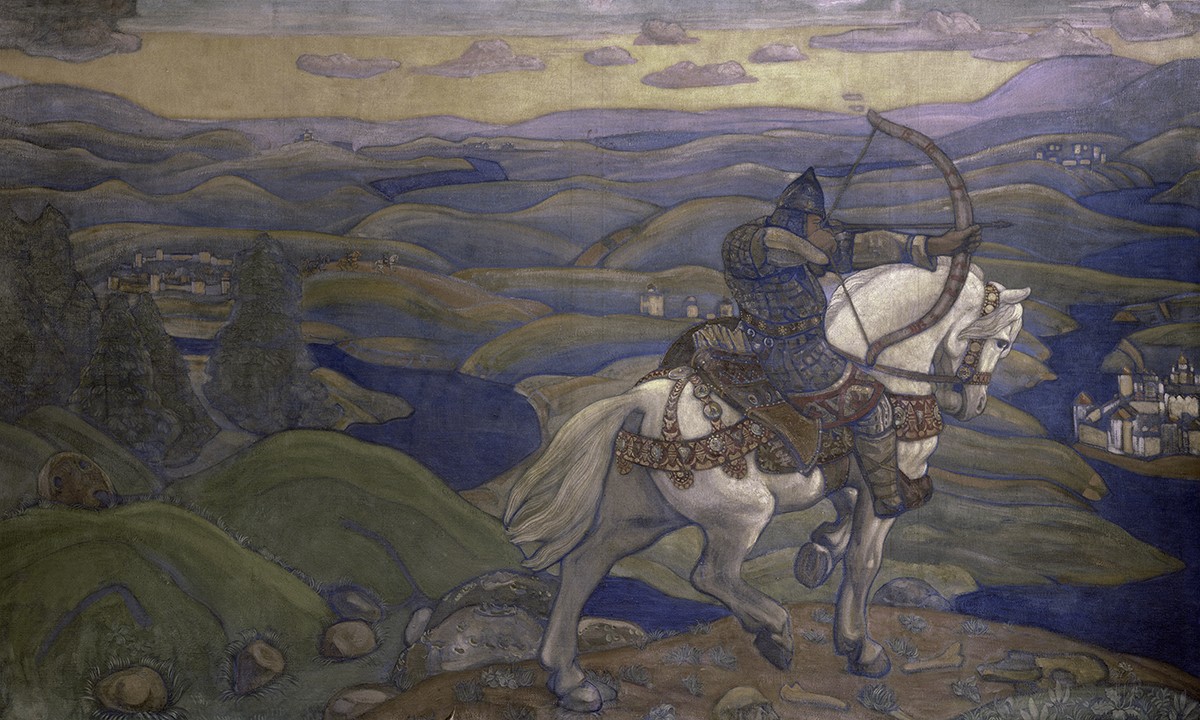
Подчас высокообразованные люди к восприятию картин подходят совершенно по обывательски. Вот и адвоката Сергея Муромцева, будущего Председателя Первой государственной думы, беспокоил вопрос о том, так ли в старину строили города. На его недоумение Илья Остроухов, художник, коллекционер и член Совета Третьяковской галереи, отвечал, что верит рериховской трактовке. Строительство города, по мнению художника, должно было начинаться не с княжеских палат, а с оборонительных стен и дозорных башен. Возможно, так считал князь, который изображен на коне справа от возводимой башни. Среди золотистого цвета деревянных построек, слегка пожухлой травы, свинцового неба и белых рубах мужиков-строителей красное пятно княжеского плаща смотрится весомой декоративной деталью.
А светлые холщовые рубахи строителей, ритмически повторяющиеся по мере движения взгляда по полотну, – деталь, наделяющая картину высоким смыслом. Чистая одежда, как и чистые помыслы, – это именно то, что определяет созидательную работу древних мастеров. Почерпнутые в археологических экспедициях богатейшие находки, следы материальной культуры былых времен, позволяли Николаю Константиновичу реконструировать, домысливать «дела давно минувших дней».
«Народ должен навсегда оборониться от пошлости и дикости, должен из обломков и самородков, с любовью найденных, слагать Кремль великой свободы, высокой красоты и глубокого знания», – писал художник.
Galleria Tret'jakov
Scheda
- Numero di inventario
- 1618
In catalogo
Fonti
- Galleria Tret'jakov
- Immagine: Galleria Tret'jakov — © State Tretyakov Gallery
Nel frattempo, nella vita di Nicholas Roerich
Tutta la vitac. 1898 – 1901
Working for the Society for the Encouragement of the Arts
At 24 Roerich becomes assistant director of the museum of the Imperial Society for the Encouragement of the Arts and at the same time assistant editor of the magazine “Art and Art Industry”; three years later he becomes the Society's secretary.
1898–1903
Lecturer at the Archaeological Institute
From 1898 Roerich works with the St Petersburg Archaeological Institute: he teaches a course titled “Artistic Technique as Applied to Archaeology”, directs training excavations and compiles the “Archaeological Map of St Petersburg Province”. He digs in the provinces of St Petersburg, Pskov, Novgorod, Tver, Yaroslavl and Smolensk.
28 October 1901
Marries Elena Shaposhnikova
Roerich and Elena Ivanovna are married in the church of the Imperial Academy of Arts; they will go through life hand in hand, complementing each other creatively and spiritually.
3 agosto 1902
Son born: George de Roerich
1903–1904
A “journey through antiquity”: over forty towns
With his wife Roerich visits more than forty towns with ancient monuments to study the roots of Russian culture. The result is about 90 architectural studies, a collection of photographs of old Russia and articles in which he is among the first to raise the question of the great artistic value of early Russian icon painting and architecture.
1904
Talashkino, Maria Tenisheva's estate
After touring the towns along the Volga and visiting Mozhaisk and the Savvino-Storozhevsky Monastery, Roerich ends his trip at Talashkino near Smolensk, the estate of Maria Tenisheva. Together with Malyutin, Vrubel, Benois, Korovin and Repin he puts into practice projects to revive ancient Russian traditions and folk crafts; his collaboration with Tenisheva will last until 1917 and their friendship until her death.