Sandro BotticelliItalia, 1445–1510
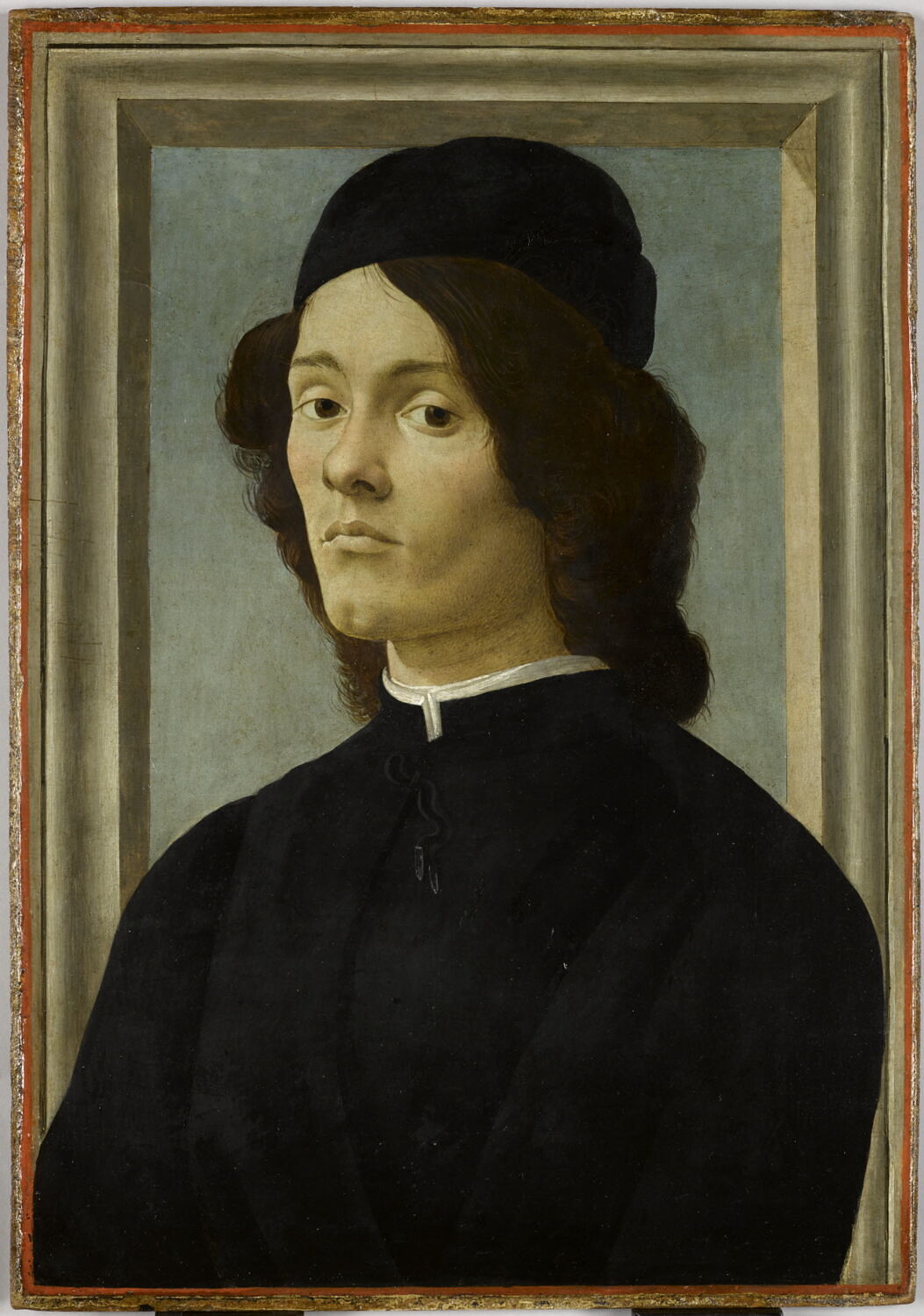
Giuliano de' Medici
Si può vedere?
Sì, esposta ora
Dove si trova «Giuliano de' Medici» oggi? National Gallery of Art, Sala 7 · Edificio Ovest, piano principale, Washington. Sì, esposta ora. Verificato 29 settembre 2026.

Aperto· fino alle 17:00
Esposta al pubblico.
- Verificato
- Ultimo cambio di stato
- Fonte
- Il museo
Sul dipinto
Il Ritratto di Giuliano de' Medici è un dipinto a tempera su tavola (75,6x52,6 cm) di Sandro Botticelli, databile al 1478-1480 circa e conservato nella National Gallery of Art di Washington.
Esistono tre versioni di questo dipinto: una conservata a Berlino, una a Bergamo e una a Washington.
Scheda
- Numero di inventario
- 1952.5.56
Che cosa raffigura
In catalogo
Fonti
- National Gallery of Art
- Immagine: National Gallery of Art — Museum open access
Nella vita di Sandro Botticelli
Tutta la vita26 April 1476
Death of Simonetta Vespucci
On 26 April 1476 Simonetta Vespucci died suddenly of consumption — according to a number of scholars Botticelli's secret love and the model for many of his paintings; he never married. Later the painter asked to be buried at Simonetta's feet.
1478–1479
The Pazzi conspiracy and the fresco of the executions
After the Pazzi conspiracy of 1478, in which Giuliano de' Medici was assassinated, Botticelli painted for Florence's customs house a large fresco of the hanging of the plot's leaders, a “pittura infamante” with which Florence humiliated traitors. It was his first major fresco commission; the figure of Francesco Salviati, Archbishop of Pisa, was removed in 1479 after protests from the Pope.
1480s
Lorenzo's circle: Ficino, Pico, Poliziano
Botticelli frequented Lorenzo the Magnificent's Platonic Academy, where he met the humanists, poets and philosophers Marsilio Ficino, Pico della Mirandola and Angelo Poliziano; the influence of Neoplatonism shows in his secular paintings.
1481
Summoned to Rome: the Sistine Chapel
In 1481 Pope Sixtus IV summoned Botticelli and other prominent Florentine and Umbrian artists to fresco the walls of the newly completed Sistine Chapel; the Florentine contribution is thought to be part of a peace deal between Lorenzo de' Medici and the papacy. Botticelli painted three of the fourteen large scenes — the Temptations of Christ, the Youth of Moses and the Punishment of the Sons of Corah — and a large share of the imagined portraits of popes.
1481
A printed Dante illustrated from Botticelli's drawings
The first printed Dante of 1481 carried engravings by the goldsmith Baccio Baldini after Botticelli's drawings: one engraving was planned for each of the hundred cantos, but only 19 were engraved and most copies have just two or three. A leading painter's attempt to design the illustrations of a printed book was unprecedented, but it seems to have been something of a flop.
20 February 1482
His father's death and the return from Rome
On 17 February 1482 Botticelli's contract for the Sistine Chapel was extended, but three days later his father died and the painter had to return to Florence.