Gilbert StuartStati Uniti, 1755–1828
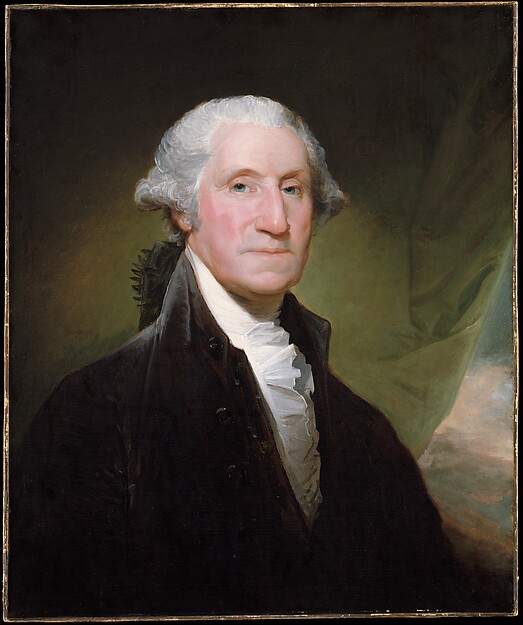
George Washington (1732-1799)
Si può ammirare?
Al momento non riceve

Harvard Art Museums
Cambridge, Stati Uniti
Appartiene alla collezione, ma al momento non è esposta.
- Verificato
- Ultimo cambio di stato
- Fonte
- I dati di collezione del museo stesso
About the painting
Stuart created more than a hundred portraits of George Washington. Scholars group them into three types, named for their original owners: the unfinished “[Boston] Athenaeum” portraits, showing the left side of Washington’s face (such as the image on the U.S. dollar); the Samuel “Vaughan” portraits, which show the right side of Washington’s face; and the full-length “Lansdowne” portraits. In this example of the Vaughan type, the second-term president looks majestic and vigorous in his advanced years. He is positioned in three-quarter profile against a sweeping curtain that symbolizes state authority. His hair, styled in what’s called a soldier’s queue and tied with a sawtooth bow, appears freshly cut and powdered. The upturned collar of his velvet suitcoat projects height and wealth. The portrait represents Washington as an august actor on the world stage and suggests how gender, race, and visual scale can engage and inform ideologies of power.
Harvard Art Museums
Scheda
- Numero di inventario
- H631
In catalogo
Fonti
- Harvard Art Museums: the museum's own open data · acquisita 7 giorni fa
- Immagine: Harvard Art Museums — © President and Fellows of Harvard College
Nel frattempo, nella vita di Gilbert Stuart
Tutta la vita1793
Returns to the United States to paint Washington
After 18 years in Britain and Ireland, leaving numerous unfinished paintings behind, Stuart returns with a plan to paint a portrait of Washington, have an engraver reproduce it and support his family from the sale of the engraving. Settling briefly in New York, he seeks commissions from influential people who could bring him to Washington’s attention.
1794
Paints John Jay and gets a letter to Washington
His portrait of the statesman John Jay brought Stuart a letter of introduction to Washington.
1795
Washington sits for Stuart
Later that year Washington posed for him. Stuart painted him in a series of iconic portraits, each of which brought a demand for copies and kept him busy and highly paid for years.
1795
Opens a studio near Philadelphia
In 1795 he moves to Germantown, a suburb of Philadelphia, and opens a studio there. In his Philadelphia years he also painted the Spanish ambassador Josef Jaudenes, who commissioned a portrait for his wedding to an American woman.