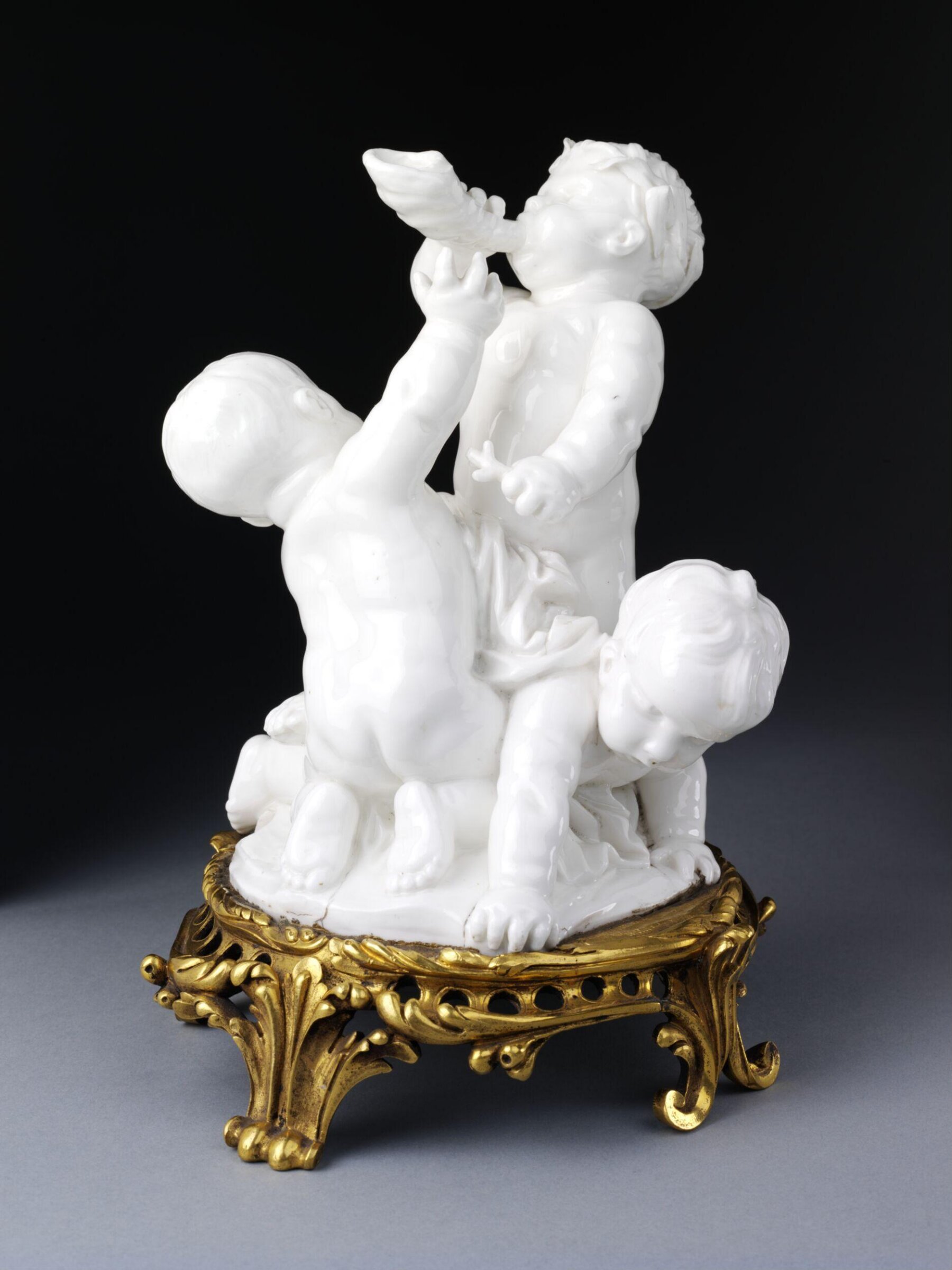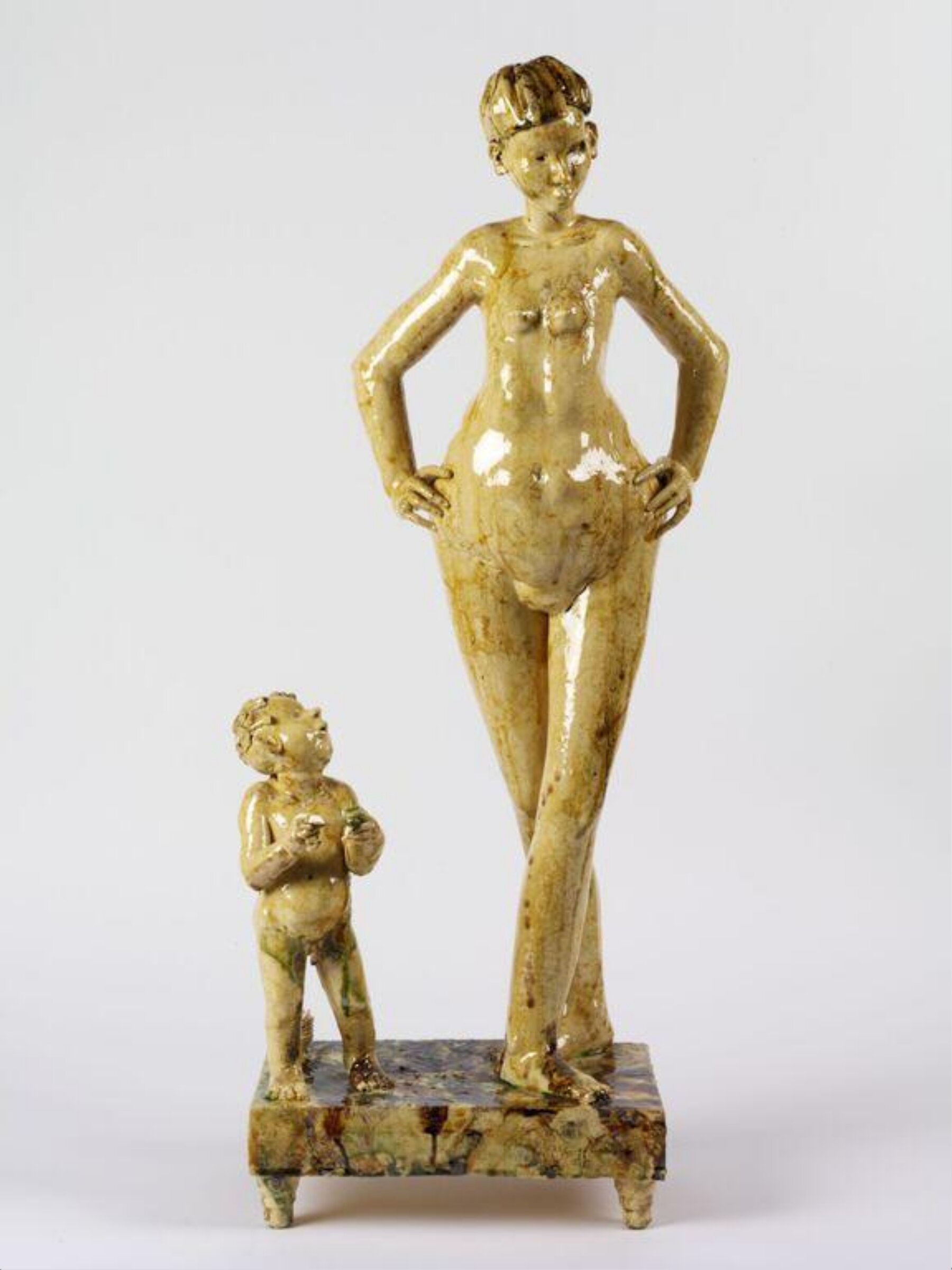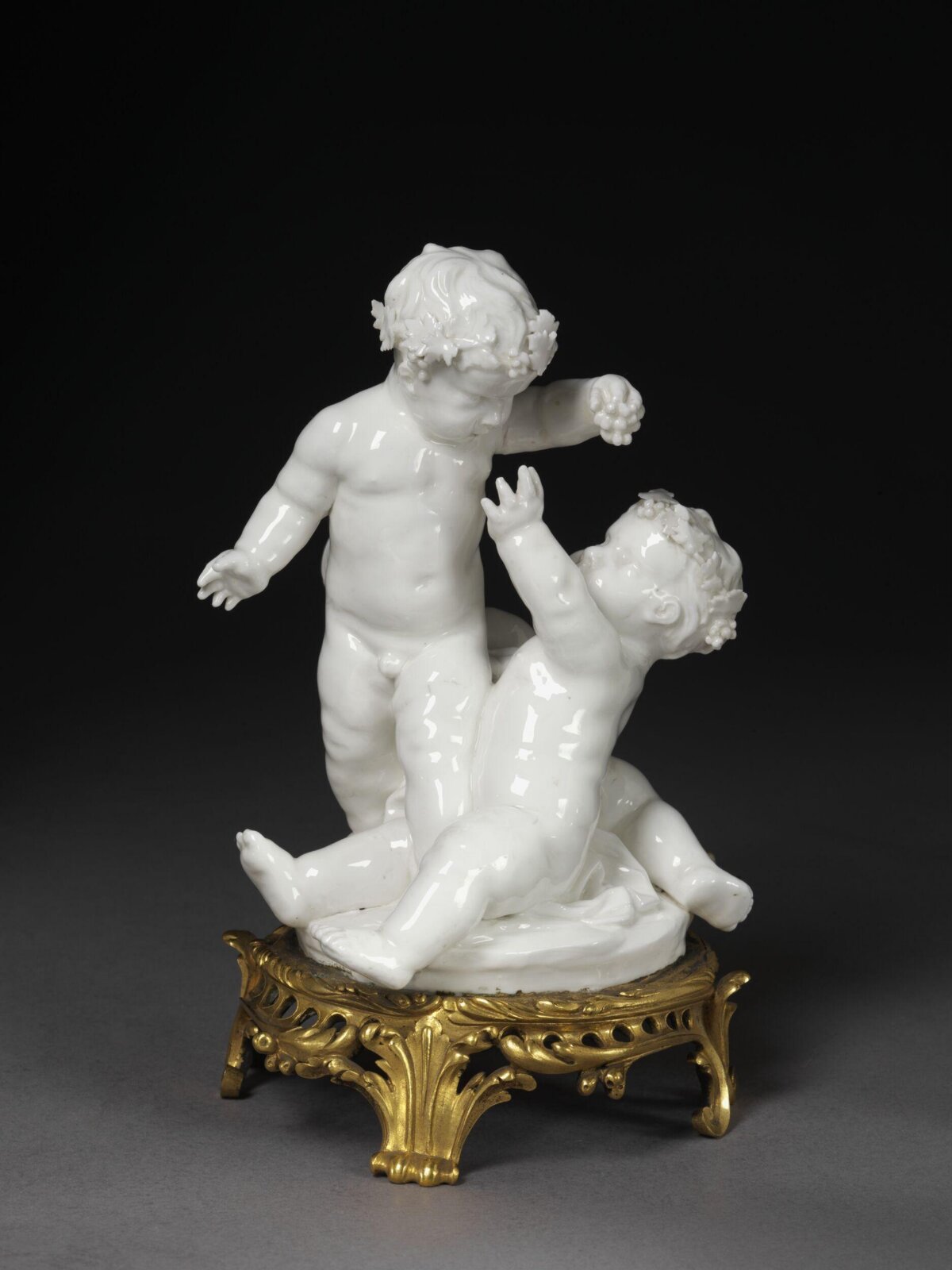
Figure group
Si può vedere?
Sì, esposta ora
Dove si trova «Figure group» oggi? Victoria and Albert Museum, Ceramics, Room 139, The Curtain Foundation Gallery, Londra. Sì, esposta ora. Verificato 25 settembre 2026.

Chiuso· apre alle 10:00
Esposta al pubblico.
- Verificato
- Ultimo cambio di stato
- Fonte
- Il museo
Sulla scultura
This group and its pair 799&A-1882 are among the earliest sculptural figure groups produced by the Vincennes porcelain factory. The models have been traced in the factory documents by Sèvres Archivist Tamara Préaud as the work of sculptor Louis-Félix de La Rue, modelled after designs by François Boucher.
Leggi
The Vincennes porcelain factory had a link to the French crown from the start as it was established in about 1740 in the semi-abandoned royal fortress of the château de Vincennes to the east of Paris. A group of porcelain specialists devoted themselves there to solving the technical challenges of porcelain production, as huge sums were paid by wealthy aristocrats for this glassy white substance which, up to then, was mostly imported from East Asia or the Meissen factory in what is now Germany. During the early 1740s the majority of the Vincennes factory's products were probably experimental as the porcelain body was still being perfected and different enamel colours invented. In 1745 however, they secured a royal 'privilège' which granted them the exclusive right to produce porcelain ‘in Meissen style’ in France.
As the wording suggests, the factory's earliest productions were indebted to the prestigious Meissen factory. The factory's repertoire quickly evolved however, from the emulation of East Asian or Meissen examples to incorporate the latest styles used in French gilt- bronze, woodcarving and decorative painting. The financial support and patronage of King Louis XV and his mistress, Madame de Pompadour, enabled Vincennes to secure the best technicians, artists, sculptors and designers. Jean-Claude Duplessis (director of models, 1748-74), Jean-Jacques Bachelier (director of decoration, 1751-93), Etienne-Maurice Falconet (director of sculpture, 1757-66), and the court painter François Boucher, all played a central role in the development of this entirely new French art form. By 1756 the factory had outgrown its workshops in the old château and it transferred to specially constructed premises at Sèvres (south-west of Paris). In 1759 the king purchased the factory outright and remarkably the Sèvres porcelain manufactory continues in production to the present day.
Victoria and Albert Museum
Scheda
- Numero di inventario
- 799A-1882
Che cosa raffigura
In catalogo
Fonti
- Victoria and Albert Museum
- Immagine: Victoria and Albert Museum — © Victoria and Albert Museum, London