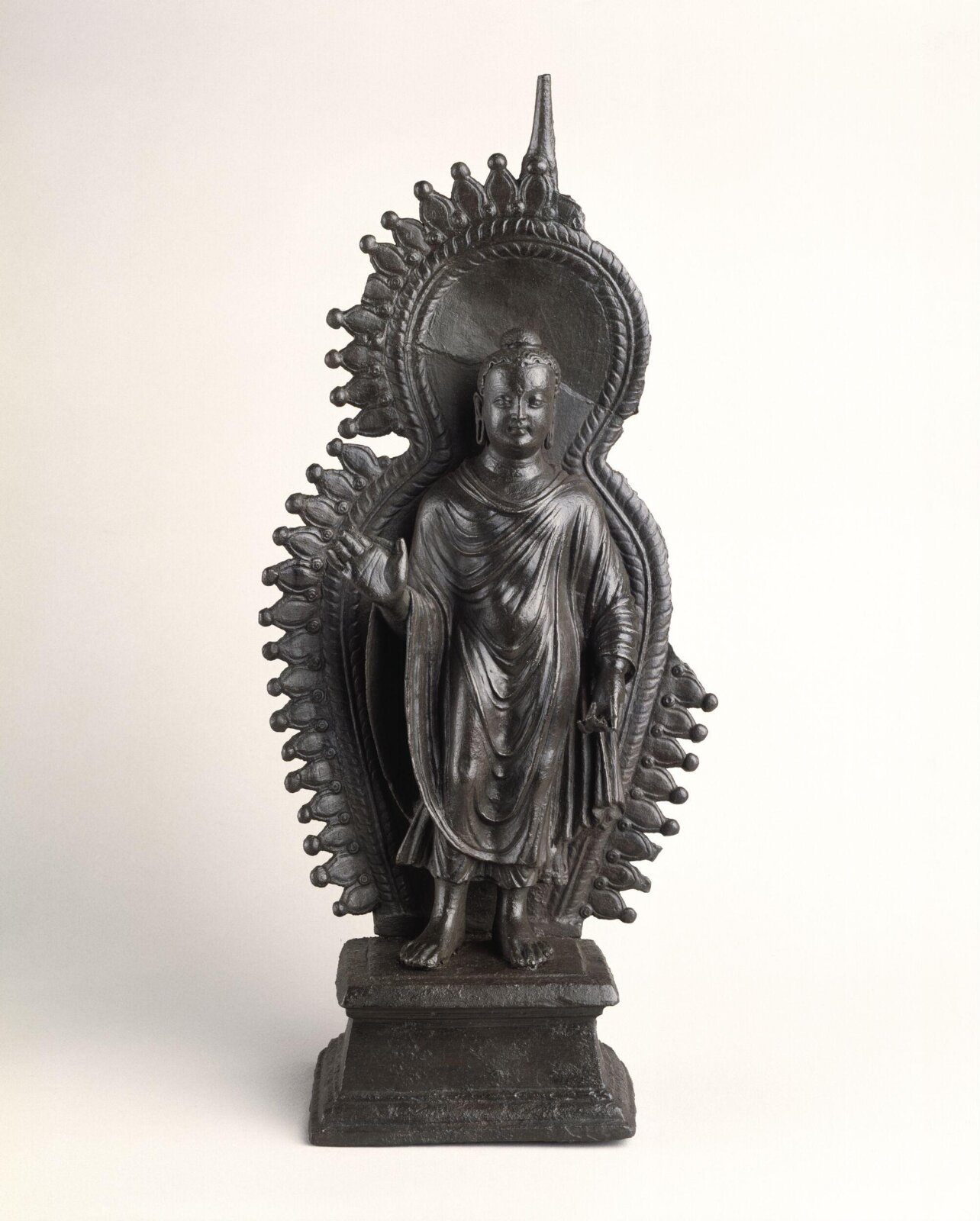
Figure
Si può ammirare?
Sì, riceve visite

Victoria and Albert Museum
SalaThe Himalayas and South-East Asia, Room 47aLondra, Regno Unito
Esposta al pubblico. Chi lo garantisce è indicato qui sotto.
- Verificato
- 8 giorni fa
- Ultimo cambio di stato
- 25 set 2026
- Fonte
- I dati di collezione del museo stesso
About the sculpture
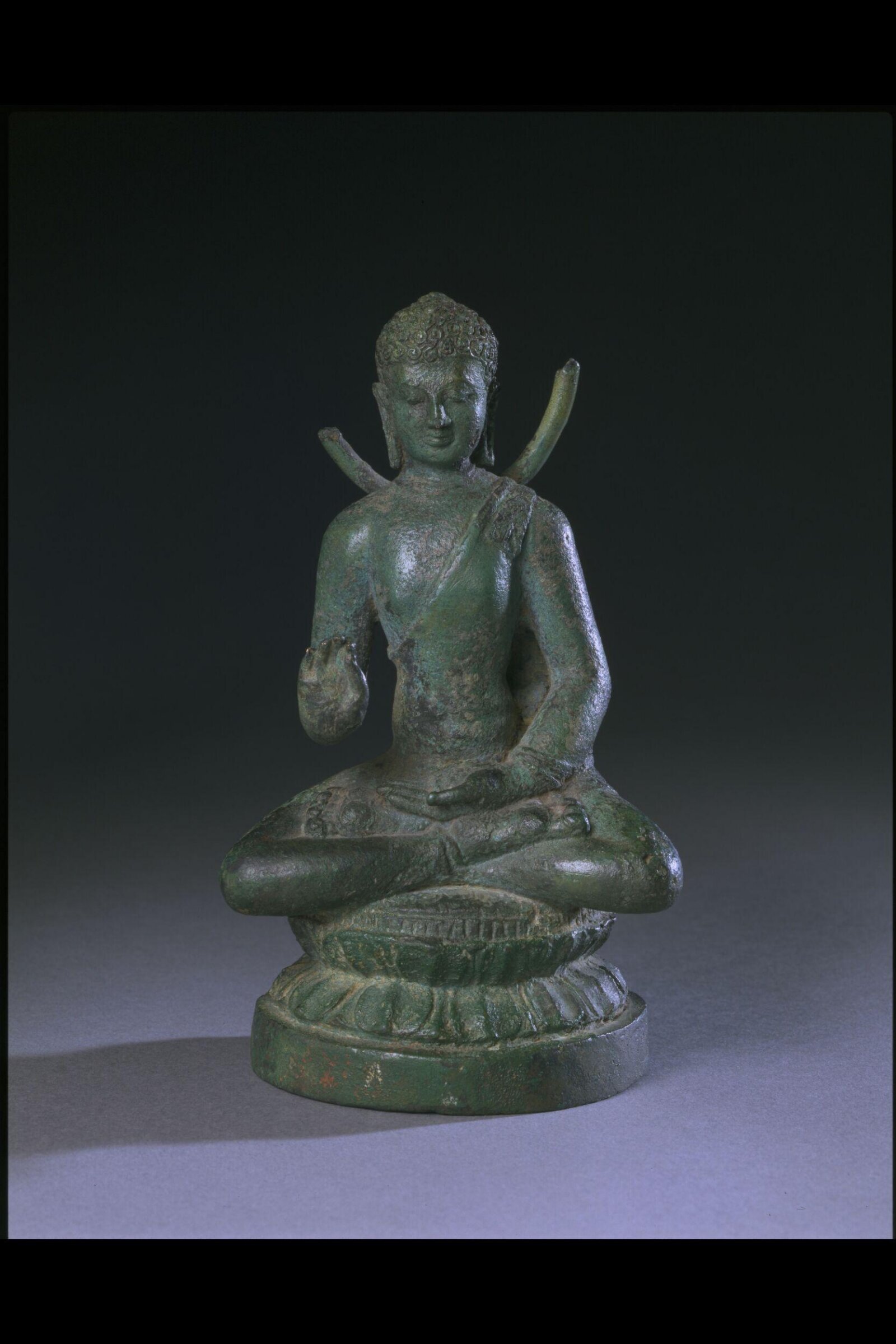
This standing Buddha was originally a portable processional shrine. It is assembled from a figure, base and nimbus. The projection at the summit of the nimbus was intended to support an honorific umbrella, a signifier of rank.
The sophisticated figure conforms closely to a known group of such processional images from Gandhara, north-west India. Here he stands with his right hand raised in a gesture of reassurance (‘abhaya-mudra’), looking directly at the devotee. The right knee is flexed and the deeply fluted, gracefully draped robes clearly define the body of the Buddha.
Read on
The hair is represented with wavy lines that cover a prominent skull protruberance (‘ushnisha’). The figure is framed by a radiating back plate with flames and pearl projections. These are reminiscent of the flaming aureole associated with the Buddha imagery as a source of light (‘radiance’). They also perhaps allude to when he made flames miraculously emit from his shoulders.
The figure stands on a moulded rectangular base close in style to those being produced in Gupta workshops of northern India in the 5th and 6th centuries. It displays a number of the Buddha’s auspicious body markings (‘laksanas’), notably the ‘ushnisha’, the forehead mark (‘urna’), extended earlobes, hand-markings and webbed fingers.
Victoria and Albert Museum
Scheda
- Numero di inventario
- IS.12-1948
What it shows
In catalogo
Fonti
- Victoria and Albert Museum: the museum's own open data · acquisita 8 giorni fa
- Immagine: Victoria and Albert Museum — © Victoria and Albert Museum, London