Figure
Si può ammirare?
Al momento non riceve

Victoria and Albert Museum
Londra, Regno Unito
Appartiene alla collezione, ma al momento non è esposta.
- Verificato
- 7 giorni fa
- Ultimo cambio di stato
- 25 set 2026
- Fonte
- I dati di collezione del museo stesso
About the sculpture
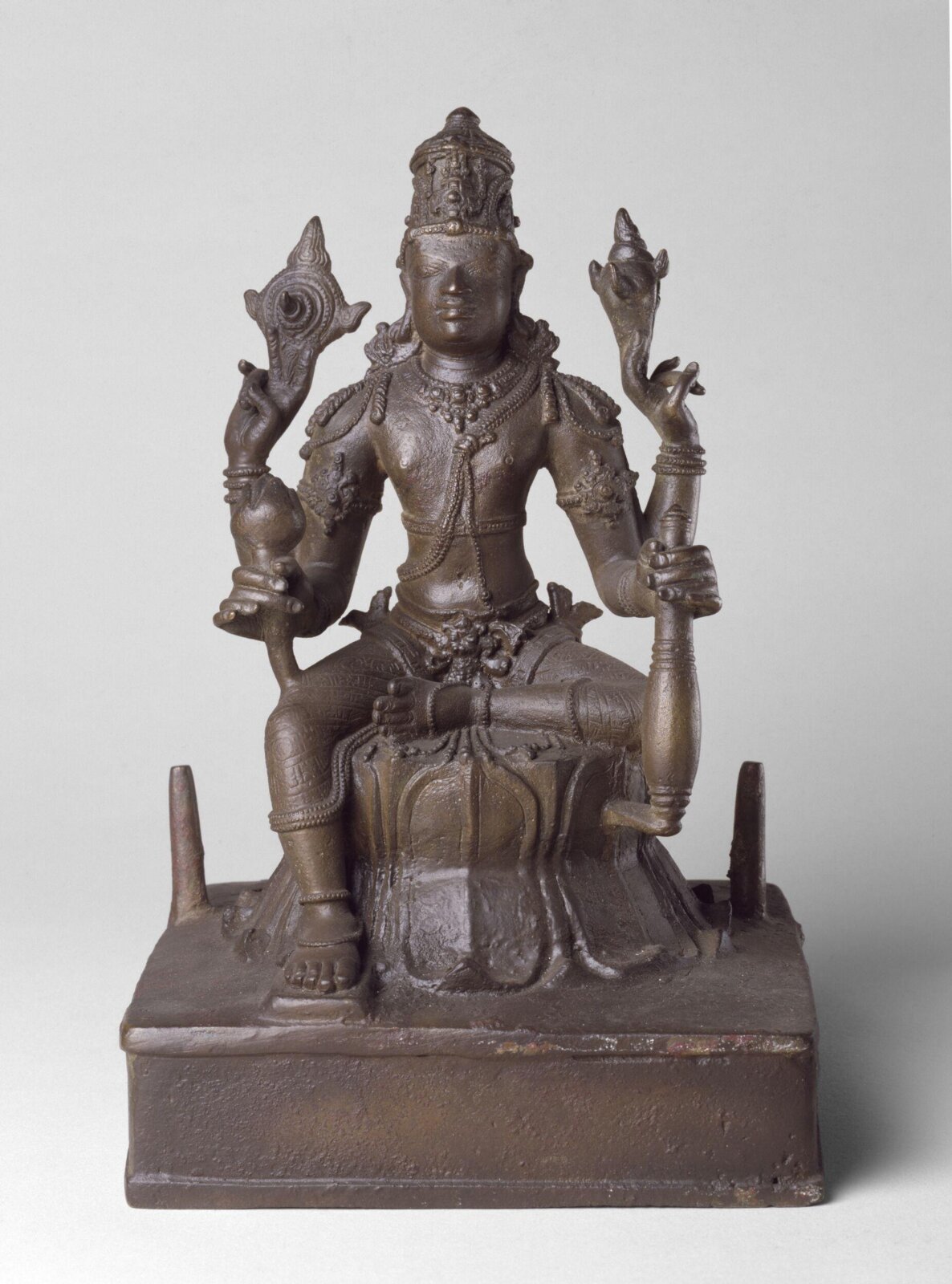
This small processional image shows Vishnu seated in royal ease (‘lalitasana’) on a double-lotus throne. His upper hands hold the flaming wheel (‘cakra’) and conch (‘sangka’), while his lower ones hold the mace (‘gada’) and lotus stem and bud (‘padma’). The lotus is a feature of iconography of the Pallava period (about 300-888 AD) and was soon displaced by the hand gesture invoking protection of the devotee (‘abhaya-mudra’).
The lightly engraved ‘srivatsa’ mark on Visnu’s chest is a symbol of the natural elements and of the presence of his consort, Laksmi. He wears a cylindrical crown (‘kirita-mukuta’) and elaborate ear-ornaments (‘kundala’) with ‘makara’ design. He is richly bejewelled, with strings of pearls draping his shoulders and elaborate arm-bands.
Read on
The flower-like disc (‘sirascakra’) on the back of the head is probably a residual nimbus, now used for hanging garlands and jewelled pendants. The waist-cloth is secured with belt with a' kirttimukh' ('face of glory) clasp and sash. The base has cast projections to secure a framing arch (‘prabha’), now missing.
The devotional poetry of the Tamil poet-saints makes it clear that processional images were widely used in the Pallava period. However, few have survived the centuries of use and the ravages of hostile invasions. Prior to conservation the surface of this sculpture was encrusted with carbonate material, which confirms a period of earth-burial. The sculpture was probably buried to escape looting during the Muslim occupation in the early 14th century.
Victoria and Albert Museum
Scheda
- Numero di inventario
- IM.13-1934
What it shows
In catalogo
Fonti
- Victoria and Albert Museum: the museum's own open data · acquisita 7 giorni fa
- Immagine: Victoria and Albert Museum — © Victoria and Albert Museum, London