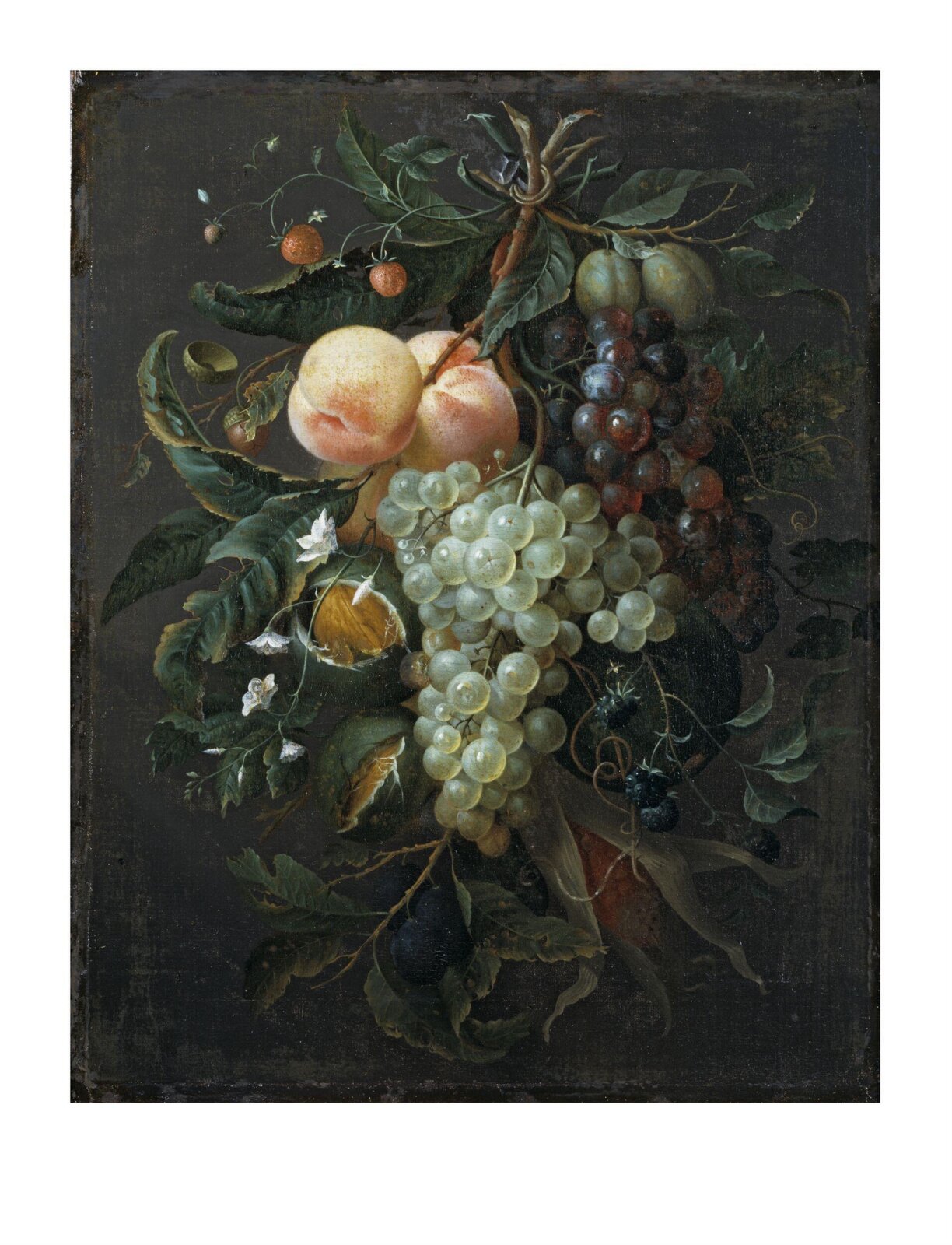
 Pieter Gallis1633–1697
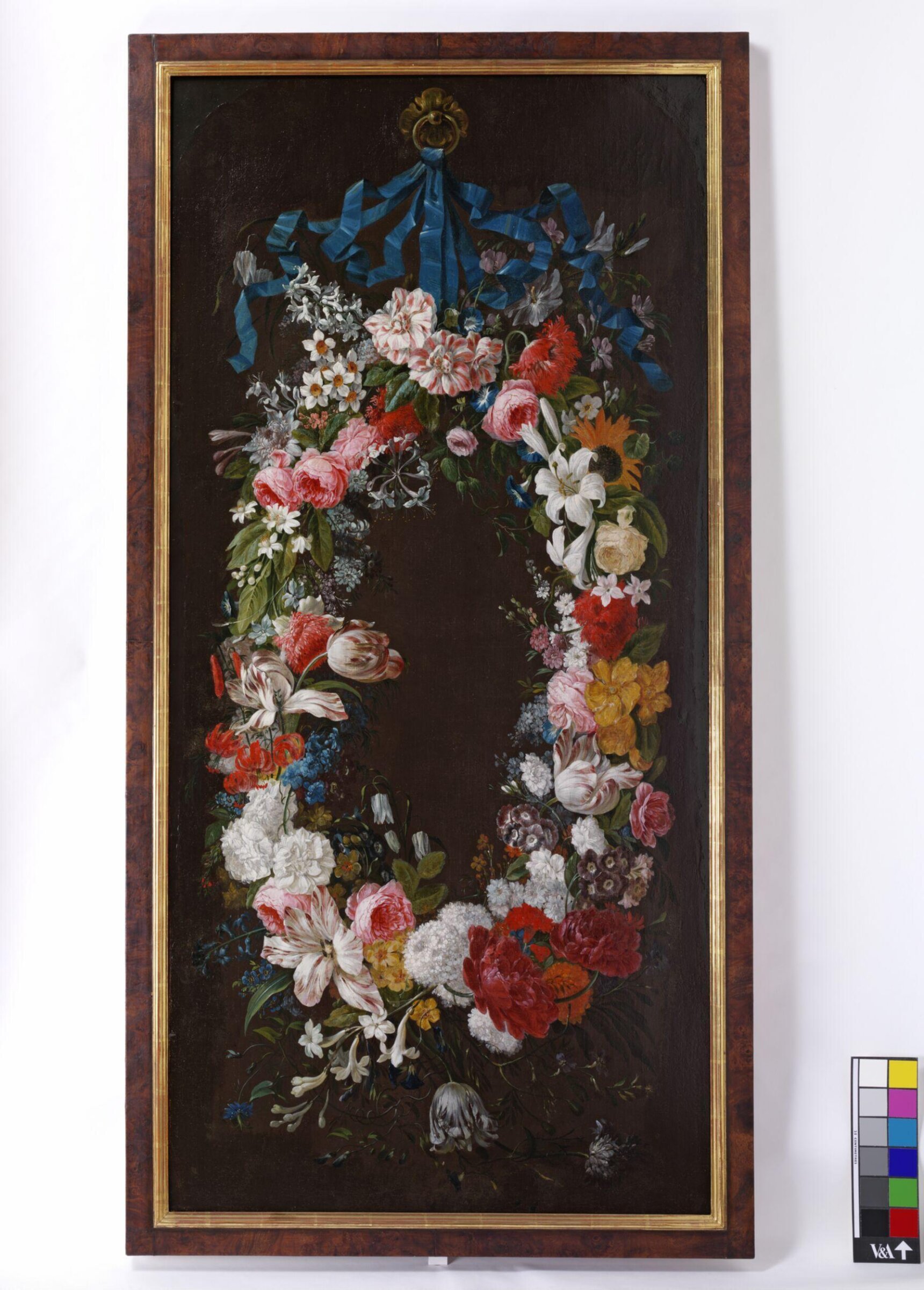
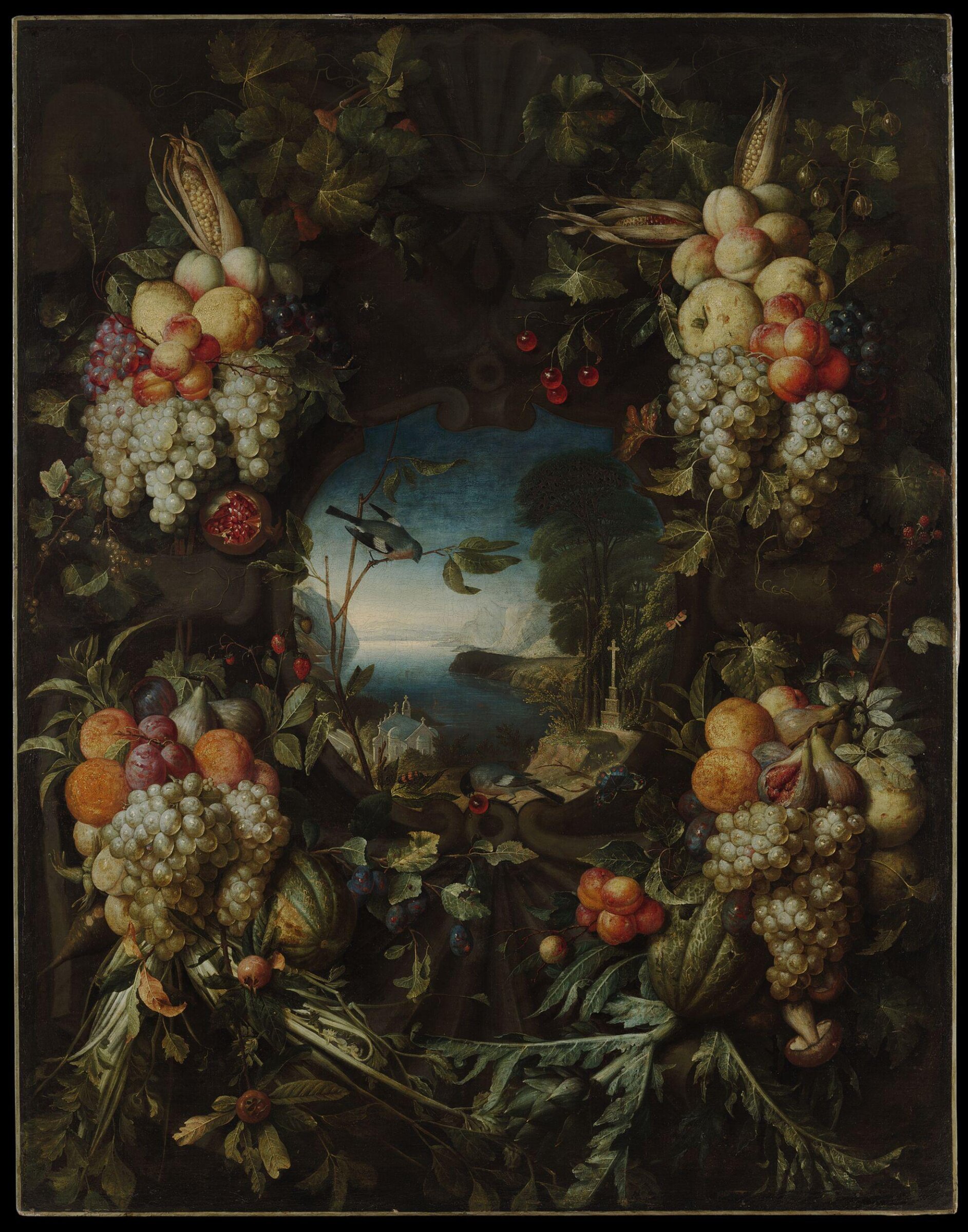
Festoon with Fruit, Corn, Nuts and Flowers
Si può vedere?
Sì, esposta ora
Dove si trova «Festoon with Fruit, Corn, Nuts and Flowers» oggi? Victoria and Albert Museum, Silver, Room 69, Londra. Sì, esposta ora. Verificato 25 settembre 2026.

Chiuso· apre alle 10:00
Esposta al pubblico.
- Verificato
- Ultimo cambio di stato
- Fonte
- Il museo
Sul dipinto
A festoon of fruit, flowers, vegetables and nuts hanging from a nail. Pieter Gallis (1633-1697) was a painter of the Northern-Netherlandish School, working in Amsterdam Enkhizen, Purmerend and Hoorn. He was primarily a painter of still lifes and landscapes and appears to have been inspired by the works of Jan and his son Cornelis de Heem. 501-1870 closely resembles two of Cornelis' festoons of the 1650s and 1660s now in private collections. These were inspired by works by his father such as Festoon with Fruit and Flowers ca. 1660, now in the Rijksmuseum, Amsterdam. In still-life paintings such as 501-1870, objects, especially fruit, which may appear to be no more than miscellaneous elements in fact conceal a system of Christian symbolism.
Leggi
Grapes symbolize the Eucharistic wine and hence the Redeemer’s blood, a concept expressed by Augustine, ‘Jesus is the grape of the Promised Land, the bunch that has been put under the wine-press’. The black bunch of grapes at right and a white in the centre probably allude to John’s account of the wounding of Christ on the cross ‘and at once there was a flow of blood and water’ (19:34). Ears of corn, as visible in the lower right, in association with grapes, stand for the bread of the Eucharist while the walnut as seen at the lower left, was also elaborated by Augustine; the outer green case was the flesh of Christ, the shell the wood of his cross, the kernel his divine nature. Peaches are similarly associated with the Trinity due to their three constituent parts (skin, flesh, stone) and with Truth. Strawberries are associated with the Incarnation while green plums evoke the charity and humility of Christ and purple plums are associated with His Passion and death. Jasmine flowers (?) are an attribute of the Virgin symbolising Grace and Divine Love.
Victoria and Albert Museum
Scheda
- Numero di inventario
- 501-1870
Che cosa raffigura
In catalogo
Fonti
- Victoria and Albert Museum
- Immagine: Victoria and Albert Museum — © Victoria and Albert Museum, London