Francesco SolimenaItalia, 1657–1747
Sketch of Figures of Prophets
Si può vedere?
Non esposta al momento
Dove si trova «Sketch of Figures of Prophets» oggi? Collezione: Ermitage, San Pietroburgo. Non esposta al momento. Verificato 29 agosto 2026.

San Pietroburgo, Russia
Appartiene alla collezione, ma al momento non è esposta.
- Verificato
- Ultimo cambio di stato
- Fonte
- Il museo
Scheda
- Numero di inventario
- ГЭ-291
In catalogo
Fonti
- Ermitage
- Immagine: Ermitage — © State Hermitage Museum
Nella vita di Francesco Solimena
Tutta la vita1690s–1730s
His studio dominates Neapolitan painting
From the 1690s through the first four decades of the 18th century his studio dominates Neapolitan painting, becoming a virtual academy at the heart of the city’s cultural life. Among its pupils are Francesco De Mura, Giuseppe Bonito and Gaspare Traversi; the Scottish portraitist Allan Ramsay spends three years there.
1691–1695
Turns to the sombre manner of Preti
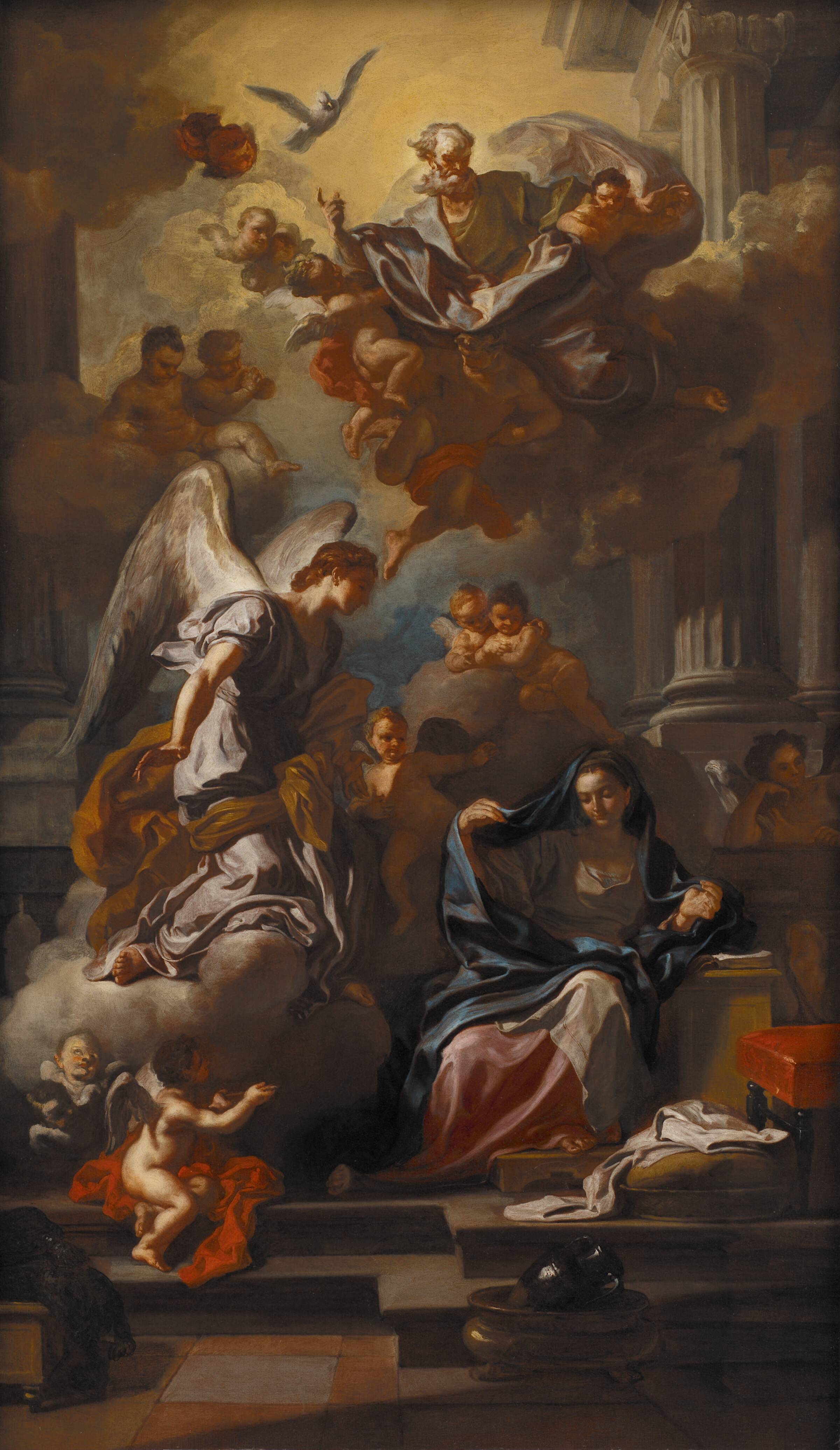
After 1690 he again looks for inspiration in the more sombre art of Mattia Preti; the Miracle of St. John of God for the Ospedale di Santa Maria della Pace rests on dramatic contrasts of light and dark. The same response to Preti shapes the Annunciation (Mauritshuis) and the Allegory of Louis XIV (1692, Hermitage).
1692
Luca Giordano leaves for Spain
Giordano leaves Naples for Spain, where he stays until 1702. His absence spurs Solimena to develop his primary role as a catalyst of change in painting, refining his idiom without abandoning the influence of Preti.
mid-1690s
Turns toward classicism
Perhaps stimulated by the rivalry of Paolo de Matteis, he begins to move toward a more classical style that puts disegno before colore and shows a new concern for ideal beauty. Striking examples are the Assumption (1697) in the Annunziata at Marcianise and the St. Christopher in Sant’Anna dei Lombardi, whose nude de’ Dominici admired for its ideal beauty.
1701
Probable visit to Rome
He probably visits Rome, where he paints the Abduction of Orithyia for Cardinal Fabrizio Spada (now in the Galleria Spada); its clear drawing and frieze-like composition show his assimilation of Roman classicism and that of the French Academy in Rome.