William-Adolphe BouguereauFrancia, 1825–1905
Equality Before Death
Si può ammirare?
Non si sa: il museo mantiene il riserbo

Museo d'Orsay
Parigi, Francia
Il proprietario è noto. Se oggi sia esposta, il museo non lo dice, e a indovinare non ci hanno insegnato.
- Ultimo cambio di stato
- 29 set 2026
- Fonte
- I dati di collezione del museo stesso
About the painting
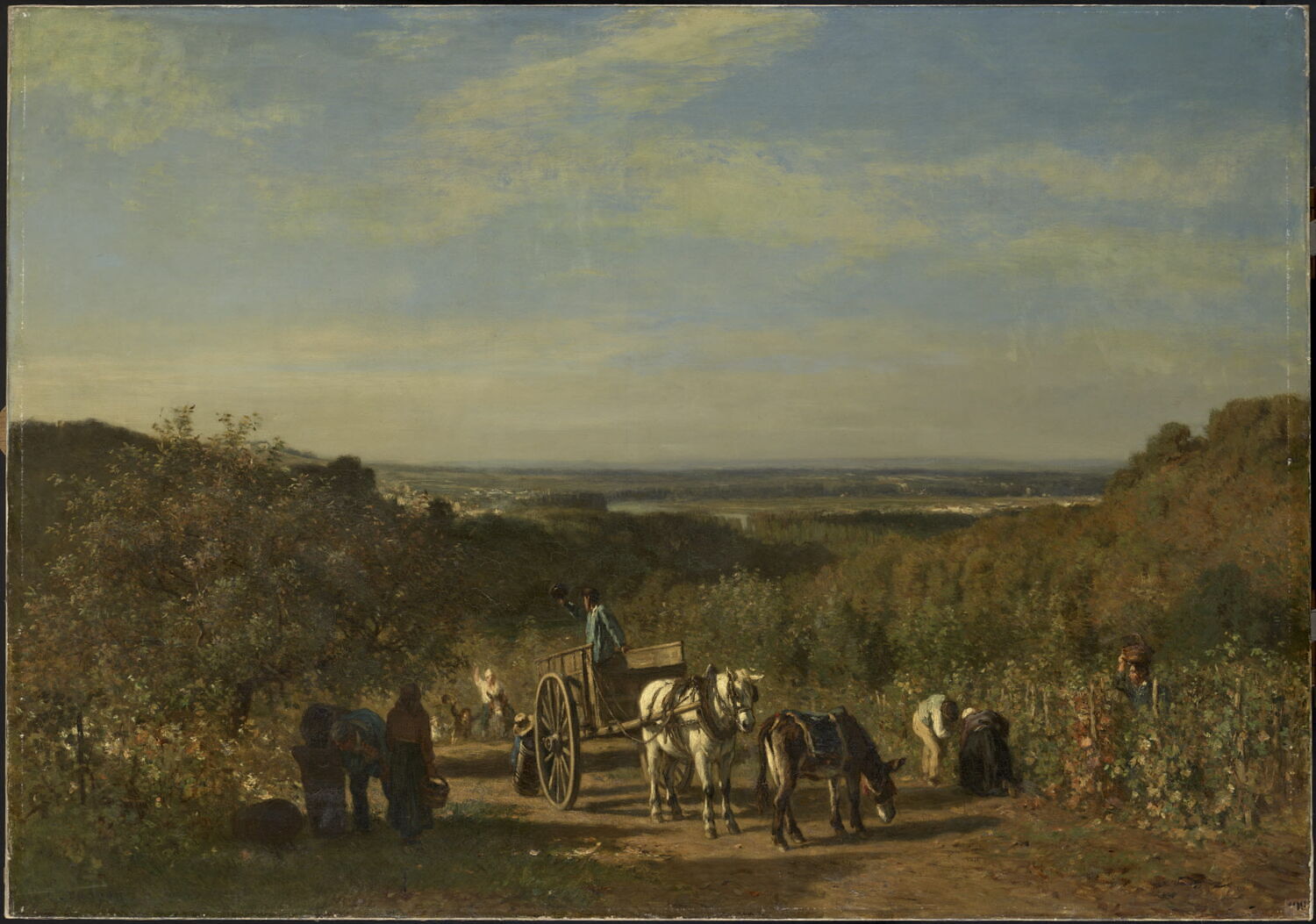
Uguaglianza davanti alla morte (Egalité devant la mort) è un dipinto a olio su tela realizzato dall'artista francese William-Adolphe Bouguereau nel 1848. Di dimensioni 141x269 cm, è conservato al Musée d'Orsay di Parigi.
Scheda
- Numero di inventario
- RF 2010 7
Fonti
- Wikidata · acquisita 5 giorni fa
- Immagine: Museo d'Orsay — William-Adolphe Bouguereau · Public domain · Wikimedia Commons
Nel frattempo, nella vita di William-Adolphe Bouguereau
Tutta la vitauntil 1846
Thirty-three portraits in three months — to fund the move to Paris
To fund the move to Paris William paints portraits to order: his uncle Eugène finds clients, and in three months 33 portraits are made, earning 900 francs. All are unsigned and only one has been traced; by some accounts he also designed labels for jam jars for merchants.
March – April 1846
Moving to Paris: Picot’s studio and the École des Beaux-Arts
In March 1846 the twenty-year-old William arrives in Paris and lodges at the Hôtel Corneille at 5 rue Corneille; in April he enters François Picot’s studio and, on his recommendation, the École des Beaux-Arts. To supplement his formal training in drawing he attends anatomical dissections and studies historical costumes and archaeology.
1846–1850 · Formazione
Beaux-Arts de Paris
1848 · Premio
Prix de Rome
1848–1850
The Prix de Rome: three attempts
In April 1848 Bouguereau enters the Prix de Rome competition for the first time, but soon riots break out in Paris and he enrols in the National Guard; he fails to win in 1848 (third place by some accounts, second prize by others) or in 1849. In 1850 his “Zenobia Found on the Banks of the Araxes” wins a joint first prize: it receives fewer votes than Paul Baudry’s work, but because of the revolution of 1848 no one was sent to Italy and a vacancy has arisen at the French Academy in Rome.
1850
The Salon of 1850: attacks on “Dante and Virgil”
The large canvas “Dante and Virgil in Hell” (281 × 225 cm), apparently inspired by Delacroix’s painting of the same subject, is meant to surpass Delacroix in the rendering of passions, and its naturalism to make viewers believe in the cruelty of the forces ruling Hell; at the Salon of 1850 it provokes attacks from critics and the disgust of the public.