 Pompeo BatoniItalia, 1708–1787
Edward Howard
Si può ammirare?
Sì, riceve visite

Esposta al pubblico. Chi lo garantisce è indicato qui sotto.
- Verificato
- 9 giorni fa
- Ultimo cambio di stato
- 25 set 2026
- Fonte
- I dati di collezione del museo stesso
About the painting
Object Type
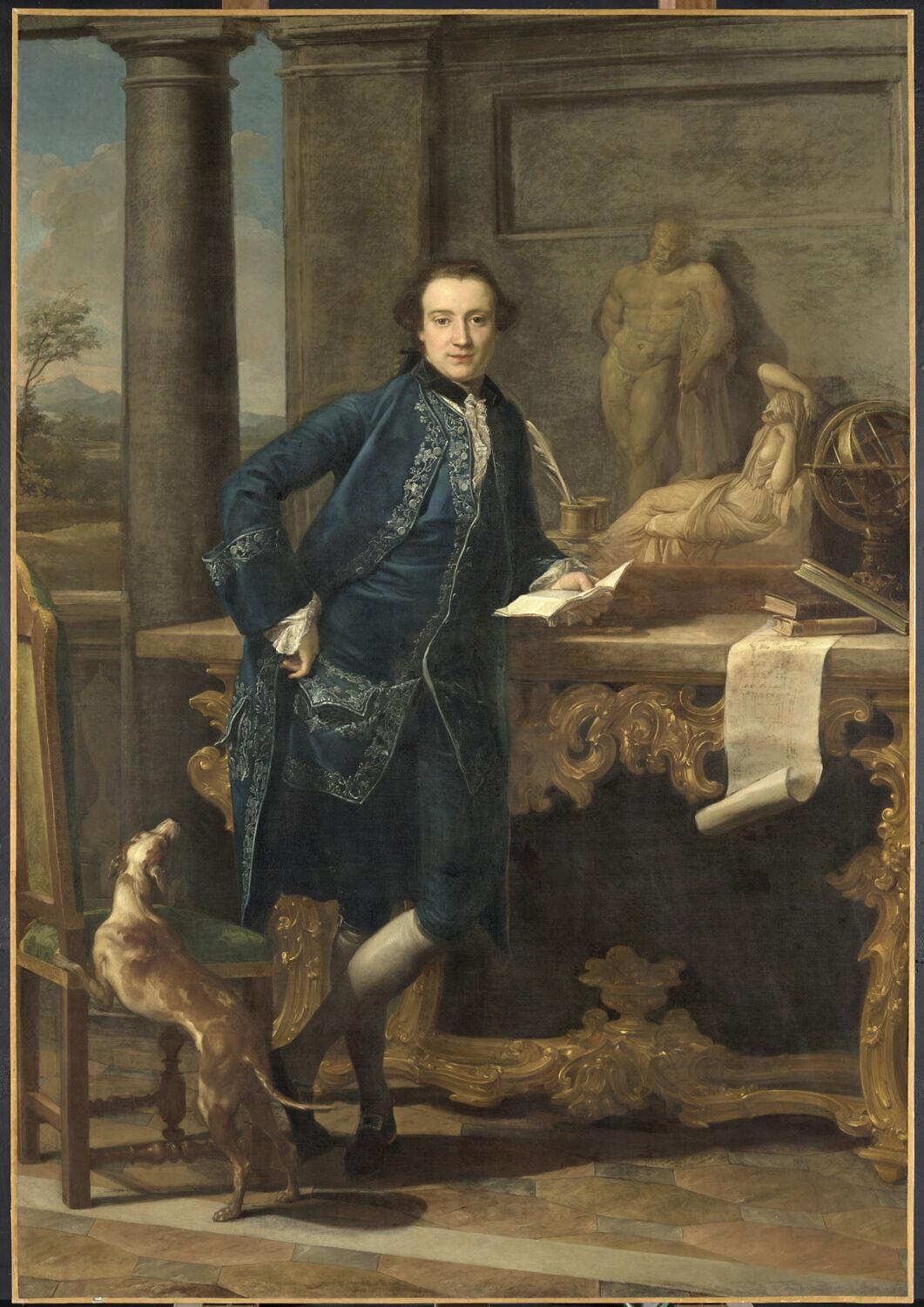
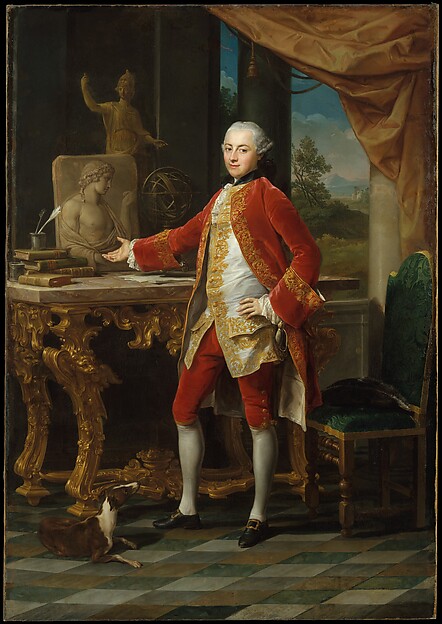
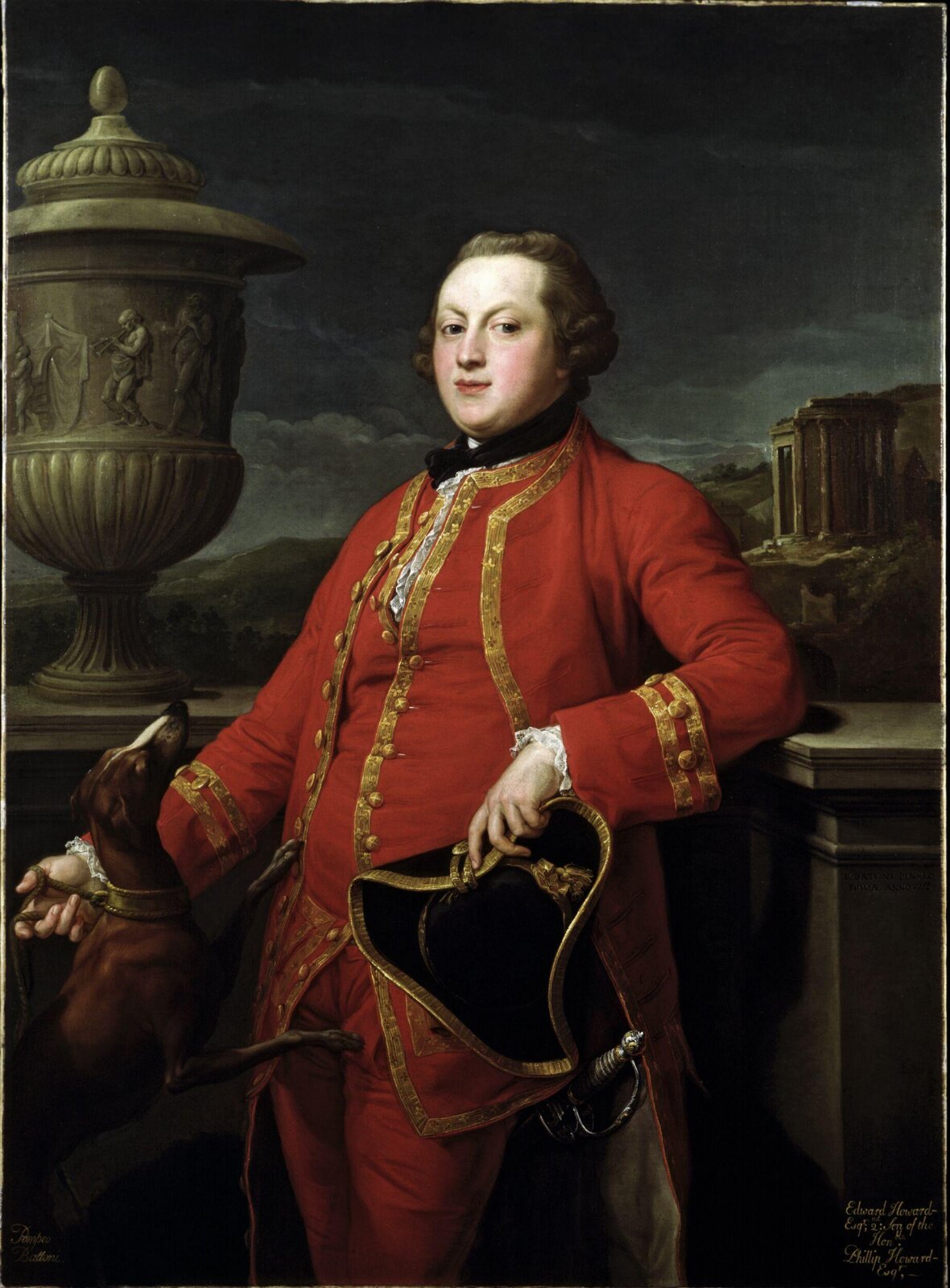
When rich young men went on the Grand Tour of Europe as part of their education, many of them took the opportunity to commission an Italian artist to paint their portrait. The frame made for this portrait is a good example of the British Neo-classical style.
Subjects Depicted
Edward Howard was the son of Lord Philip Howard. In 1764, in the course of his travels in Italy, Edward commissioned Pompeo Batoni (1708-1787) to paint his portrait. Frequently, the backgrounds in portraits of Grand Tourists included identifiable Roman antiquities, and here Batoni has inserted the ruined Temple of Vesta.
People
Read on
At that time Batoni was the most celebrated painter in Rome, and one of the most famous in Europe. For nearly 50 years he made portraits of Rome's visitors. He was equally gifted as a history painter, as well as being internationally known for his religious and mythological paintings. On completion of this portrait in 1766, he sent it to Edward Howard in Britain, who had returned home in 1764. It was finally mounted in an elaborately-carved British frame surmounted by an oval with a relief of Minerva and Cupid, very much in the decorative manner of Sir William Chambers (1723-1796), an influential architect and designer in the Neo-classical style.
Victoria and Albert Museum
Scheda
- Numero di inventario
- W.36:1-1949
What it shows
In catalogo
Fonti
- Victoria and Albert Museum: the museum's own open data · acquisita 9 giorni fa
- Immagine: Victoria and Albert Museum — © Victoria and Albert Museum, London