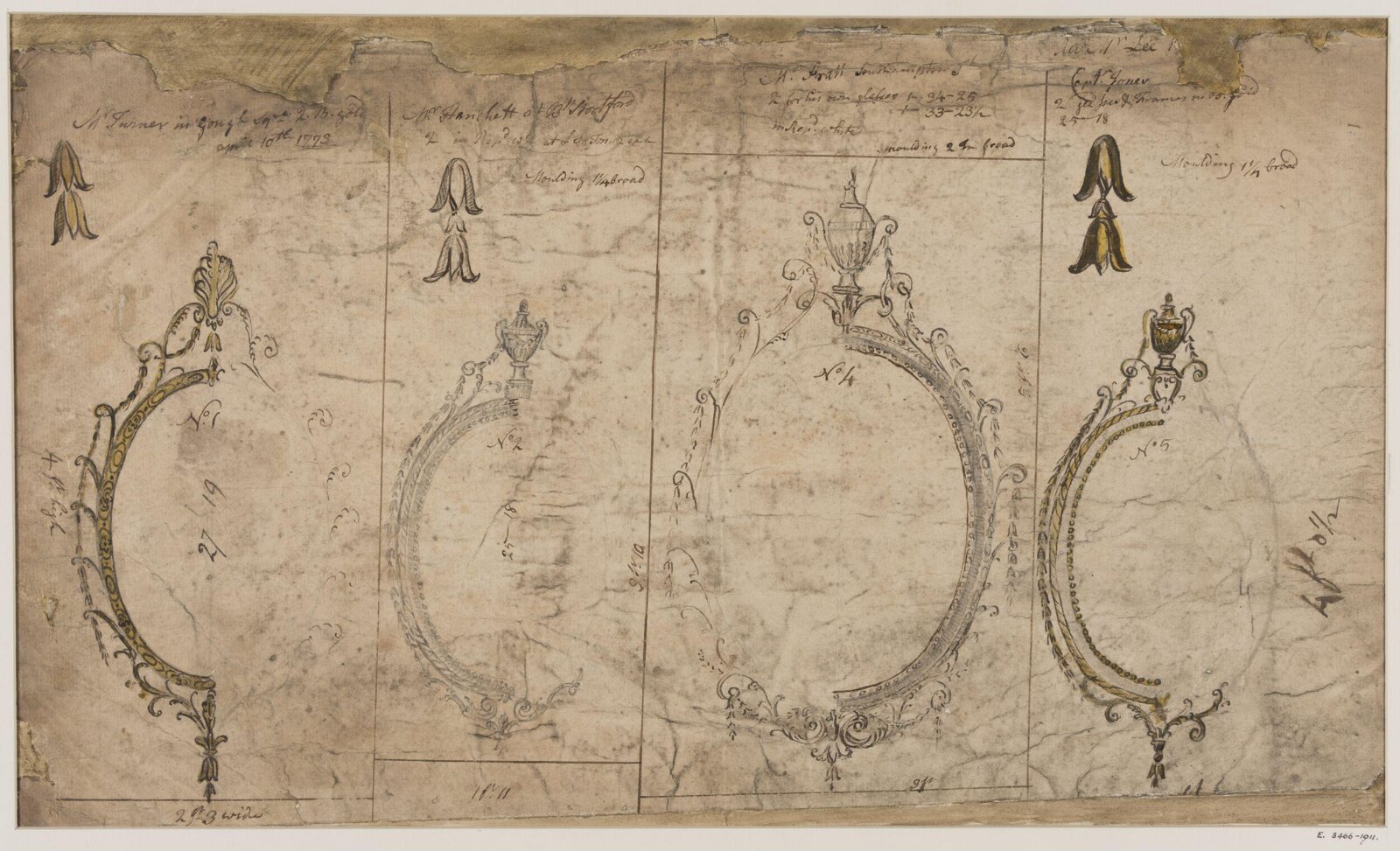
Drawing
Si può ammirare?
Al momento non riceve

Londra, Regno Unito
Appartiene alla collezione, ma al momento non è esposta.
- Verificato
- Ultimo cambio di stato
- Fonte
- Il museo
Sull’opera
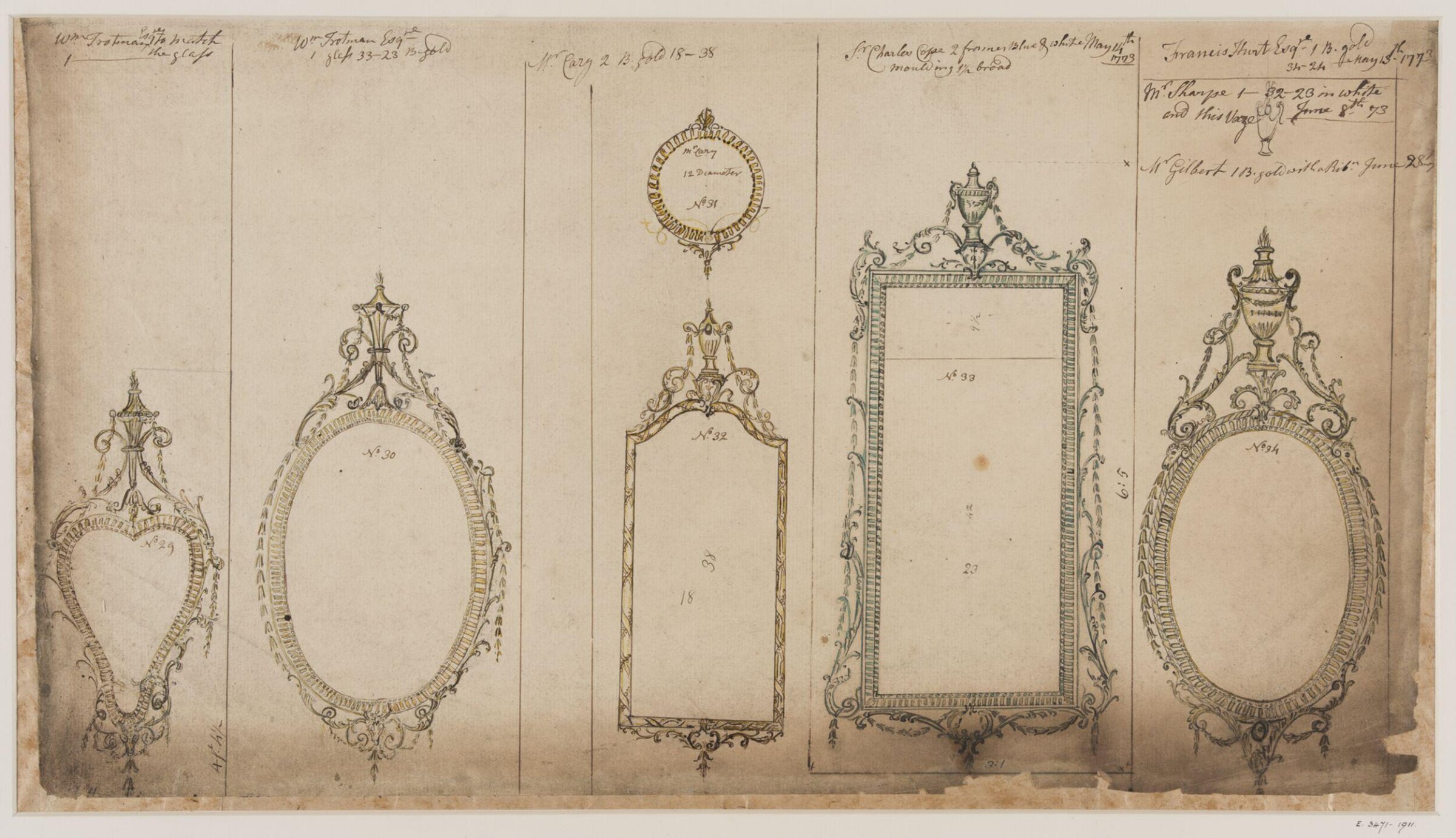
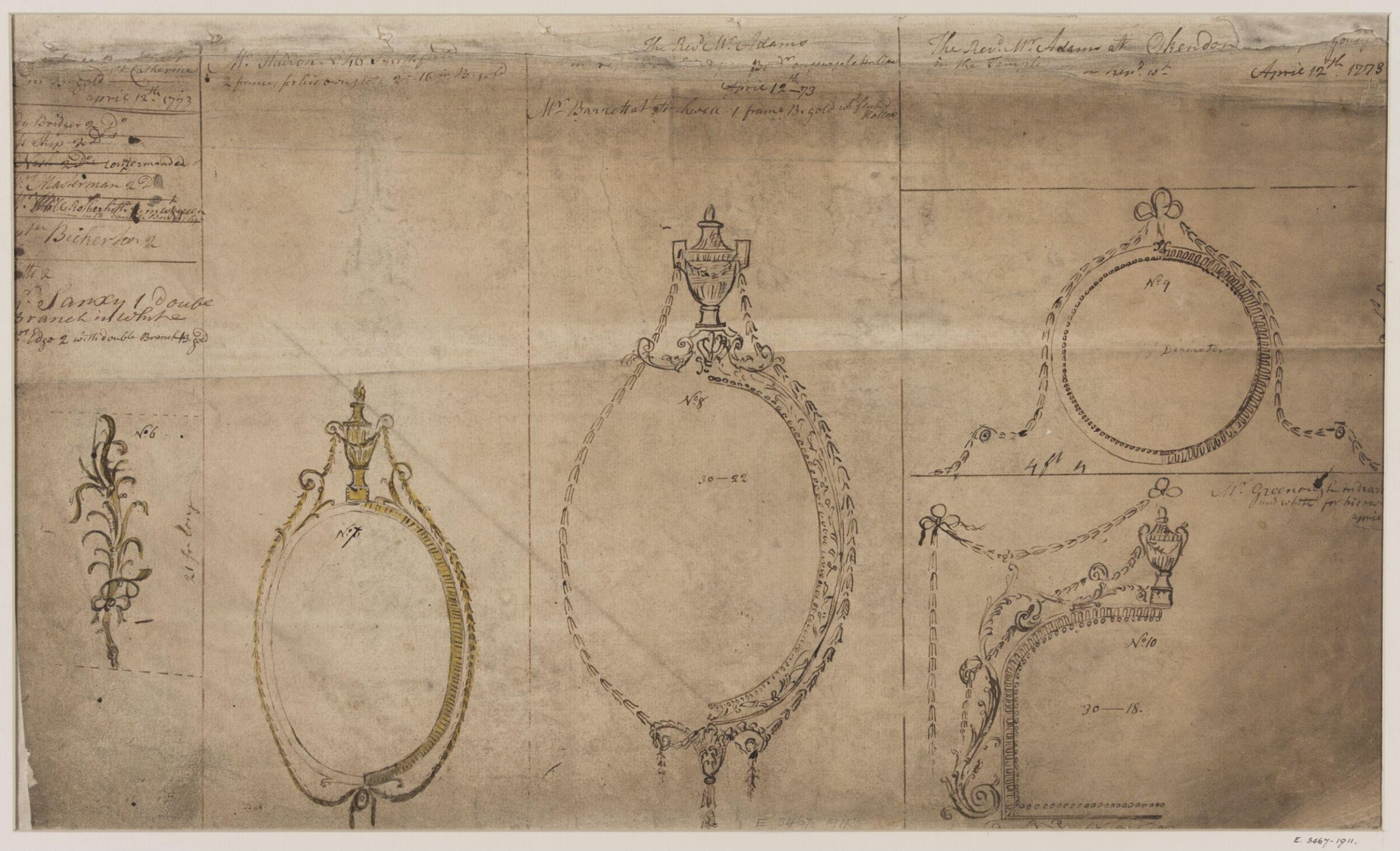
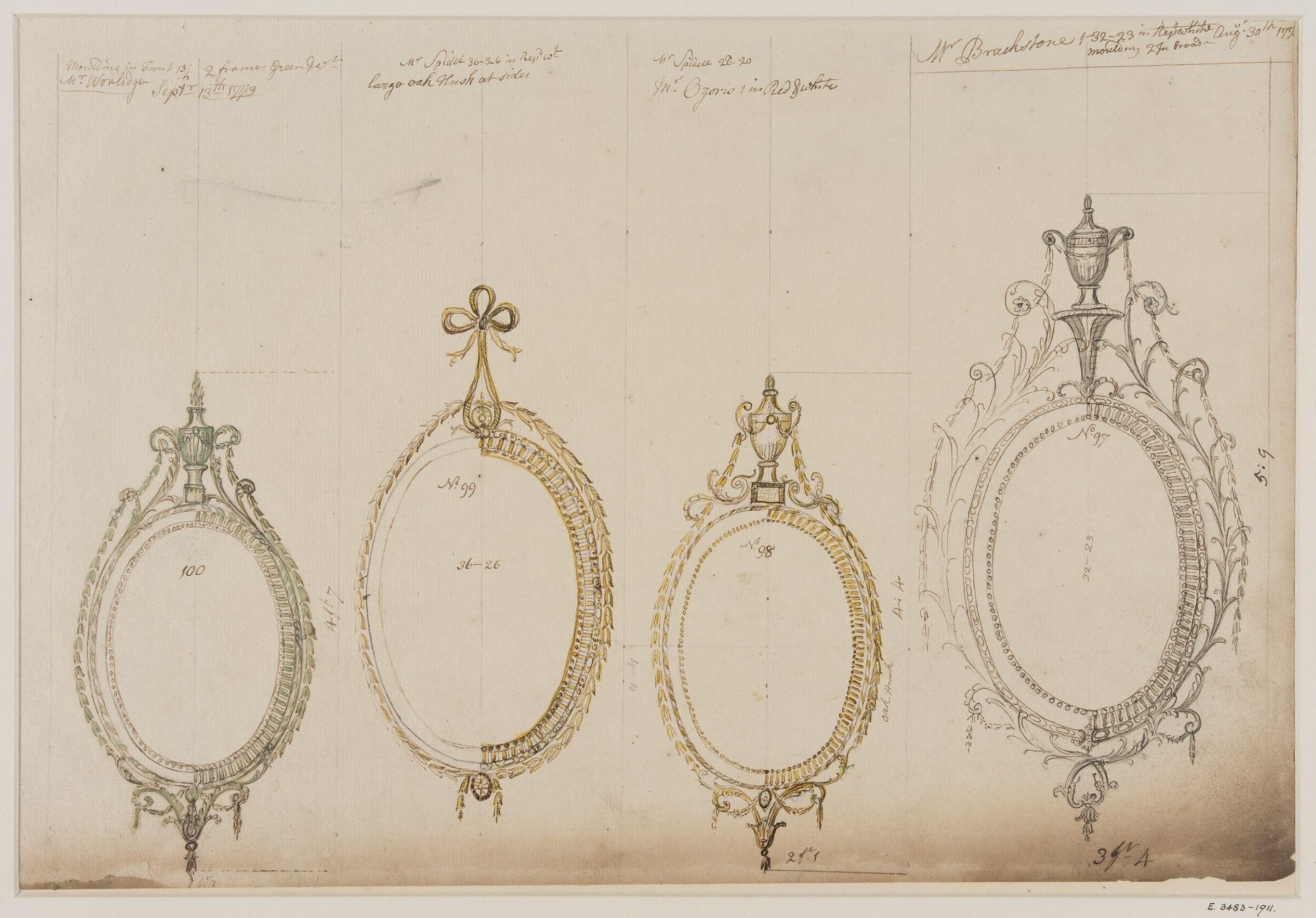
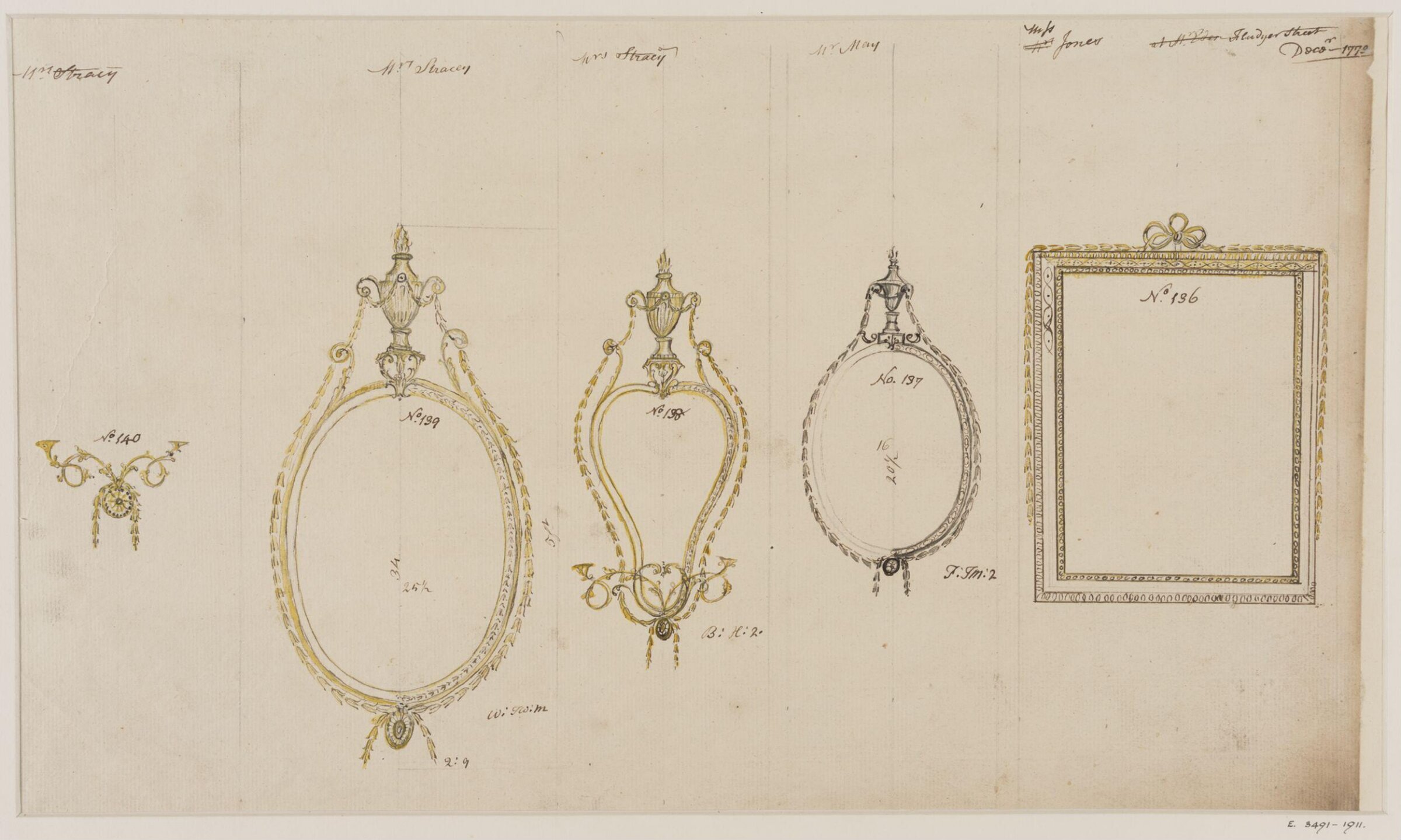
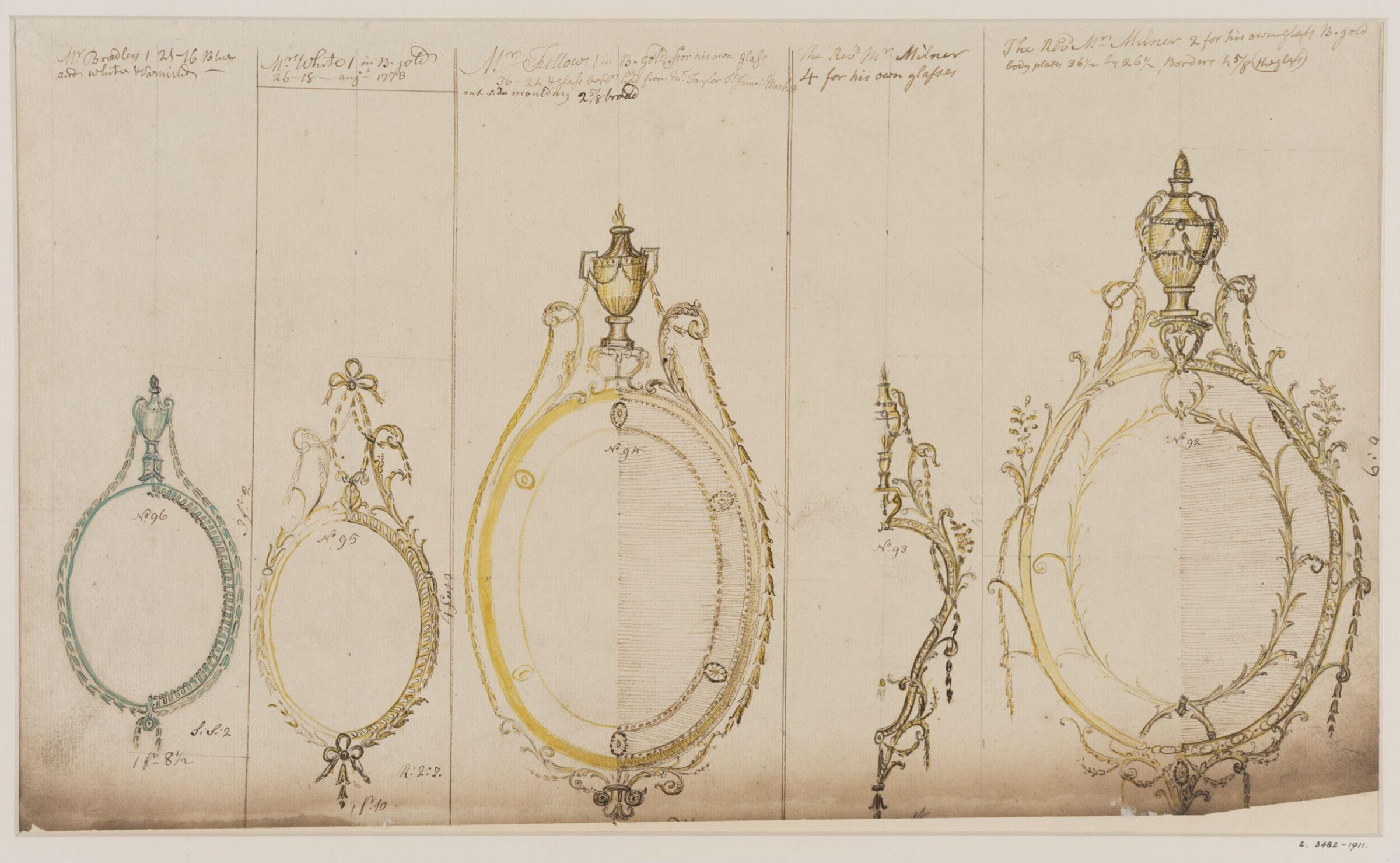
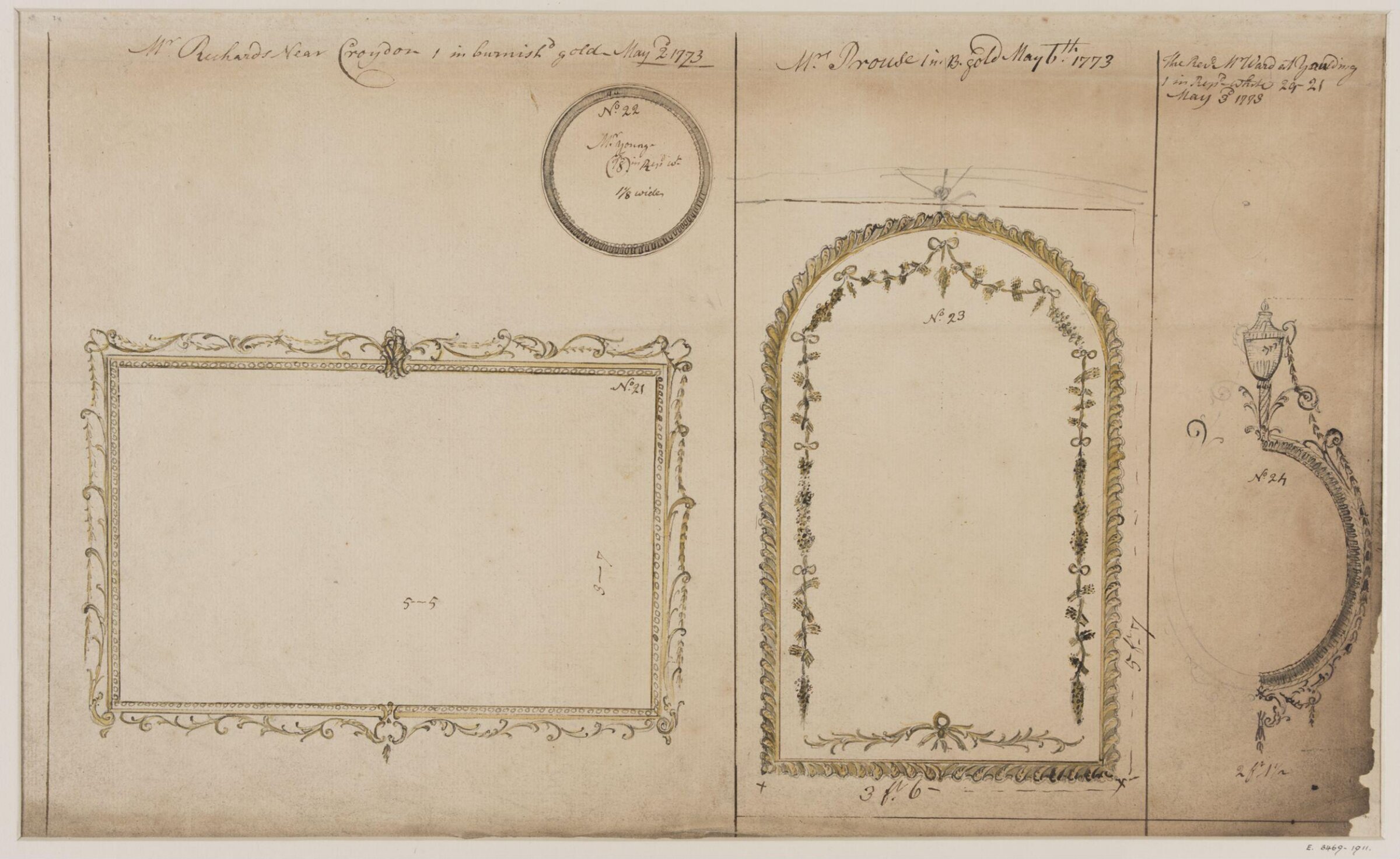
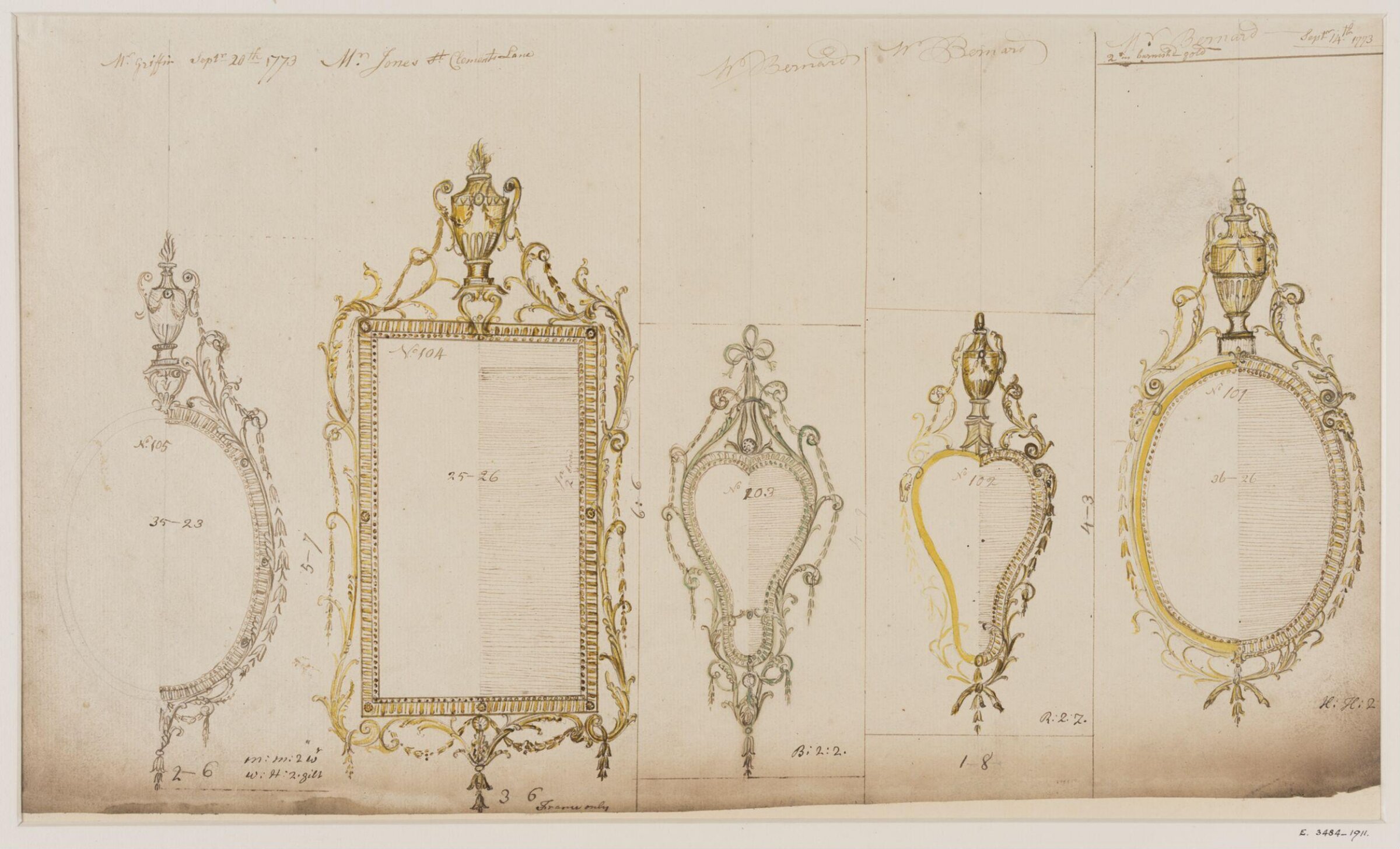
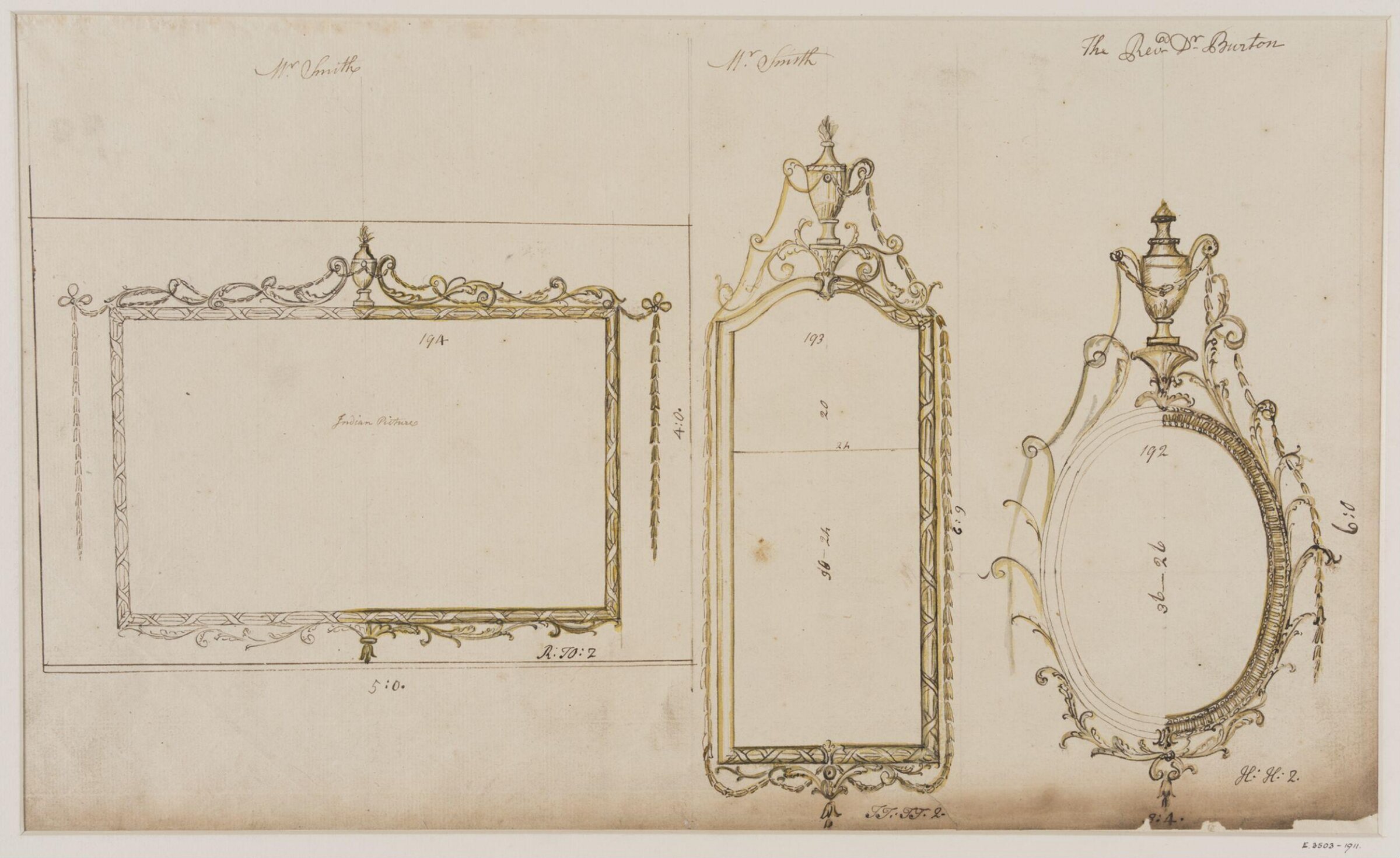
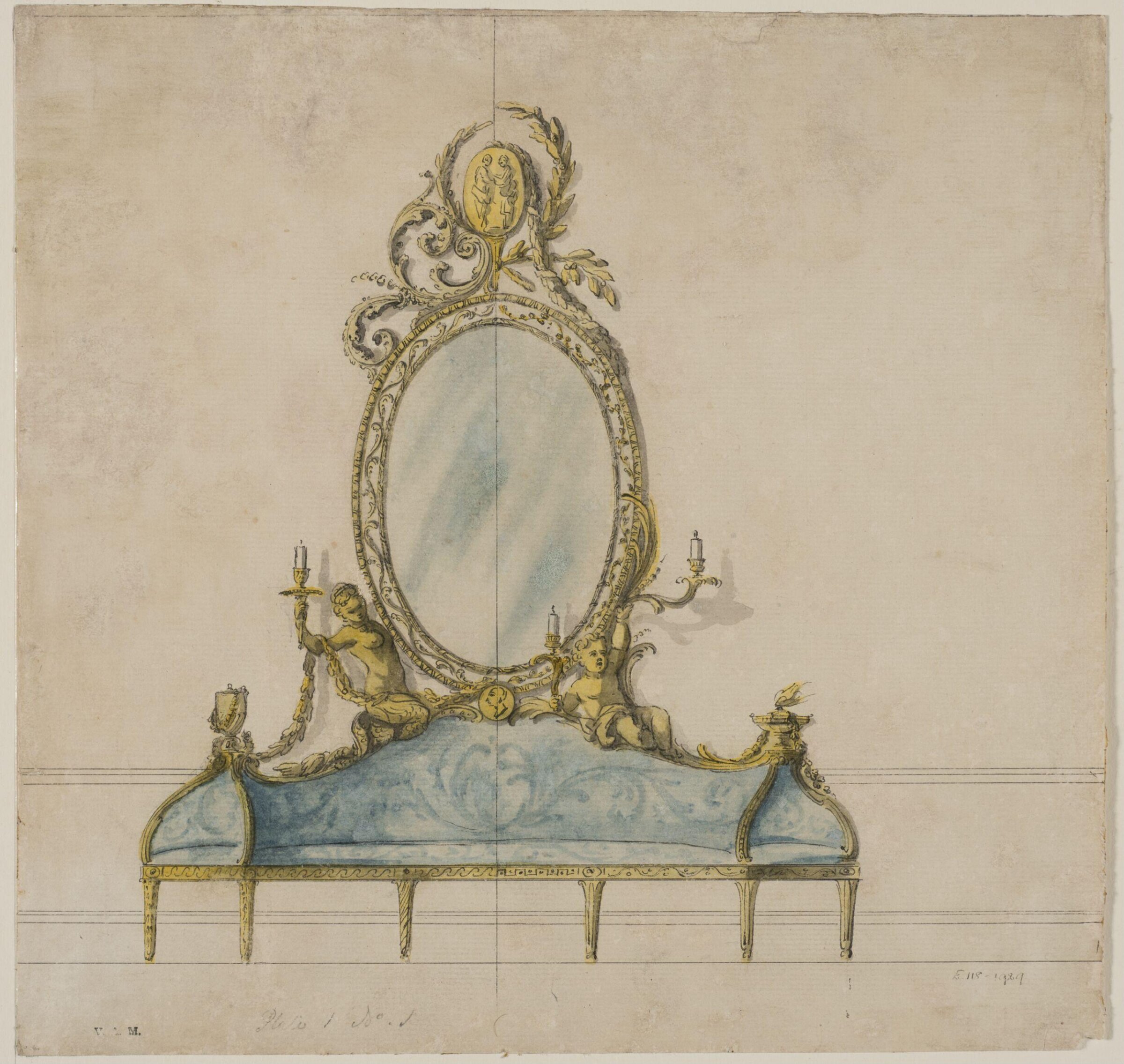
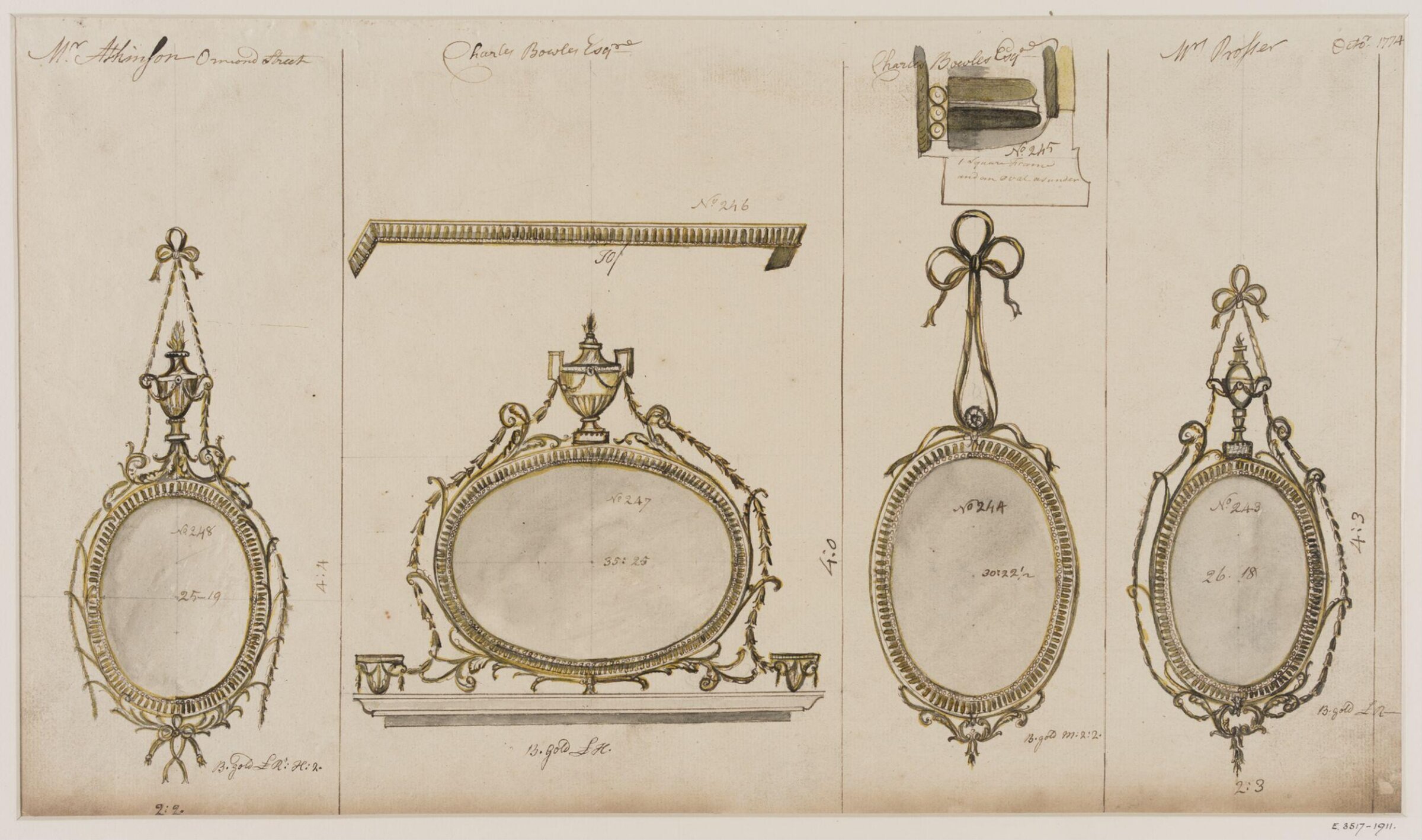
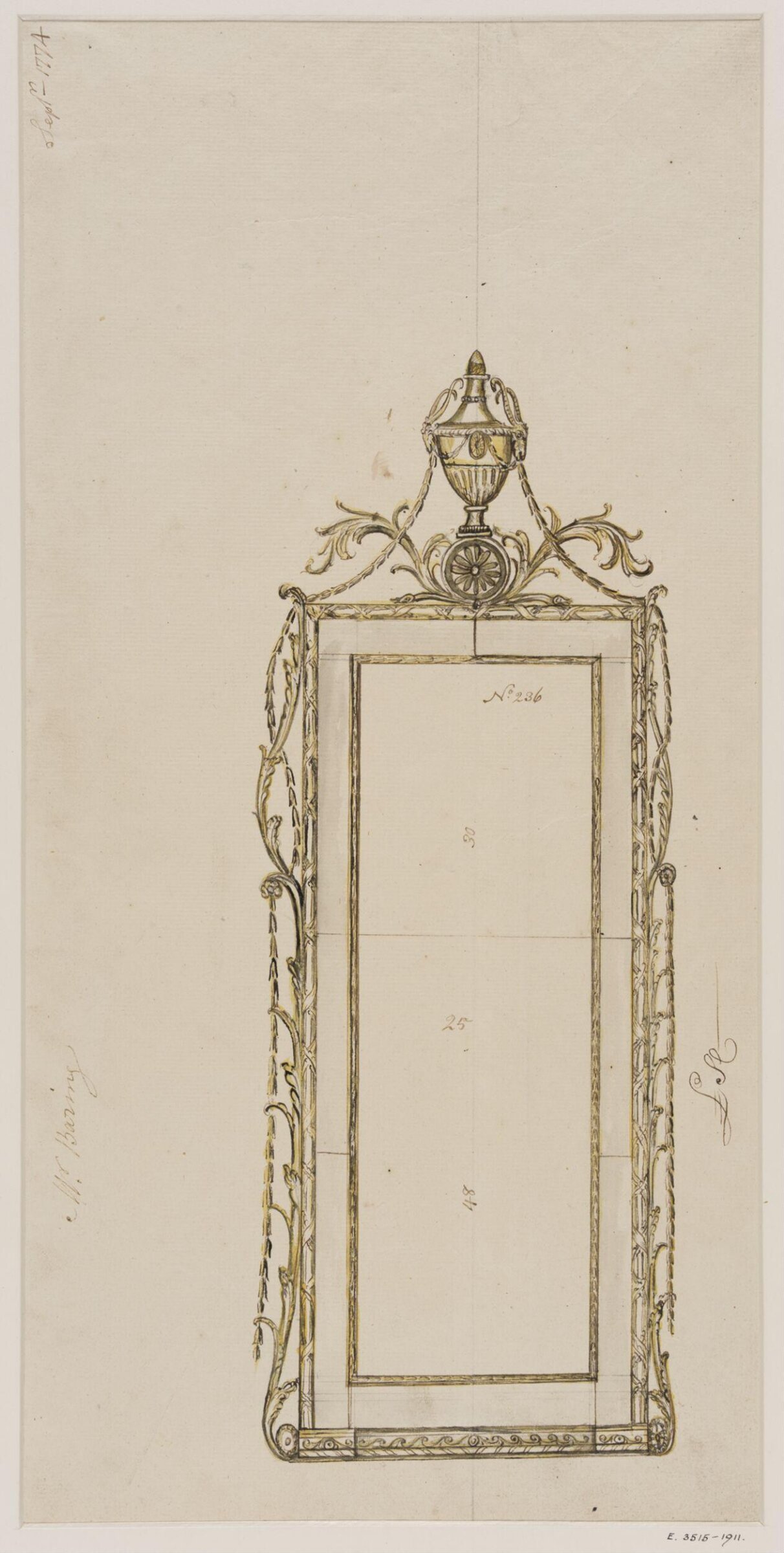
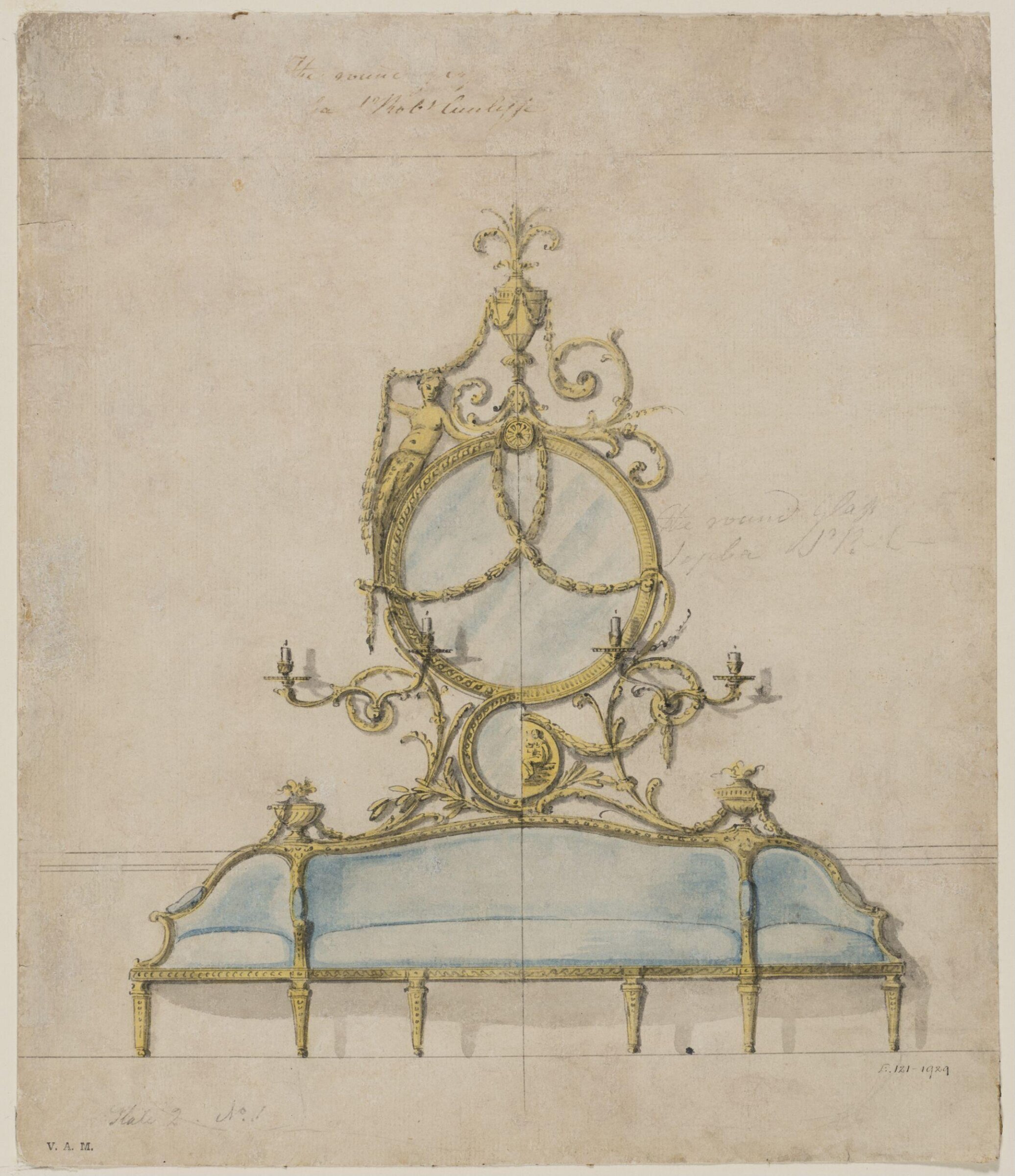
This design is part of a group of over 900 drawings of frames, mainly for pier glasses, overmantels, and girandoles. Many of these workshop designs share similar characteristics such as leaf scrolls and festoons of husks. Most of them are numbered, contain information about who ordered them, the date, the price (written in code), the colour of the frame and the dimensions of the finished object.
The drawings from John Linnell's workshop survive over the period 1773 to 1783. From April 1773 to August 1778, the workshop produced about twelve pieces a month. Production decreased over the next two years to 3 or 4 pieces a month. In 1783 these designs were no longer produced.
Leggi
Robert Adam, a leading architect, was a key influence on the neoclassical designs of John Linnell. Linnell worked with Adam for the first time at Kedleston Hall, Derbyshire, and they worked together on a number of other occasions. In the early 1770s festoons of husks began to be used on pier glasses and they are very prominent within these workshop designs.
John Linnell (1729-1796) was the son of the famous furniture maker William Linnell (ca. 1703-1763). Unlike most furniture makers, John Linnell gained a design education at the St. Martin's Lane Academy, which was founded by William Hogarth in 1735. In 1750, aged 21, he joined his father's firm as a designer. On his father's death in 1763, John Linnell took over the family firm. During his lifetime John Linnell produced high quality furniture, which rivalled that of other leading furniture makers such as Thomas Chippendale, John Cobb and William Ince and John Mayhew.
Victoria and Albert Museum
Scheda
- Numero di inventario
- E.3466-1911
Che cosa raffigura
In catalogo
Fonti
- Victoria and Albert Museum
- Immagine: Victoria and Albert Museum — © Victoria and Albert Museum, London