 Edward HopperStati Uniti, 1882–1967
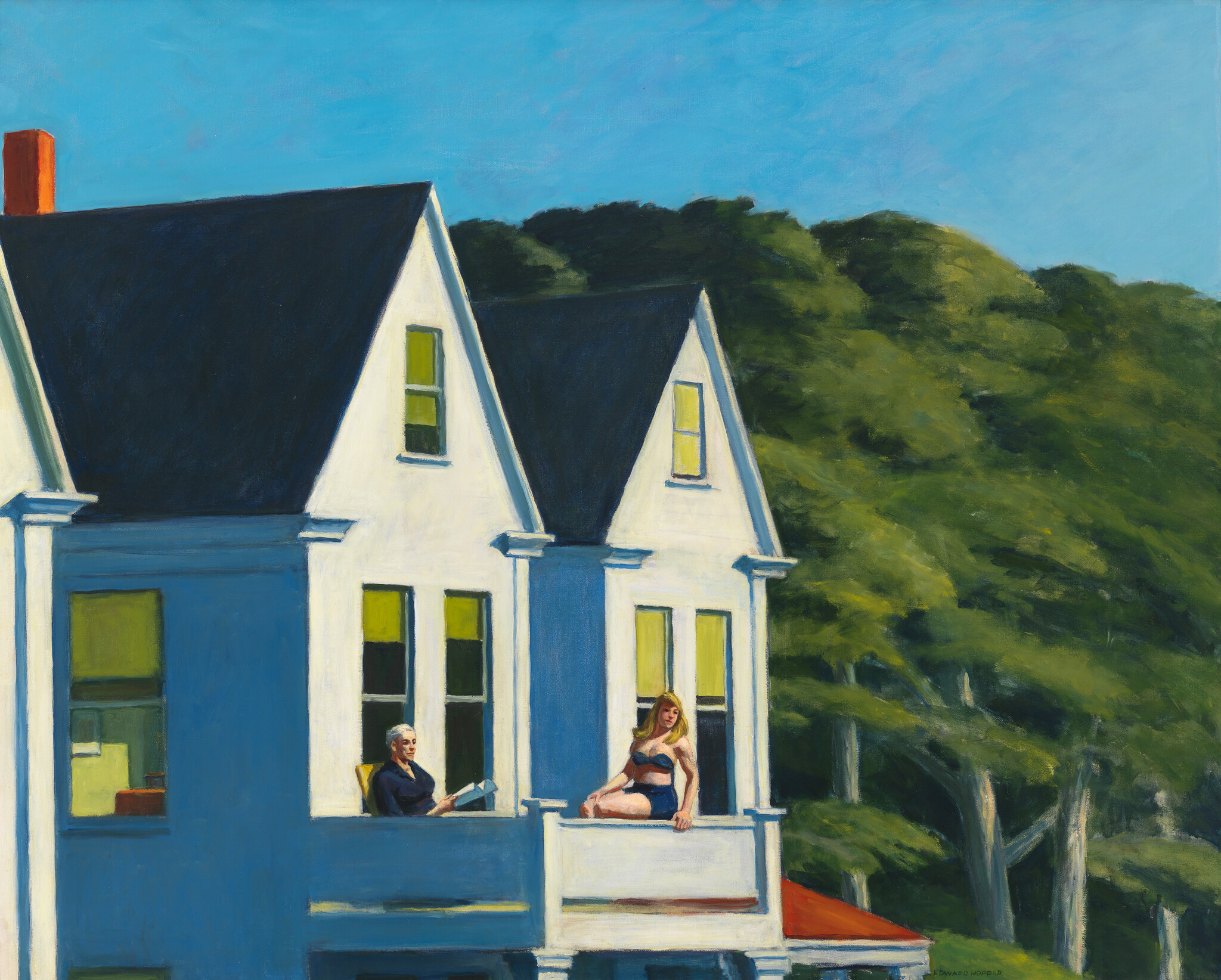
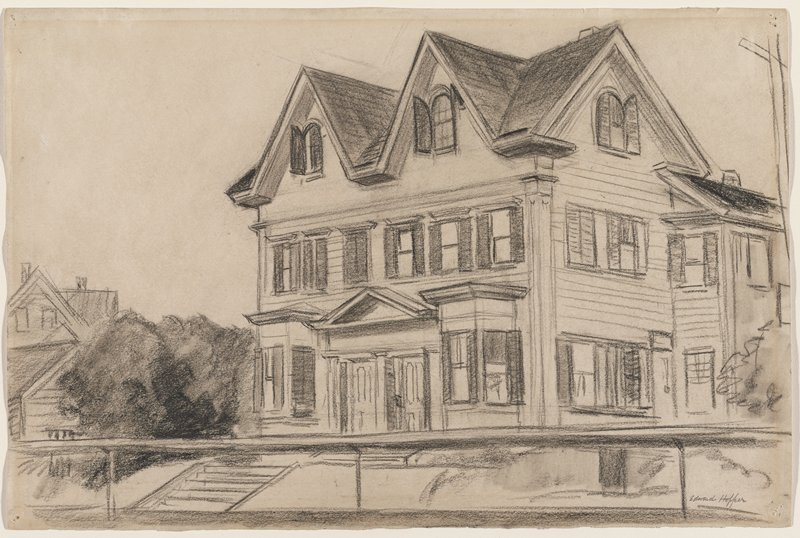
Double House, Gloucester
Si può ammirare?
Al momento non riceve

Minneapolis Institute of Art
Minneapolis, Stati Uniti
Appartiene alla collezione, ma al momento non è esposta.
- Verificato
- Ultimo cambio di stato
- Fonte
- I dati di collezione del museo stesso
Sull’opera
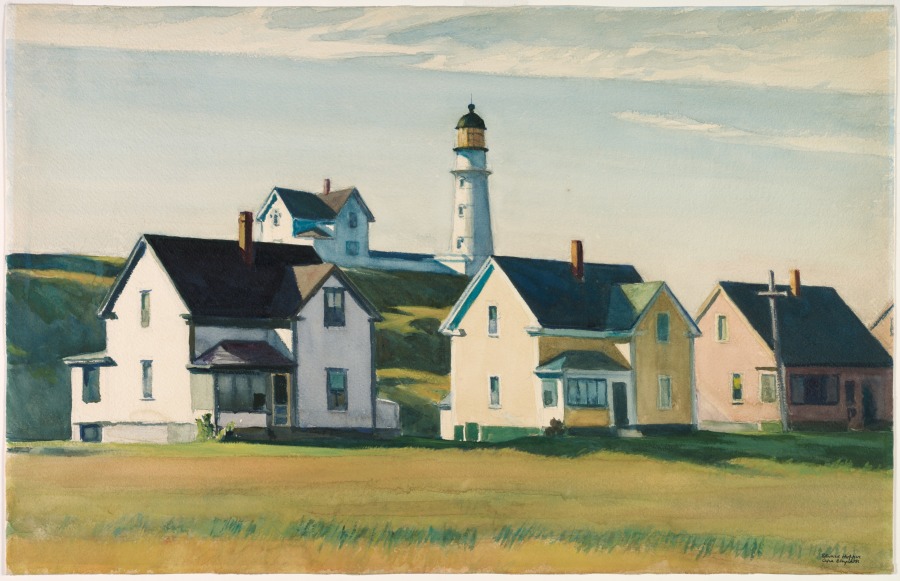
Double House, Gloucester is typical of Edward Hopper’s approach to architectural subjects. It was executed in the 1920s, during one of the artist’s several trips to the Massachusetts seaside village of Gloucester. Hopper drew this Greek Revival wood-frame house from across the street, cropping out nearby structures to isolate his subject. The two-family house looms large within the composition, its slightly elevated position lending an even more imposing presence. Hopper rendered the complex formal structure in bold outline, precisely delineating the arrangement of windows, shutters, doors, and rchitectural details. Though it has no observable inhabitants, the solitary dwelling conceals an implicit human presence, a suspended narrative, suggested by the alternating pattern of open and shuttered windows that evokes the ebb and flow of daily life.
Minneapolis Institute of Art
Scheda
- Numero di inventario
- 86.113
In catalogo
Fonti
- Minneapolis Institute of Art: the museum's own open data · acquisita 7 giorni fa
- Immagine: Minneapolis Institute of Art — © Heirs of Josephine N. Hopper / Licensed by VAGA at Artists Rights Society (ARS), NY
Nel frattempo, nella vita di Edward Hopper
Tutta la vita1915–1923
Turning to etching
At an impasse over his oil paintings, in 1915 Hopper turns to etching; by 1923 he has produced most of his approximately 70 etchings, many of them urban scenes of Paris and New York, as well as some posters for the war effort.
early 1920s
His etchings gain recognition
During the early 1920s Hopper's etchings begin to receive public recognition; they express some of his later themes: a couple in silence (“Night on the El Train”), a solitary female (“Evening Wind”) and a simple nautical scene (“The Catboat”).
summer 1923
Gloucester: meeting Josephine again, and the watercolours
In the summer of 1923, on a painting trip to Gloucester, Hopper re-encounters the artist Josephine Nivison; with her encouragement he turns to watercolour, producing numerous scenes of Gloucester. They marry a year later, with the artist Guy Pène du Bois as best man.
1923
The Brooklyn Museum buys “The Mansard Roof”
With Josephine's help six of Hopper's Gloucester watercolours are admitted to an exhibit at the Brooklyn Museum, and one of them, “The Mansard Roof”, is bought by the museum for its permanent collection for $100; the critics generally rave about his work.
1924
Every watercolour sold: farewell to illustration
At a one-man show with his dealer Frank Rehn in 1924 Hopper sells all his watercolours and finally decides to put illustration behind him; his financial stability will let him live a simple, stable life and keep creating art in his personal style for four more decades.
9 luglio 1924
Married: Josephine Hopper