ART WIKI32.963 in sala
MappaCollezioneArtistiMuseiMostreRivista
Accedi

ART WIKI

Dove è appeso il capolavoro, e quando si può entrare.

Collezioni: Art Institute of Chicago, Cleveland Museum of Art, Ermitage, Galleria Tret'jakov, Getty Museum, Harvard Art Museums, Hirshhorn Museum and Sculpture Garden, Metropolitan Museum of Art, Minneapolis Institute of Art, Museo del Louvre, Museo Puškin delle belle arti, Museo russo, Museum of Modern Art, National Gallery of Art, National Museum of Asian Art, National Portrait Gallery, Rijksmuseum, Smithsonian American Art Museum, Statens Museum for Kunst, Victoria and Albert Museum, Villa Getty, Whitney Museum of American Art, Catalogo statale del fondo museale russo (274 musei), Europeana (19 musei), Wikidata (6 musei), Paris Musées (12 musei) e Joconde, la banca dati dei musei del Ministero della Cultura francese (495 musei). Le immagini appartengono ai titolari dei diritti.

Sezioni

  • Mappa
  • Ricerca
  • Collezione
  • Capolavori
  • Esposte ora
  • Artisti

Altro

  • Musei e gallerie
  • Mostre
  • Rivista
  • Da dove vengono i dati
  • Privacy e cookie
HomeMappaCatalogo
  1. Collezione/
  2. Herzog Anton Ulrich-Museum/
  3. Die libysche Sibylle
Die libysche Sibylle, Buonarroti Michelangelo, 1550–1585
Michelangelo, ritrattoMichelangeloItalia, 1475–1564

Die libysche Sibylle

1550–1585 · Print

Si può ammirare?

Non si sa: il museo mantiene il riserbo

Herzog Anton Ulrich-Museum

Braunschweig, Germania

Il proprietario è noto. Se oggi sia esposta, il museo non lo dice, e a indovinare non ci hanno insegnato.

Ultimo cambio di stato
27 set 2026
Fonte
I dati di collezione del museo stesso
Sulla mappaPagina del museo

Scheda

Che cosa raffigura

LibroDonnaSibylleSchreibfederSibylla LibycaLibysche SibylleGeöffnetes BuchErwachsener Mann (+ zwei Personen)

In catalogo

StampeRinascimentoXVI secolo

Fonti

  • Herzog Anton Ulrich-Museum: i dati aperti del museo · acquisita 8 giorni fa
  • Immagine: Herzog Anton Ulrich-Museum — CC BY-NC-SA 4.0

Nel frattempo, nella vita di Michelangelo

Tutta la vita
  1. 1534–1564 · Luogo di lavoro

    Rome

  2. 1550

    Vasari publishes his biography

    Giorgio Vasari published his Lives, including a biography of Michelangelo, the first Western artist whose biography appeared in his lifetime. Vasari held that his work transcended that of any artist living or dead and was “supreme in not one art alone but in all three”.

  3. 1553

    Ascanio Condivi's biography is published

    His pupil Ascanio Condivi published a book of recollections of the master, with his portrait.

  4. 1554

    Verses on divine love

    Michelangelo's faith deepened towards the end of his life. In a poem of 1554 he wrote that neither painting nor sculpture could any longer calm his soul, now turned towards the divine love that opened its arms on the cross.

  5. February 1564

    His will: “my soul to God, my body to the earth”

    Before his death Michelangelo dictated his will with characteristic brevity: “I give my soul to God, my body to the earth, my possessions to my family.” His nephew Leonardo reached Rome a few days before he died, and Tommaso dei Cavalieri, Daniele da Volterra and his doctors were with him at the end.

  6. 18 febbraio 1564

    Died

Altre opere di Michelangelo

Tutte le opere
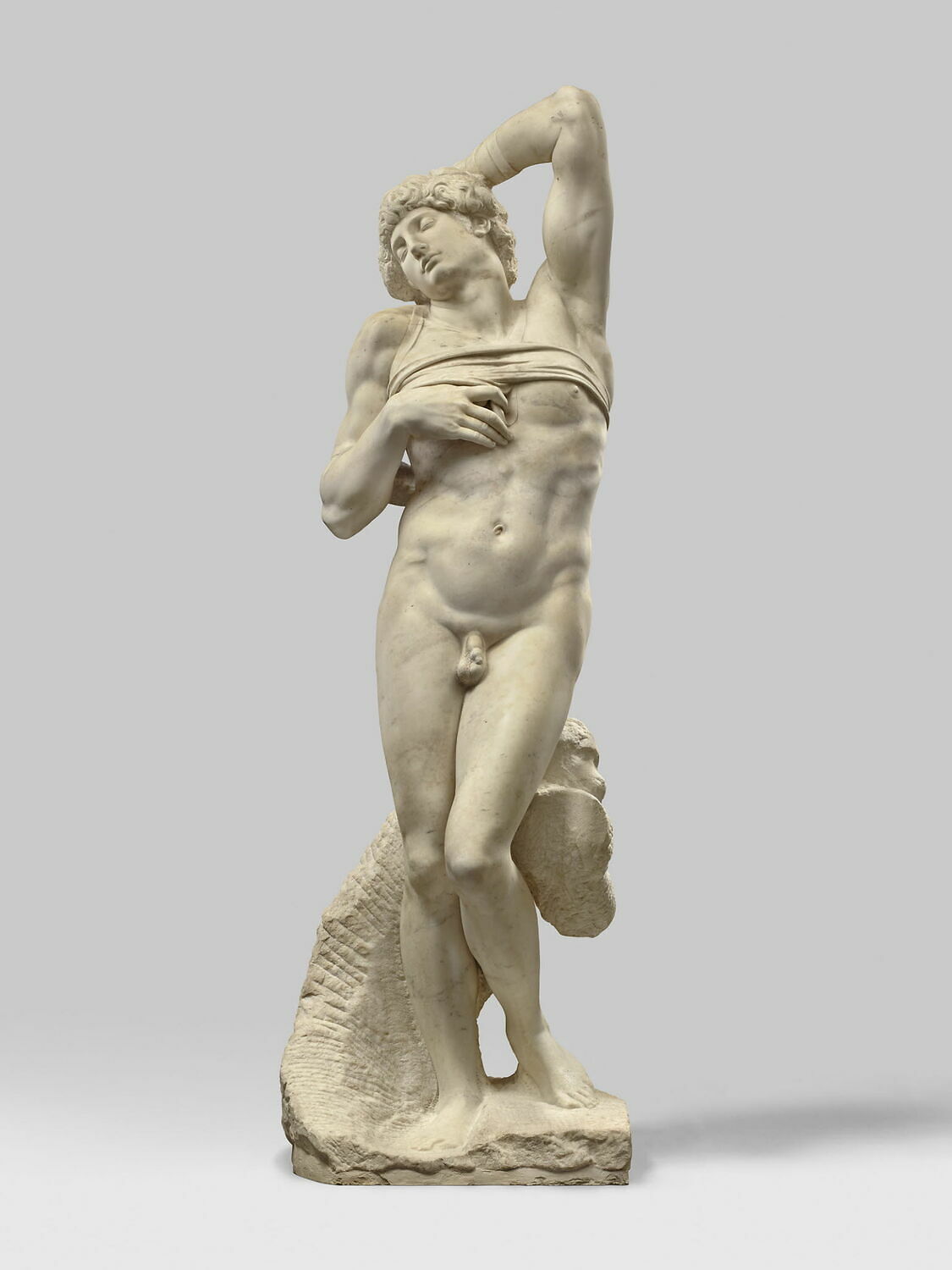
Esclave mourant, Buonarroti, Michelangelo dit Michel-Ange, 1513 - 1515

Schiavo morente

1513 - 1515 · Museo del Louvre

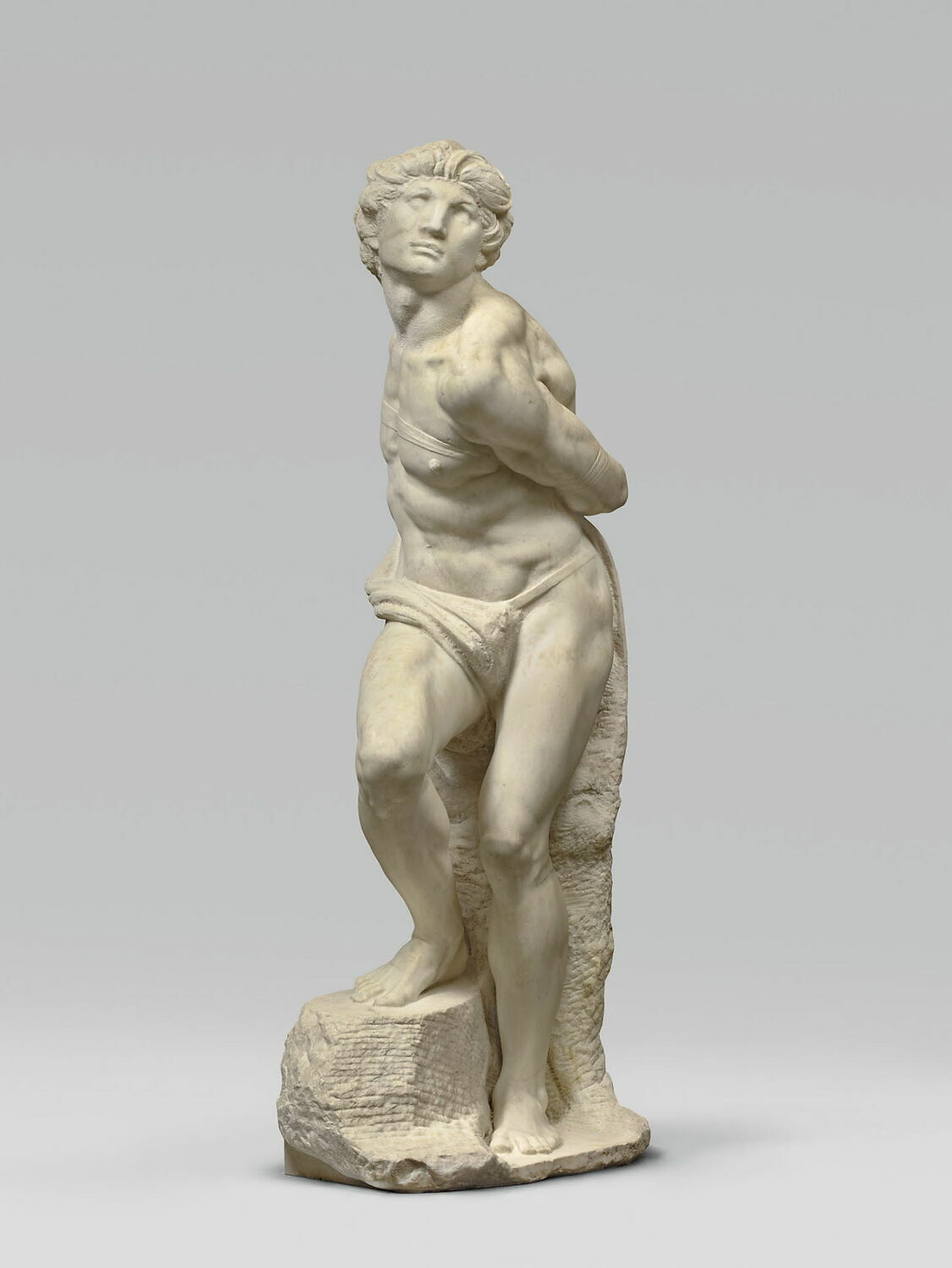
Esclave rebelle, Buonarroti, Michelangelo dit Michel-Ange, 1513 - 1515

Schiavo ribelle

1513 - 1515 · Museo del Louvre

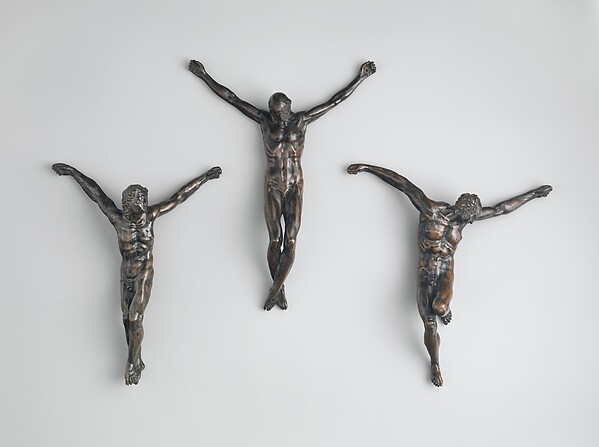
Christ and the Two Thieves Crucified, Michelangelo Buonarroti, ca. 1560–70

Christ and the Two Thieves Crucified

ca. 1560–70 · Metropolitan Museum of Art

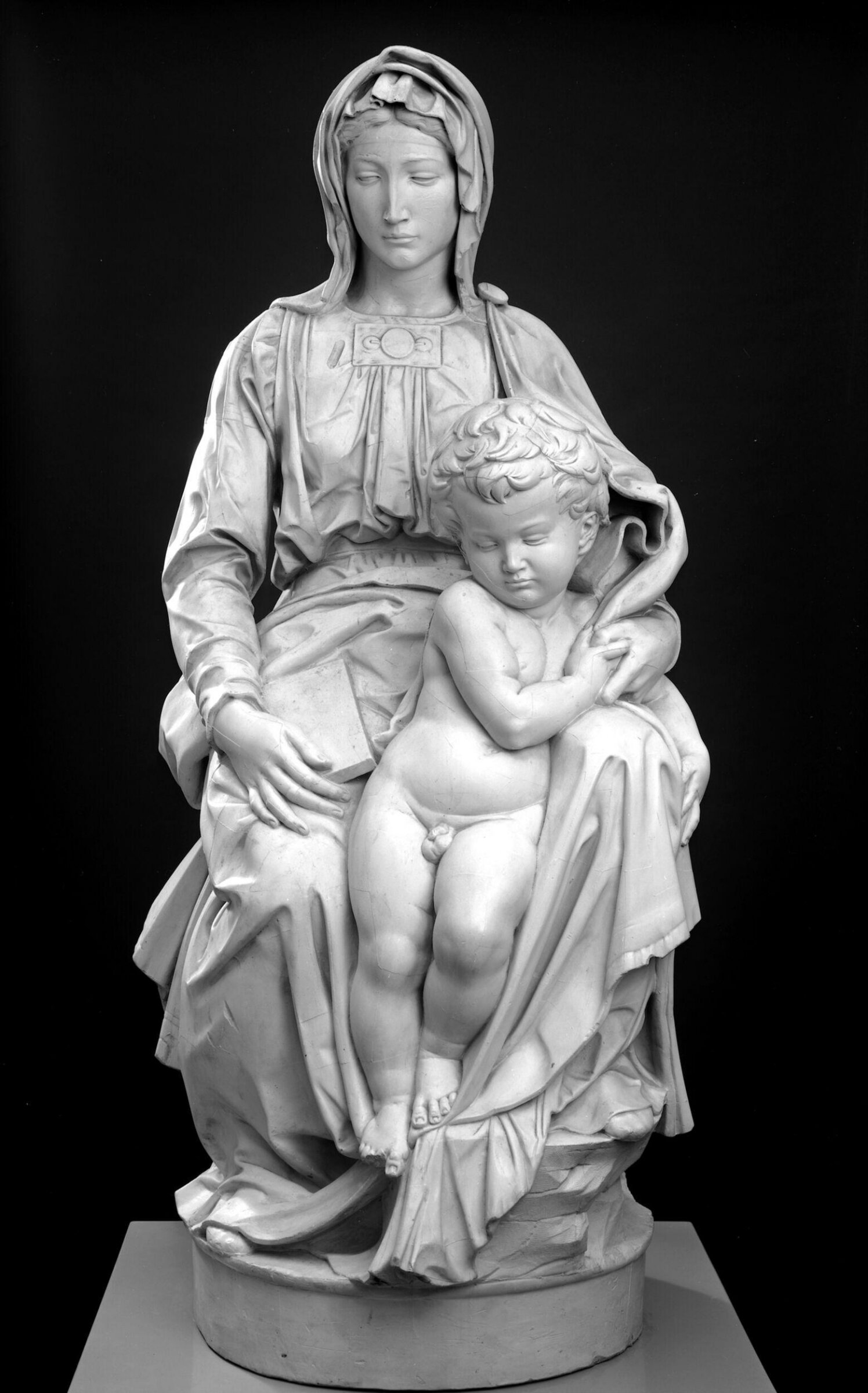
Bruges Madonna, Michelangelo, 1504-6

Bruges Madonna

1504-6 · Victoria and Albert Museum

Design for an Equestrian Statue of Henry II of France, Michelangelo, 1559 - 1564

Design for an Equestrian Statue of Henry II of France

1559 - 1564 · Rijksmuseum

The Prophet Ezekiel, Giorgio Ghisi after Michelangelo, early 1570s

The Prophet Ezekiel

early 1570s · Non esposta · National Gallery of Art

The Eritrean Sibyl, Giorgio Ghisi after Michelangelo, early 1570s

The Eritrean Sibyl

early 1570s · Non esposta · National Gallery of Art

Two Nude Men, Marcantonio Raimondi after Michelangelo

Two Nude Men

Non esposta · National Gallery of Art