 Gustav KlimtAustria, 1862–1918
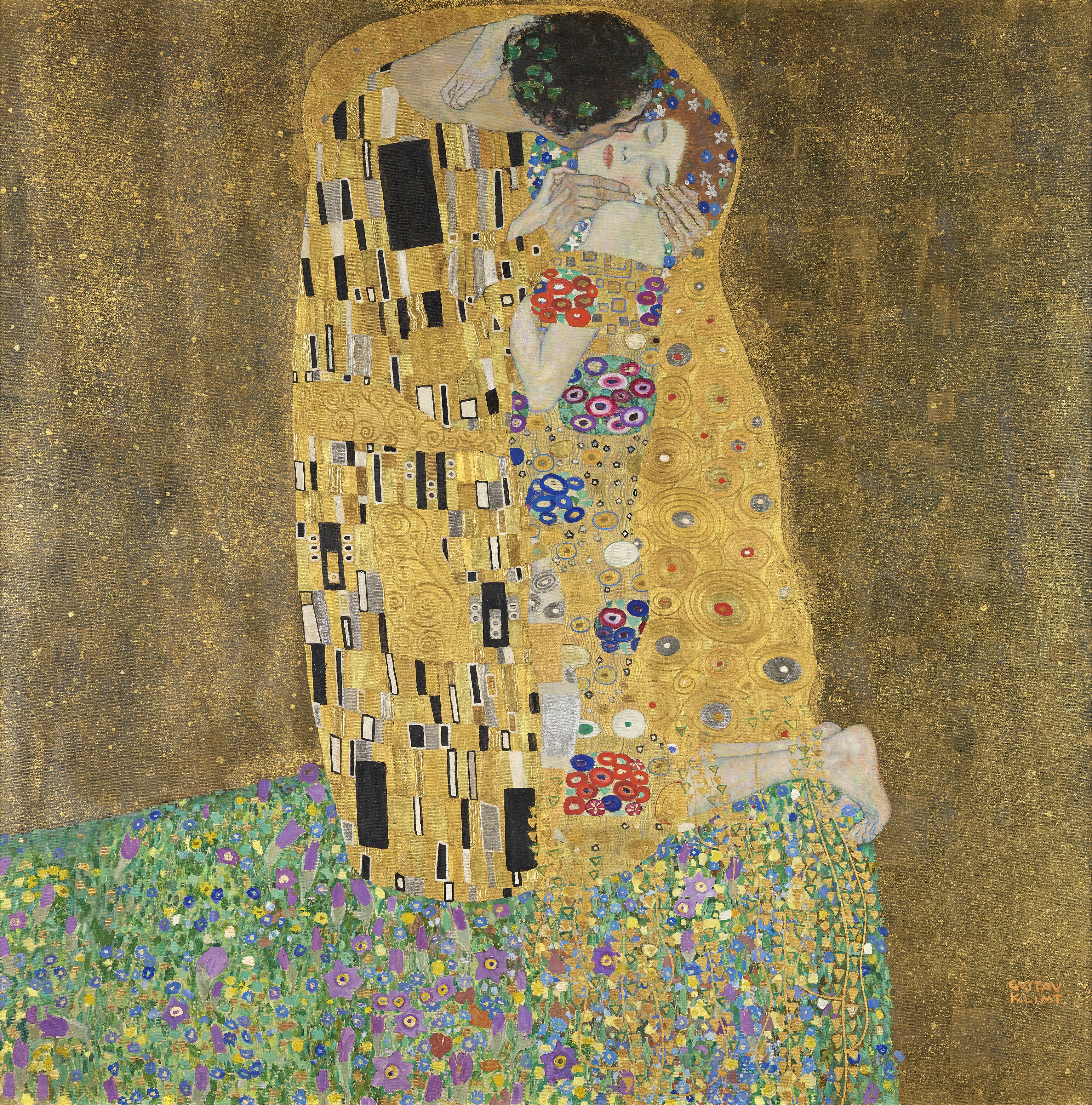
Der Kuss (Liebespaar)
Si può vedere?
Non si sa
Dove si trova «Der Kuss (Liebespaar)» oggi? Collezione: Österreichische Galerie Belvedere, Vienna. Non si sa.

Vienna, Austria
Il proprietario è noto; non si sa se oggi sia esposta.
- Ultimo cambio di stato
- Fonte
- Il museo
Sul dipinto
Con le parole del museo — in tedesco
Ohne konkreten Auftrag malt Gustav Klimt auf dem Höhepunkt seiner Goldenen Periode sein wohl berühmtestes Werk: Es zeigt ein Paar, wie zu einer Einheit verschmolzen, am Rande einer Blumenwiese. Nur die unterschiedliche Musterung der Gewänder setzt die Körper voneinander ab, die von einer goldschimmernden Gloriole umfangen werden. Tatsächlich verwendet Klimt in seinem Bild echtes Blattgold, Silber und Platin. Er beginnt mit der Arbeit an dem Gemälde vermutlich 1907 und stellt es im Juni des Folgejahres unter dem Titel „Liebespaar“ erstmals im Rahmen der Kunstschau aus. Von dort kauft es das Kunstministerium um eine bereits damals hohe Summe für die Moderne Galerie, das heutige Belvedere, an. Im Herbst 1909 wird das Bild in einem Katalog des Museums erstmals als „Der Kuss“ bezeichnet – der Titel, unter dem es heute weltbekannt ist.
Österreichische Galerie Belvedere
Scheda
In catalogo
Fonti
- Österreichische Galerie Belvedere
- Immagine: Österreichische Galerie Belvedere — CC BY-SA 4.0
Nella vita di Gustav Klimt
Tutta la vita1900–1907
He returns the advance and keeps the paintings
The state commission refused to accept the three “Faculty Paintings”; Klimt told the minister he would return the 60,000-krone advance, refused to work for the Austrian state again and kept the pictures. The ministry demanded them, but Klimt did not open the door to the removal men — and the affair ended in his victory.
1906
The “Kunstschau” group
A year after the split Klimt formed the “Kunstschau” group, or “Klimt group”, which included Carl Moll, Otto Wagner and other leading Austrian artists.
1908
Klimt defends Kokoschka
The public and critics fell on the debutant Oskar Kokoschka so fiercely that the scandal of the “Faculty Paintings” came to mind; Klimt did not turn away from his pupil and defended his place in the show even if it were to be closed. Hevesi granted him talent but denied him taste; Klimt replied that art has nothing to do with taste.
1 June – 16 November 1908
The first Vienna Art Show
For the sixtieth anniversary of Franz Joseph's reign pavilions with 54 rooms were built on a temporary site and over 900 works shown. Room 22, which Peter Altenberg called “the church of modern art named after Gustav Klimt”, held “The Kiss”, “Adele Bloch-Bauer I”, “Danaë” and “The Three Ages of Woman”.
1909
The second Vienna Art Show
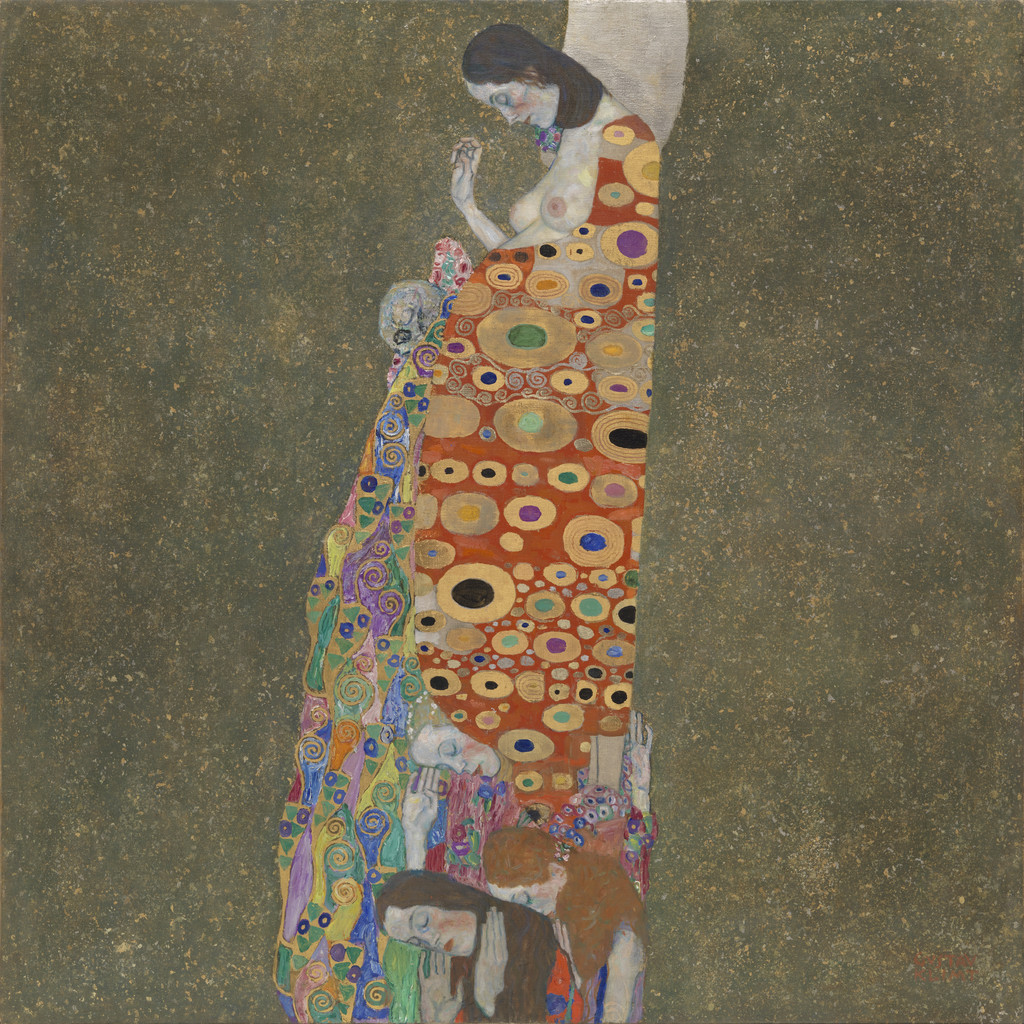
The second generation of modernists was represented by Kokoschka and Egon Schiele, and Klimt showed “Judith II” and “Hope II”. The works of Van Gogh, Munch, Gauguin, Vallotton, Bonnard and Matisse gave him the impulse for a new phase, but he never organized exhibitions again.
1910
Klimt at the Venice Biennale
Klimt's exhibition at the 1910 Venice Biennale influenced the artistic scene of Venice; the Italian Liberty artists Galileo Chini and Vittorio Zecchin were among those he influenced.