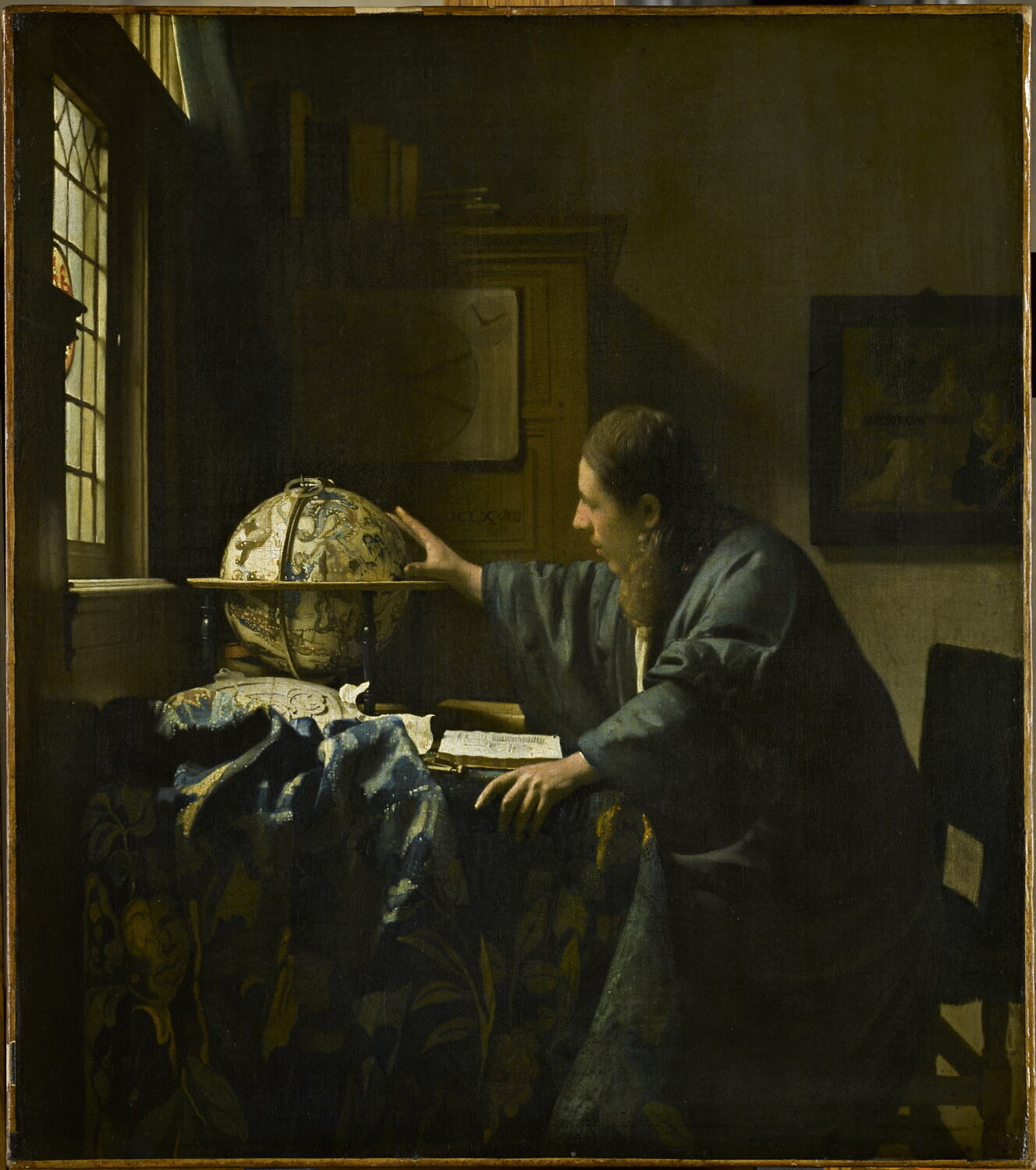
Johannes VermeerPaesi Bassi, 1632–1675
Lettera d'amore
De liefdesbrief
Si può vedere?
Non si sa
Dove si trova «Lettera d'amore» oggi? Collezione: Rijksmuseum, Amsterdam. Non si sa.

Amsterdam, Paesi Bassi
Il proprietario è noto; non si sa se oggi sia esposta.
- Fonte
- Il museo
Sul dipinto
La Lettera d'amore è un dipinto olio su tela (44x38 cm) di Jan Vermeer, databile al 1669-1670 circa e conservato nel Rijksmuseum di Amsterdam. È firmato "IVMeer" sulla parete poco sopra il cesto.
Con le parole del museo
Vermeer chose an unusual vantage point for this painting. From a dim space in the foreground, a glimpse is afforded of another room with a domestic scene. An elegantly dressed woman looks up expectantly at a maidservant, who has just handed her a letter. The seascape on the wall behind them may well allude to the epistle’s subject: during the 17th century, the sea was often compared to love, and the lover to a ship.
Rijksmuseum
Scheda
- Numero di inventario
- SK-A-1595
Che cosa raffigura
In catalogo
Fonti
- Rijksmuseum
- Immagine: Wikimedia Commons — Public domain
Nella vita di Johannes Vermeer
Tutta la vita1653–1675 · Luogo di lavoro
Delft
1653–1675
Patrons: van Ruijven and van Buyten
Pieter van Ruijven and his wife Maria de Knuijt were Vermeer's patrons for the better part of his career: van Ruijven bought much of his output, which kept Vermeer afloat financially but reduced the chances of his fame spreading beyond Delft. The baker Hendrick van Buyten held a couple of his paintings as collateral.
1670
Death of his mother
In 1670 Vermeer's mother, Digna Baltens, who came from Antwerp, died.
1672
The “Year of Disaster”: war and the collapse of the market
In 1672 the Rampjaar, a severe economic downturn, struck the Dutch Republic after French troops under Louis XIV invaded from the south and troops from Münster and Cologne from the east. Vermeer's sale of a painting that year was his last, and five years passed before circumstances improved.
1672
To The Hague: appraising a collection for the Elector
In 1672 Vermeer, a recognised connoisseur, travelled to The Hague, where together with the painter Jacob Jordaens he appraised Venetian and Roman paintings offered to the Elector of Brandenburg for 30,000 guilders. Before a notary he denied the collection's authenticity and declared it worth no more than a tenth of the asking price.