ART WIKI32.979 in sala
MappaCollezioneArtistiMuseiMostreRivista
Accedi

ART WIKI

Dove è appeso il capolavoro, e quando si può entrare.

Collezioni: Art Institute of Chicago, Cleveland Museum of Art, Ermitage, Galleria Tret'jakov, Getty Museum, Harvard Art Museums, Hirshhorn Museum and Sculpture Garden, Metropolitan Museum of Art, Minneapolis Institute of Art, Museo del Louvre, Museo Puškin delle belle arti, Museo russo, Museum of Modern Art, National Gallery of Art, National Museum of Asian Art, National Portrait Gallery, Rijksmuseum, Smithsonian American Art Museum, Statens Museum for Kunst, Victoria and Albert Museum, Villa Getty, Whitney Museum of American Art, Catalogo statale del fondo museale russo (274 musei), Europeana (19 musei), Wikidata (6 musei), Paris Musées (12 musei) e Joconde, la banca dati dei musei del Ministero della Cultura francese (495 musei). Le immagini appartengono ai titolari dei diritti.

Sezioni

  • Mappa
  • Ricerca
  • Collezione
  • Capolavori
  • Esposte ora
  • Artisti

Altro

  • Musei e gallerie
  • Mostre
  • Rivista
  • Da dove vengono i dati
  • Privacy e cookie
HomeMappaCatalogo
  1. Collezione/
  2. Herzog Anton Ulrich-Museum/
  3. [Das Abendmahl; La Cène]
[Das Abendmahl; La Cène], Jacques Callot, 1619–1624
Jacques Callot, ritrattoJacques CallotFrancia, 1592–1635

[Das Abendmahl; La Cène]

1619–1624 · Print

Si può ammirare?

Non si sa

Herzog Anton Ulrich-Museum

Braunschweig, Germania

Il proprietario è noto; non si sa se oggi sia esposta.

Ultimo cambio di stato
27 set 2026
Fonte
Il museo
Sulla mappaPagina del museo

Scheda

1619–1624
15921635

Nel frattempo, nella vita di Jacques Callot

Tutta la vita
  1. 1611–1621 · Luogo di lavoro

    Florence

  2. 1614–1621

    At the court of Cosimo II de’ Medici

    Under Parigi’s direction Callot works at the court of the Grand Duke of Tuscany Cosimo II de’ Medici in the Uffizi, designing festivals and theatrical performances — later these give him themes for his series of grotesque prints; during his Florentine years he becomes an independent master and often works for the Medici.

  3. 1617

    Switches to hard ground and repeated biting

    From 1617 Callot uses, instead of the soft ground customary until then, the acid-resistant hard ground of Florentine joiners and furniture-makers; it allows the plate to be bitten repeatedly, with parts of the spatial planes successively covered by varnish, and gives broad tonal gradations; he is also credited with the échoppe, an etching needle with a slanted end that produces a swelling line.

  4. 1621

    Returns to Nancy after the death of Cosimo II

    After the death of Grand Duke Cosimo II de’ Medici, Callot responds to Duke Charles IV of Lorraine’s wish to see him at his court and returns to Lorraine, where he is received with flattering honours; staying in Nancy, he sends his prints all over Europe, and Rembrandt becomes a keen collector of them.

  5. 1621–1635 · Luogo di lavoro

    Nancy

Altre opere di Jacques Callot

Tutte le opere

Dalla collezione: Herzog Anton Ulrich-Museum

Pagina del museo

Sullo stesso tema · Abendmahl

Tutte le opere sul tema

Che cosa raffigura

AbendmahlPassionNeues Testament

In catalogo

StampeBaroccoXVII secolo

Fonti

  • Herzog Anton Ulrich-Museum
  • Immagine: Herzog Anton Ulrich-Museum — CC BY-NC-SA 4.0
Lust, Jacques Callot, 17th century

Lust

17th century · Harvard Art Museums

Temptation of Saint Anthony, Jacques Callot, 17th century

Temptation of Saint Anthony

17th century · Harvard Art Museums

Envy, Jacques Callot, 17th century

Envy

17th century · Harvard Art Museums

Pardon des Rochelois, Jacques Callot, 17th century

Pardon des Rochelois

17th century · Harvard Art Museums

Pride, Jacques Callot, 17th century

Pride

17th century · Harvard Art Museums

Anger, Jacques Callot, 17th century

Anger

17th century · Harvard Art Museums

Descente dans l'île de Ré, Jacques Callot, 17th century

Descente dans l'île de Ré

17th century · Harvard Art Museums

Gluttony, Jacques Callot, 17th century

Gluttony

17th century · Harvard Art Museums

Portrait d'Adolphe de Vignacourt Grand Maître de Malthe, Caravaggio, 1704–1755

Caravaggio

Portrait d'Adolphe de Vignacourt Grand Maître de Malthe, 1704–1755

Ecce Homo, Caravaggio, 1674–1684

Caravaggio

Ecce Homo, 1674–1684

Heiliger Hieronymus, Caravaggio

Caravaggio

Heiliger Hieronymus

Bildnis eines Mannes, Rembrandt, 1839–1850

Rembrandt van Rijn

Bildnis eines Mannes, 1839–1850

Bildnis einer Frau, Rembrandt, 1839–1850

Rembrandt van Rijn

Bildnis einer Frau, 1839–1850

Tobias und seine Frau, Rembrandt, 1773

Rembrandt van Rijn

Tobias und seine Frau, 1773

Tobias und seine Frau, Rembrandt, 1773

Rembrandt van Rijn

Tobias und seine Frau, 1773

Lot mit seinen Töchtern, Rembrandt, 1771

Rembrandt van Rijn

Lot mit seinen Töchtern, 1771

Das letzte Abendmahl, Albrecht Dürer, 1523

Albrecht Dürer

Das letzte Abendmahl, 1523

Herzog Anton Ulrich-Museum

Das letzte Abendmahl, Albrecht Dürer, 1523

Albrecht Dürer

Das letzte Abendmahl, 1523

Herzog Anton Ulrich-Museum

[Das Abendmahl; Il célèbre la Cène], Jacques Callot, 1621–1631

Jacques Callot

[Das Abendmahl; Il célèbre la Cène], 1621–1631

Herzog Anton Ulrich-Museum

Christus, Brot und Wein segnend, Carlo Dolci

Carlo Dolci

Christus, Brot und Wein segnend

Gemäldegalerie Alte Meister

Das letzte Abendmahl, Hans Sebald Beham, 1522

Hans Sebald Beham

Das letzte Abendmahl, 1522

Herzog Anton Ulrich-Museum

Das Sakrament des Abendmahl, Giuseppe Maria Crespi

Giuseppe Maria Crespi

Das Sakrament des Abendmahl

Gemäldegalerie Alte Meister

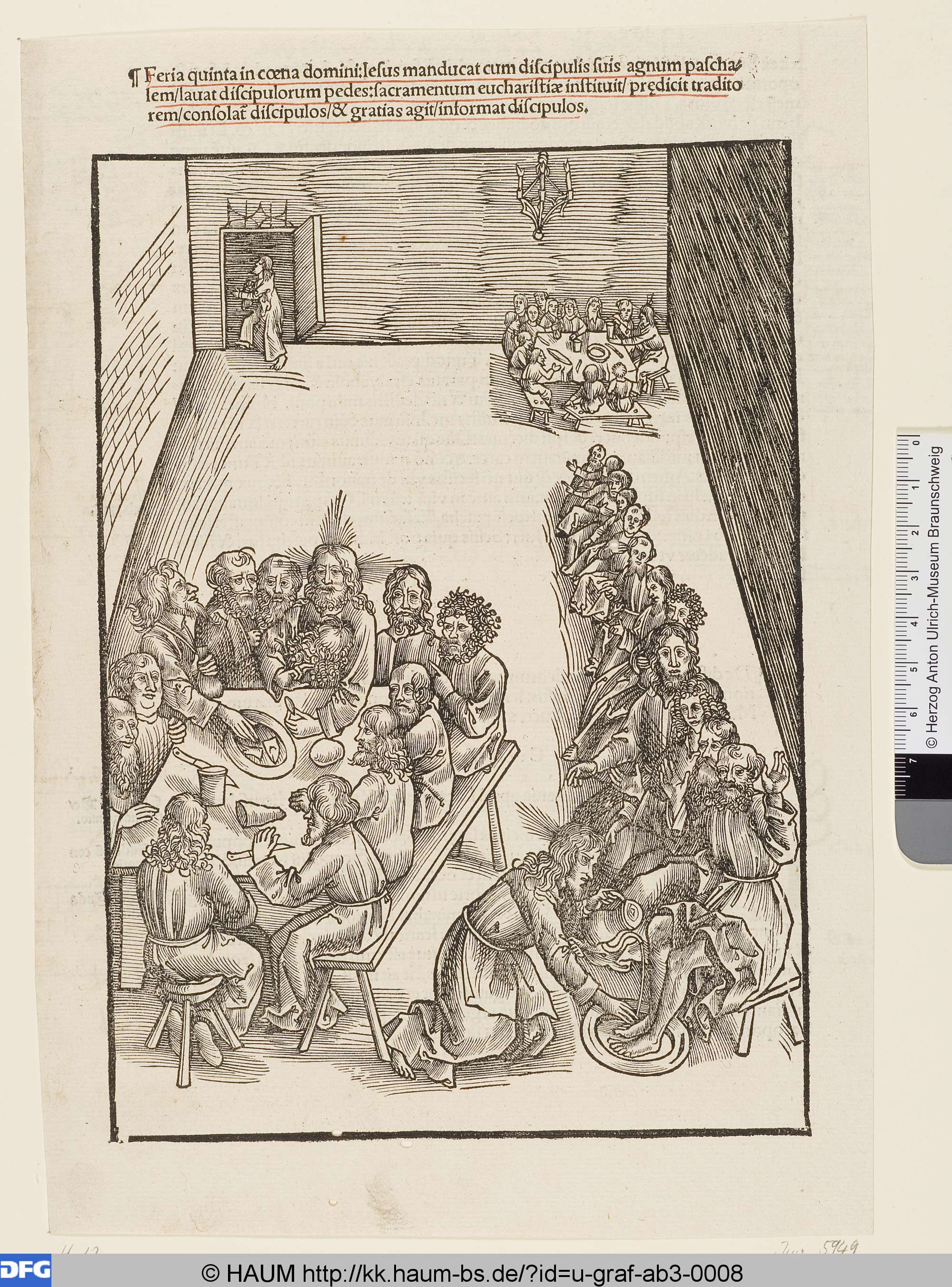
Abendmahl und Fußwaschung durch Christus, Urs Graf senior, 1506

Urs Graf

Abendmahl und Fußwaschung durch Christus, 1506

Herzog Anton Ulrich-Museum

Abendmahl und Fußwaschung durch Christus, Urs Graf senior, 1506

Urs Graf

Abendmahl und Fußwaschung durch Christus, 1506

Herzog Anton Ulrich-Museum