 Jean DubuffetFrancia, 1901–1985
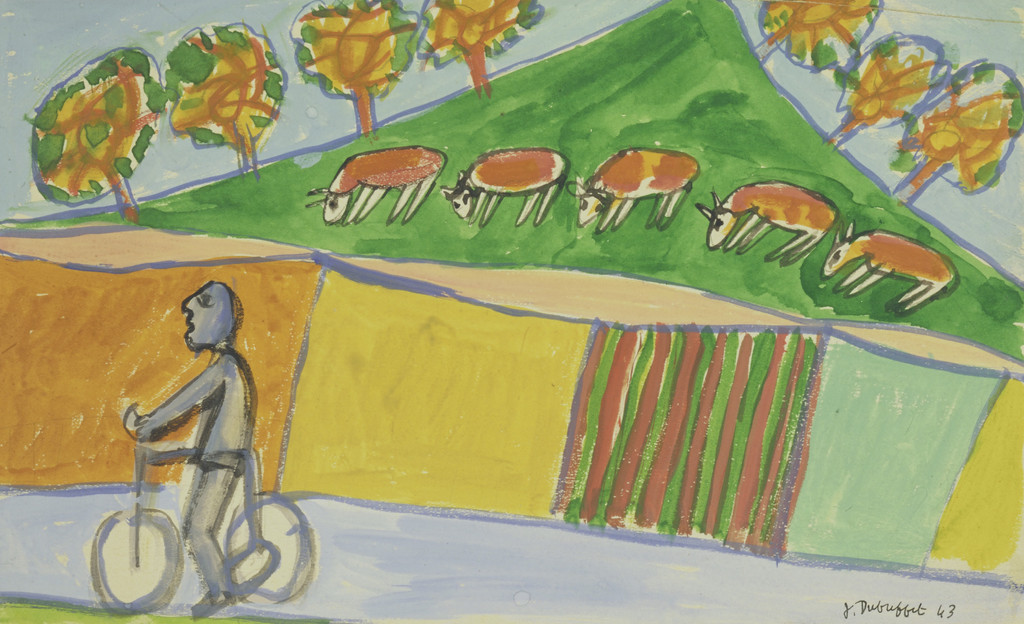
Cyclist with Five Cows
Si può ammirare?
Al momento non riceve

Museum of Modern Art
New York, Stati Uniti
Appartiene alla collezione, ma al momento non è esposta.
- Verificato
- 12 giorni fa
- Fonte
- I dati di collezione del museo stesso
Scheda
- Numero di inventario
- 1319.1968
Fonti
- Museum of Modern Art: the museum's own open data · acquisita 12 giorni fa
- Immagine: Museum of Modern Art — © the artist or rights holder
Nel frattempo, nella vita di Jean Dubuffet
Tutta la vita1940–1944
The wine business at Bercy under the German Occupation
During the German Occupation of France Dubuffet developed his wine business at Bercy. Years later, in an autobiographical text, he boasted of having made substantial profits by supplying wine to the Wehrmacht.
1942
He resolves to devote himself to art again
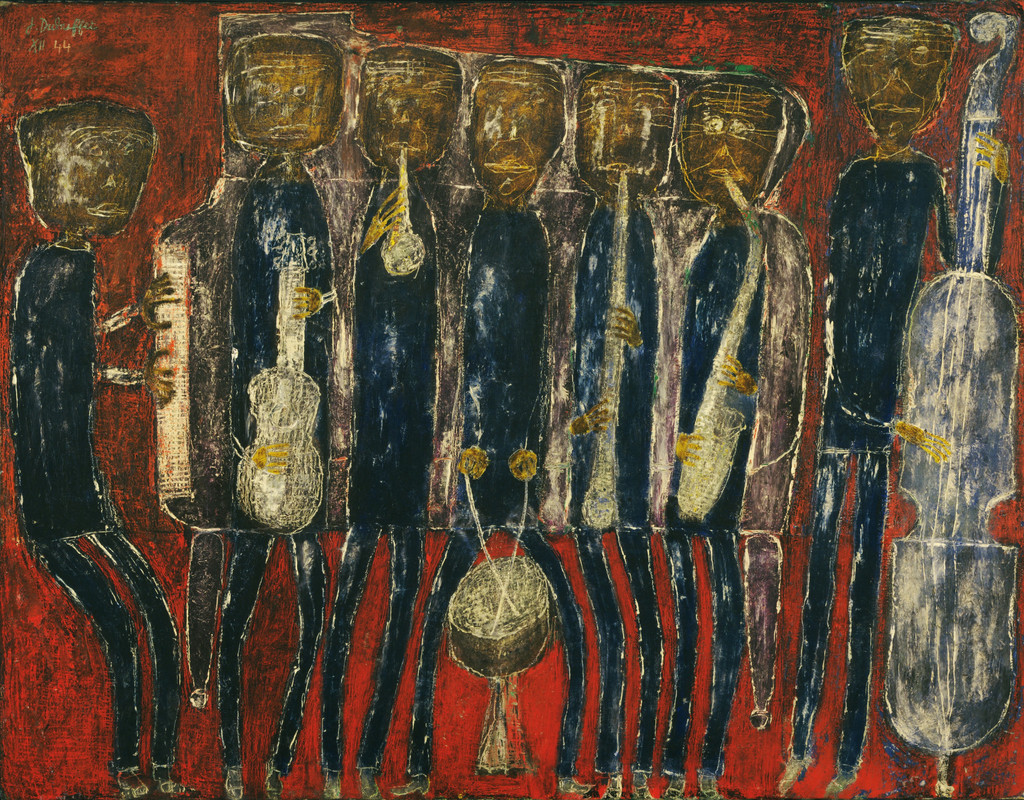
In 1942 Dubuffet decided to devote himself to art again. He drew subjects from everyday life, such as people sitting in the Paris Métro or walking in the country, and painted in strong unbroken colors recalling the palette of Fauvism and the Brücke painters, often placing figures in a very cramped space.
1943
Limbour brings Jean Paulhan to his studio
In 1943 his childhood friend, the writer Georges Limbour, took Jean Paulhan to Dubuffet's studio; the artist's work was unknown at that time. Paulhan was impressed and the meeting proved a turning point; in 1944 an important relationship between the two began.
October 1944
First solo show at Galerie René Drouin
Dubuffet's first solo show opened in October 1944 at the Galerie René Drouin in Paris, marking his third attempt to become an established artist.
1945
He begins collecting art brut
In 1945 Dubuffet began to collect art brut, “raw” art close to the work of children, the self-taught and the mentally ill; the collection is now in Lausanne.
1945
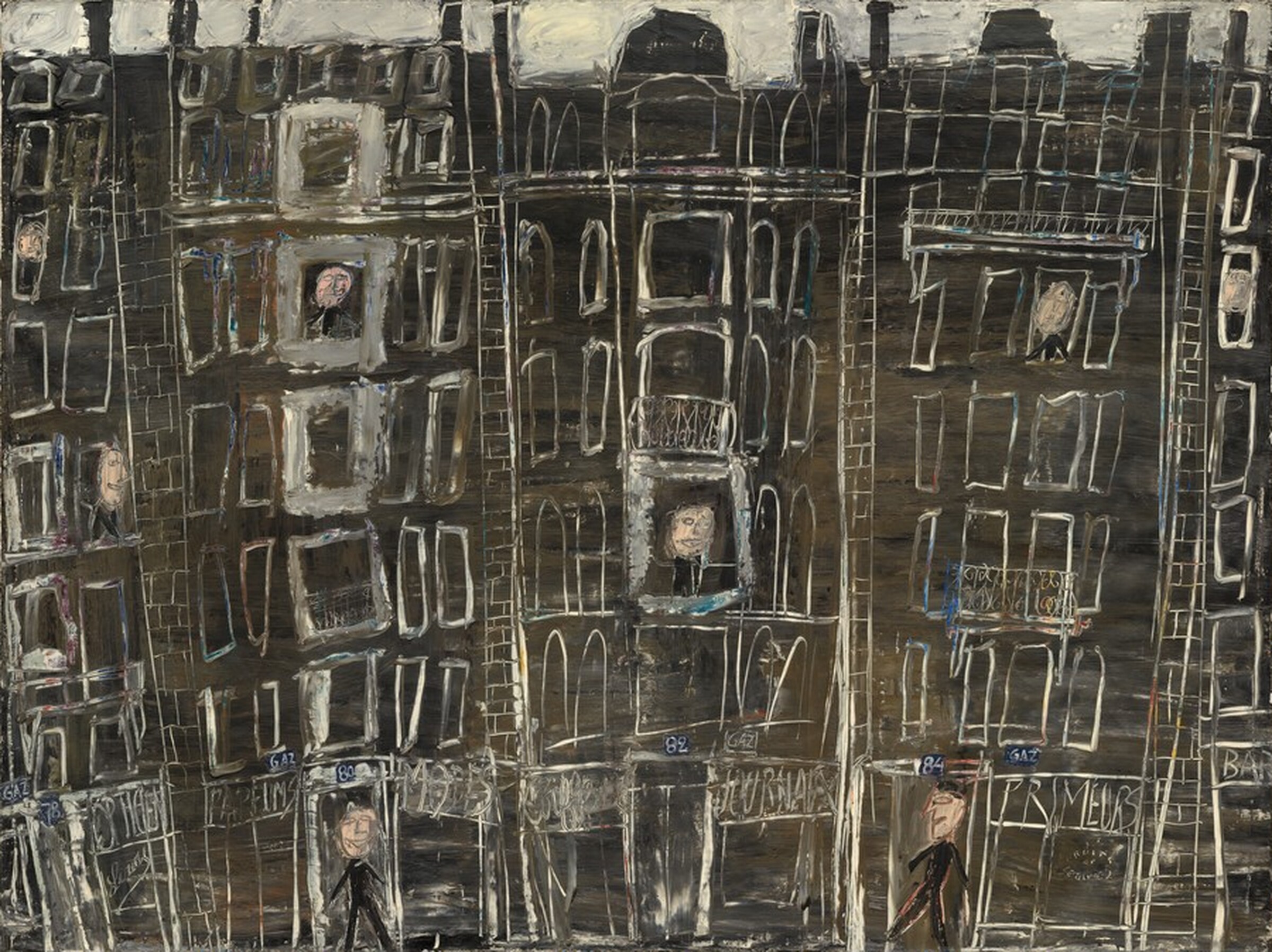
Fautrier's show and the thick paste
In 1945 Dubuffet saw a show of Jean Fautrier's paintings in Paris, in which he recognized meaningful art that expressed the depth of a person directly and purely. Emulating Fautrier, he began mixing thick oil paint with mud, sand, coal dust, pebbles, glass, straw, plaster, cement and tar, and made scratches and slashes in the paste.