ART WIKI32.963 in sala
MappaCollezioneArtistiMuseiMostreRivista
Accedi

ART WIKI

Dove è appeso il capolavoro, e quando si può entrare.

Collezioni: Art Institute of Chicago, Cleveland Museum of Art, Ermitage, Galleria Tret'jakov, Getty Museum, Harvard Art Museums, Hirshhorn Museum and Sculpture Garden, Metropolitan Museum of Art, Minneapolis Institute of Art, Museo del Louvre, Museo Puškin delle belle arti, Museo russo, Museum of Modern Art, National Gallery of Art, National Museum of Asian Art, National Portrait Gallery, Rijksmuseum, Smithsonian American Art Museum, Statens Museum for Kunst, Victoria and Albert Museum, Villa Getty, Whitney Museum of American Art, Catalogo statale del fondo museale russo (274 musei), Europeana (19 musei), Wikidata (6 musei), Paris Musées (12 musei) e Joconde, la banca dati dei musei del Ministero della Cultura francese (495 musei). Le immagini appartengono ai titolari dei diritti.

Sezioni

  • Mappa
  • Ricerca
  • Collezione
  • Capolavori
  • Esposte ora
  • Artisti

Altro

  • Musei e gallerie
  • Mostre
  • Rivista
  • Da dove vengono i dati
  • Privacy e cookie
HomeMappaCatalogo
  1. Collezione/
  2. Art Institute of Chicago/
  3. Cow Suckling a Calf
Cow Suckling a Calf, India, About 9th century

India

Cow Suckling a Calf

About 9th century · Sculpture

Sulla scultura

This naturalistic relief panel depicts a calf sucking milk from his mother while she stands patiently looking out at the viewer. Her placid eyes; floppy ears; undulating dewlap; small, upwardly curving horns; and hump help identify her as belonging to the distinctive breed of Brahman cattle originally bred in India. Cows enjoy a respected status in India: they are regarded as the nourishing mother, as portrayed in this frieze, and even their waste is used in purification rituals and for fuel.

Continua a leggere

In the medieval period in India, the cow came to be particularly associated with Krishna, an incarnation of the Hindu god Vishnu, who grew up in Vrindavan (near Mathura) among cowherds, a theme much celebrated in art. Less common are individual portrayals of a cow and calf, like this relief, which most likely came from the walls of a Hindu temple, possibly from central India, and can be dated to around the ninth century. It is possible that this relief was once part of a larger narrative scene on a temple wall, perhaps depicting Krishna among cows and cowherds.

Art Institute of Chicago · CC BY 4.0

Scheda

Numero di inventario
2006.180

Nella stessa sala · Gallery 141, Art Institute of Chicago

Pagina del museo

Sullo stesso tema · Cows

Tutte le opere sul tema

Fonti

  • Art Institute of Chicago
  • Immagine: Art Institute of Chicago — CC0

Si può ammirare?

Sì, riceve visite

Art Institute of Chicago

Chicago, Stati Uniti

Sala141

Esposta al pubblico. Chi lo garantisce è indicato qui sotto.

Verificato
3 giorni fa
Ultimo cambio di stato
19 ago 2026
Fonte
Il museo
Sulla mappaPagina del museo
Shiva as Lord of the Dance (Nataraja), India, Chola period, about 10th/11th century

India

Shiva as Lord of the Dance (Nataraja), Chola period, about 10th/11th century

Four-Armed God Vishnu, India, c. 5th century

India

Four-Armed God Vishnu, c. 5th century

Four-Armed Dancing God Ganesha with His Rat Mount, Nepal, 16th/17th century

Nepal

Four-Armed Dancing God Ganesha with His Rat Mount, 16th/17th century

God Vishnu Riding His Mount, Garuda, Nepal, 16th/17th century

Nepal

God Vishnu Riding His Mount, Garuda, 16th/17th century

Four-Armed Seated God Ganesha, Pakistan or Afghanistan, Shahi period, 7th/8th century

Pakistan or Afghanistan

Four-Armed Seated God Ganesha, Shahi period, 7th/8th century

Two-Armed God Ganesha Holding a Bowl of Sweets, India, c. 3rd/4th century

India

Two-Armed God Ganesha Holding a Bowl of Sweets, c. 3rd/4th century

God Vishnu with Goddess Lakshmi and His Mount, Garuda, in Attendance, Nepal, 11th century

Nepal

God Vishnu with Goddess Lakshmi and His Mount, Garuda, in Attendance, 11th century

Shiva Nataraja Enshrined at Chidambaram Temple with Attendants, India, 19th century

India

Shiva Nataraja Enshrined at Chidambaram Temple with Attendants, 19th century

Young Ladies of the Village, Gustave Courbet, 1851–52

Gustave Courbet

Young Ladies of the Village, 1851–52

Metropolitan Museum of Art

Woman with Cow, and Goose; Counterproof [verso], Paul Gauguin, 1884-1888

Paul Gauguin

Woman with Cow, and Goose; Counterproof [verso], 1884-1888

Non esposta · National Gallery of Art

Tahitian Carrying Bananas (Le porteur de fei), Paul Gauguin, in or after 1895

Paul Gauguin

Tahitian Carrying Bananas (Le porteur de fei), in or after 1895

Non esposta · National Gallery of Art

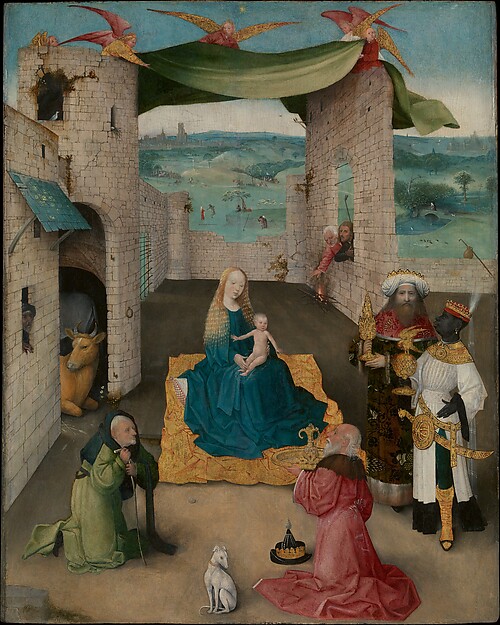
The Adoration of the Magi, Hieronymus Bosch, ca. 1475

Hieronymus Bosch

Adorazione dei Magi, ca. 1475

Metropolitan Museum of Art

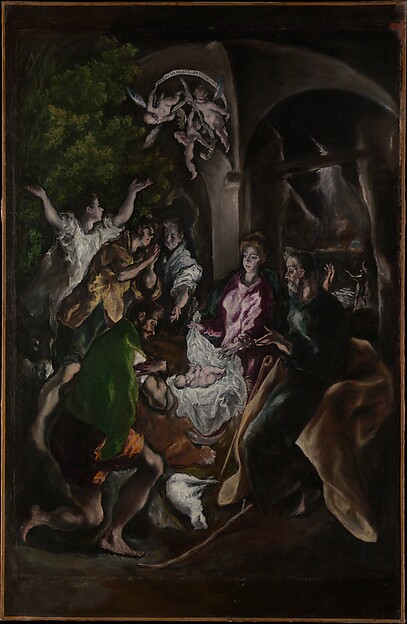
The Adoration of the Shepherds, El Greco, ca. 1605–10

El Greco

The Adoration of the Shepherds, ca. 1605–10

Metropolitan Museum of Art

American Landscape, Edward Hopper, 1920

Edward Hopper

American Landscape, 1920

Non esposta · National Gallery of Art

Studies of Cattle, John Singer Sargent, c. 1872

John Singer Sargent

Studies of Cattle, c. 1872

Non esposta · National Gallery of Art

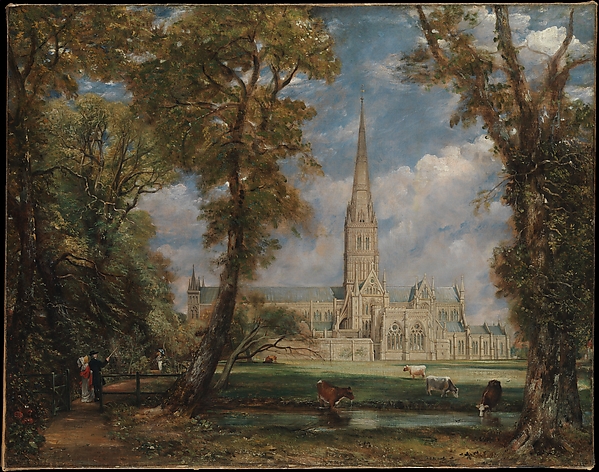
Salisbury Cathedral from the Bishop's Grounds, John Constable, ca. 1825

John Constable

Salisbury Cathedral from the Bishop's Grounds, ca. 1825

Metropolitan Museum of Art

Che cosa raffigura

CowsAnimaleCalfsMothersNurturingFeedingNursing (breast feeding)

In catalogo

SculturaPietraSouth AsianIndian (South Asian)India