 Antoine-Jean GrosFrancia, 1771–1835
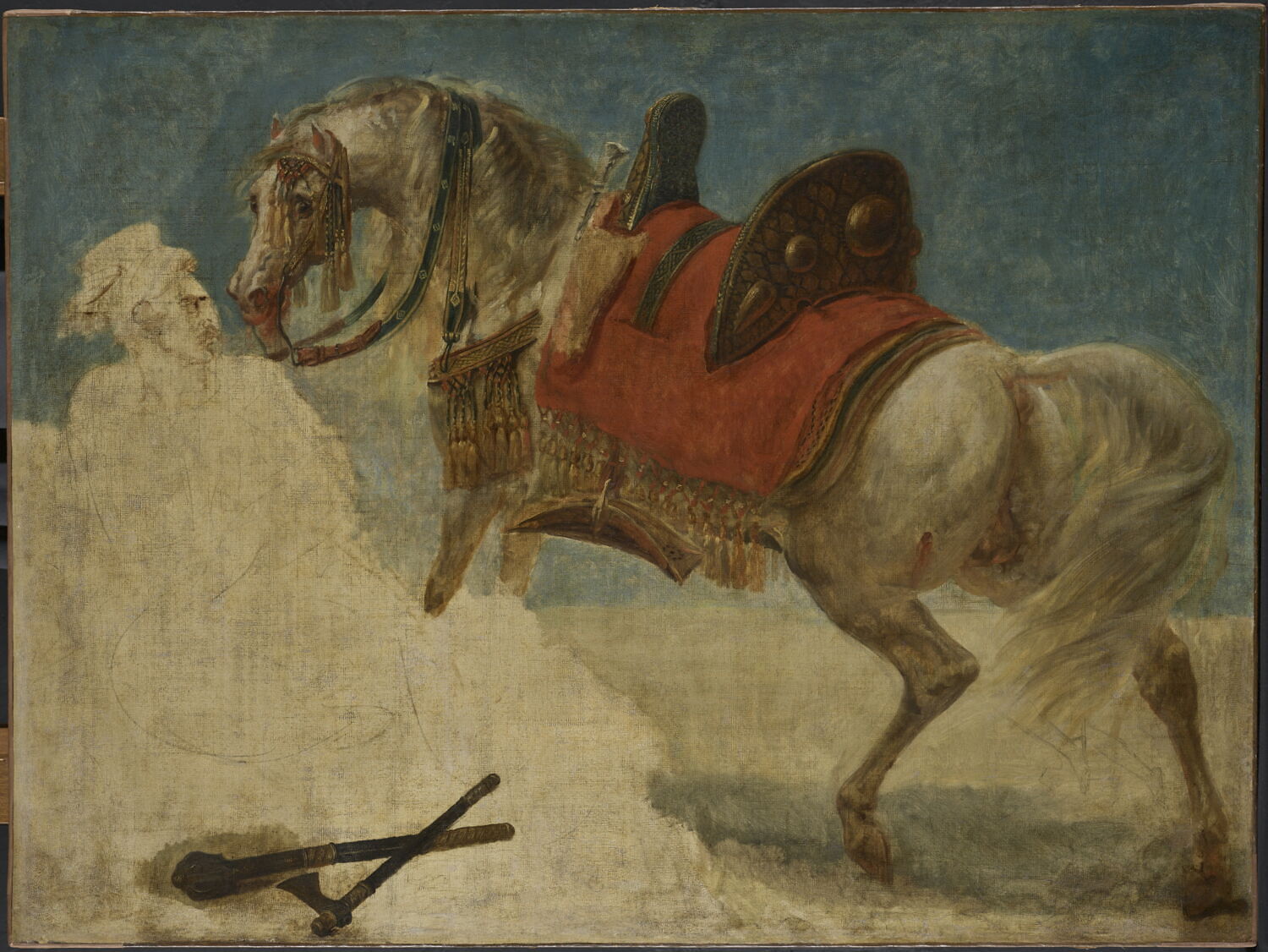
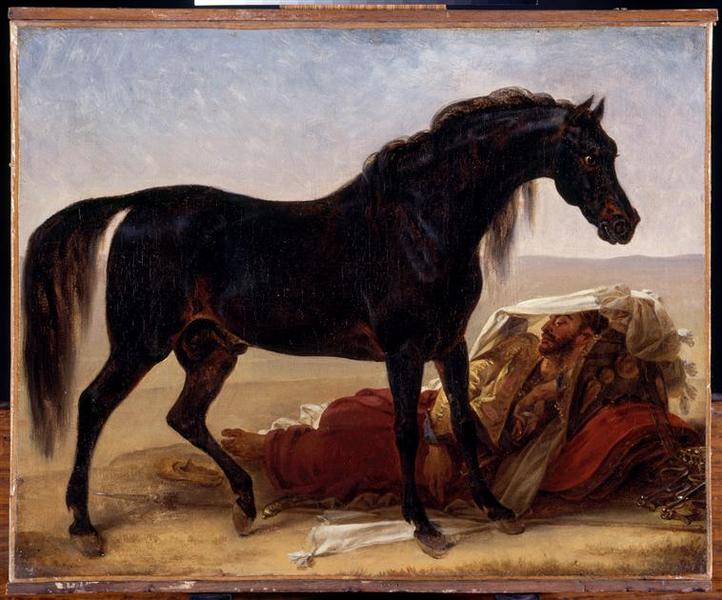
Cheval arabe
Si può vedere?
Non si sa
Dove si trova «Cheval arabe» oggi? Collezione: Musée des Arts et de l'Archéologie de Valenciennes, Valenciennes. Non si sa.
Valenciennes, Francia
Il proprietario è noto; non si sa se oggi sia esposta.
- Ultimo cambio di stato
- Fonte
- Il museo
Scheda
- Numero di inventario
- P.46.1.343
Che cosa raffigura
In catalogo
Fonti
- Musée des Arts et de l'Archéologie de Valenciennes
- Immagine: Musée des Arts et de l'Archéologie de Valenciennes — © Claude Thériez; Ministère de la Culture (France), base Joconde
Nella vita di Antoine-Jean Gros
Tutta la vita1804
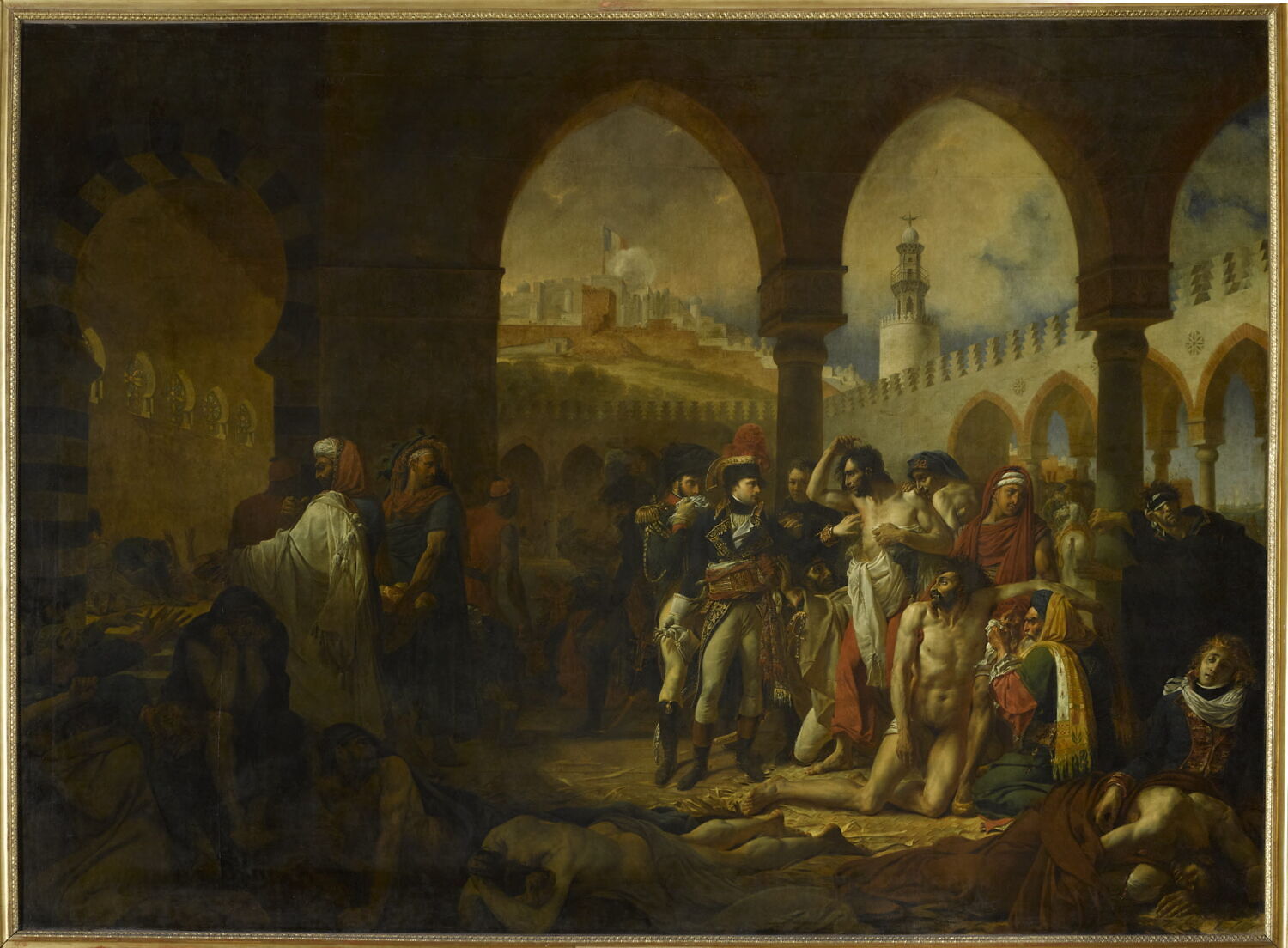
Salon triumph: Bonaparte among the plague victims of Jaffa
At the Salon Gros debuts the canvas in which Bonaparte visits soldiers sick with bubonic plague at Jaffa and reaches out to one of them, unafraid of contagion. The painting brings Gros a triumph and launches his successful career; the year of its showing is given as 1804, other accounts say 1806.
1811
State commission for the Panthéon murals
Gros receives a state commission to decorate the interiors of the Paris Panthéon; the work will be completed only in 1824.
5 November 1816
Professor at the École des Beaux-Arts
Gros is appointed professor at the École des Beaux-Arts in Paris, succeeding François-Guillaume Ménageot.
1835
Failure of “Hercules and Diomedes” at the Salon of 1835
The painting “Hercules and Diomedes” meets such a storm of criticism in Paris that Gros sends it to Toulouse, to the local Musée des Augustins.
25 – 26 June 1835
Death in the Seine: suicide at Meudon
Abandoned by his pupils, alienated by the rising tide of Romanticism and short of money, Gros falls into depression and throws himself into the Seine at Meudon. The day of his death is given as 26 June; other accounts say 25 June.
25 giugno 1835
Died