ART WIKI32.963 in sala
MappaCollezioneArtistiMuseiMostreRivista
Accedi

ART WIKI

Dove è appeso il capolavoro, e quando si può entrare.

Collezioni: Art Institute of Chicago, Cleveland Museum of Art, Ermitage, Galleria Tret'jakov, Getty Museum, Harvard Art Museums, Hirshhorn Museum and Sculpture Garden, Metropolitan Museum of Art, Minneapolis Institute of Art, Museo del Louvre, Museo Puškin delle belle arti, Museo russo, Museum of Modern Art, National Gallery of Art, National Museum of Asian Art, National Portrait Gallery, Rijksmuseum, Smithsonian American Art Museum, Statens Museum for Kunst, Victoria and Albert Museum, Villa Getty, Whitney Museum of American Art, Catalogo statale del fondo museale russo (274 musei), Europeana (19 musei), Wikidata (6 musei), Paris Musées (12 musei) e Joconde, la banca dati dei musei del Ministero della Cultura francese (495 musei). Le immagini appartengono ai titolari dei diritti.

Sezioni

  • Mappa
  • Ricerca
  • Collezione
  • Capolavori
  • Esposte ora
  • Artisti

Altro

  • Musei e gallerie
  • Mostre
  • Rivista
  • Da dove vengono i dati
  • Privacy e cookie
HomeMappaCatalogo
  1. Collezione/
  2. Museo Sorolla/
  3. Cabeza de cabra
Cabeza de cabra, Joaquín Sorolla Bastida, 1891–1896
Joaquín Sorolla, ritrattoJoaquín SorollaSpagna, 1863–1923

Cabeza de cabra

1891–1896 · Drawing

Si può ammirare?

Non si sa: il museo mantiene il riserbo

Museo Sorolla

Madrid, Spagna

Il proprietario è noto. Se oggi sia esposta, il museo non lo dice, e a indovinare non ci hanno insegnato.

Ultimo cambio di stato
27 set 2026
Fonte
I dati di collezione del museo stesso
Sulla mappaPagina del museo

Sull’opera

Con le parole del museo — in spagnolo

Cabeza de cabra en primerísimo plano, ocupando la mayor parte del papel. Está de perfil a la derecha. Dibujo muy detallado y preciso, quedando sólo esbozados los cuernos del animal.

Museo Sorolla

Scheda

1891–1896
18631923

Che cosa raffigura

Cabra

In catalogo

Disegni e acquerelliImpressionismoXIX secolo

Fonti

  • Museo Sorolla: i dati aperti del museo · acquisita 8 giorni fa
  • Immagine: Museo Sorolla — In Copyright

Nel frattempo, nella vita di Joaquín Sorolla

Tutta la vita
  1. 13 aprile 1889

    Daughter born: María Sorolla García

  2. 1890

    Moves to Madrid: large canvases for the salons

    The family moved to Madrid. For the next decade Sorolla concentrated on large canvases of orientalist, mythological, historical and social subjects for salons and international exhibitions in Madrid, Paris, Venice, Munich, Berlin and Chicago.

  3. 8 novembre 1892

    Son born: Joaquín Sorolla García

  4. 12 giugno 1895

    Daughter born: Elena Sorolla García

  5. 1897

    “A Research”: the Prize of Honour in Madrid

    Two paintings linking art and science, “Portrait of Dr. Simarro at the Microscope” and “A Research”, won Sorolla the Prize of Honour at the National Exhibition of Fine Arts. He showed his friend Simarro in the laboratory, catching the contrast between the reddish-yellow light of a gas burner and the weak mauvish light from the window.
Altre opere di Joaquín Sorolla

Tutte le opere
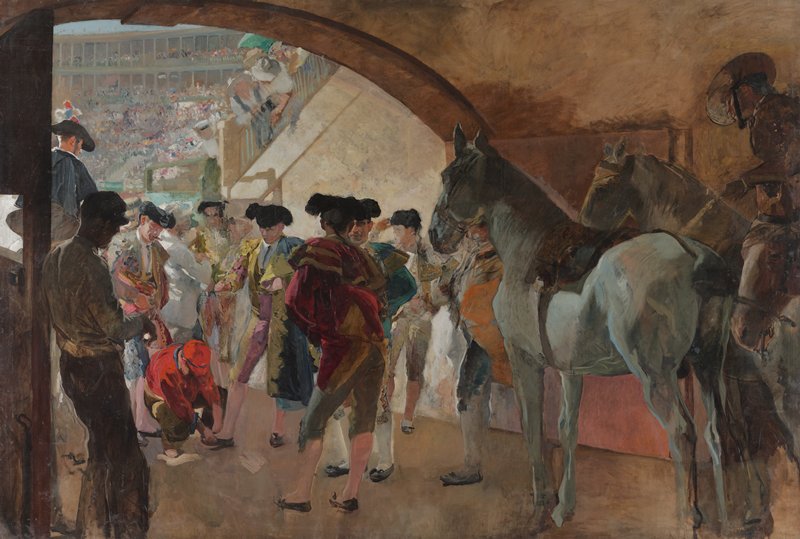
Before the Bullfight, Joaquin Sorolla y Bastida, c. 1900

Before the Bullfight

c. 1900 · Minneapolis Institute of Art

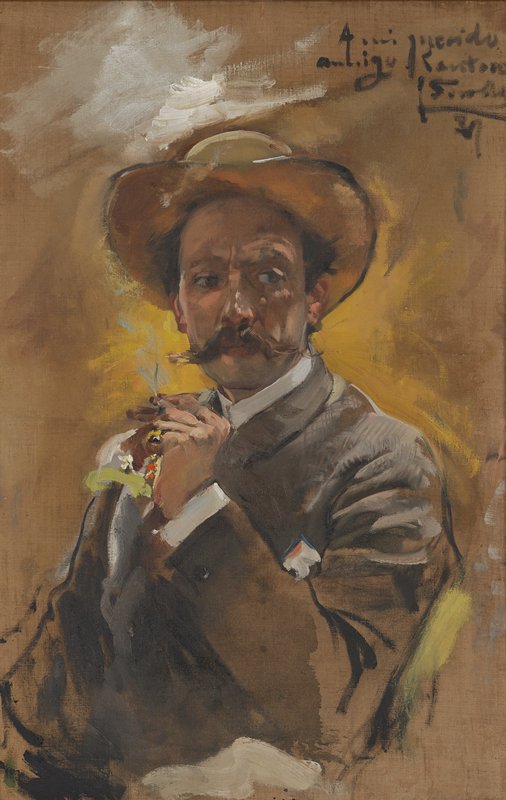
Portrait of the Painter Francesco Santoro, Rome, Joaquin Sorolla y Bastida, 1887

Portrait of the Painter Francesco Santoro, Rome

1887 · Minneapolis Institute of Art

The Wounded Foot, Joaquín Sorolla y Bastida, 1909

The Wounded Foot

1909 · Getty Museum

Hall of the Ambassadors, Alhambra, Granada, Joaquín Sorolla y Bastida, 1909

Hall of the Ambassadors, Alhambra, Granada

1909 · Getty Museum

Corner of the Garden, Alcazar, Sevilla, Joaquín Sorolla y Bastida, 1910

Corner of the Garden, Alcazar, Sevilla

1910 · Getty Museum

Court of the Dances, Alcázar, Sevilla, Joaquín Sorolla y Bastida, 1910

Court of the Dances, Alcázar, Sevilla

1910 · Getty Museum

Isabelita and Thor, Joaquin Sorolla y Bastida, 1893

Isabelita and Thor

1893 · National Gallery of Art

The Return from Fishing, Joaquín Sorolla, 1894

The Return from Fishing

1894 · Museo d'Orsay