John Dwight's Fulham Pottery
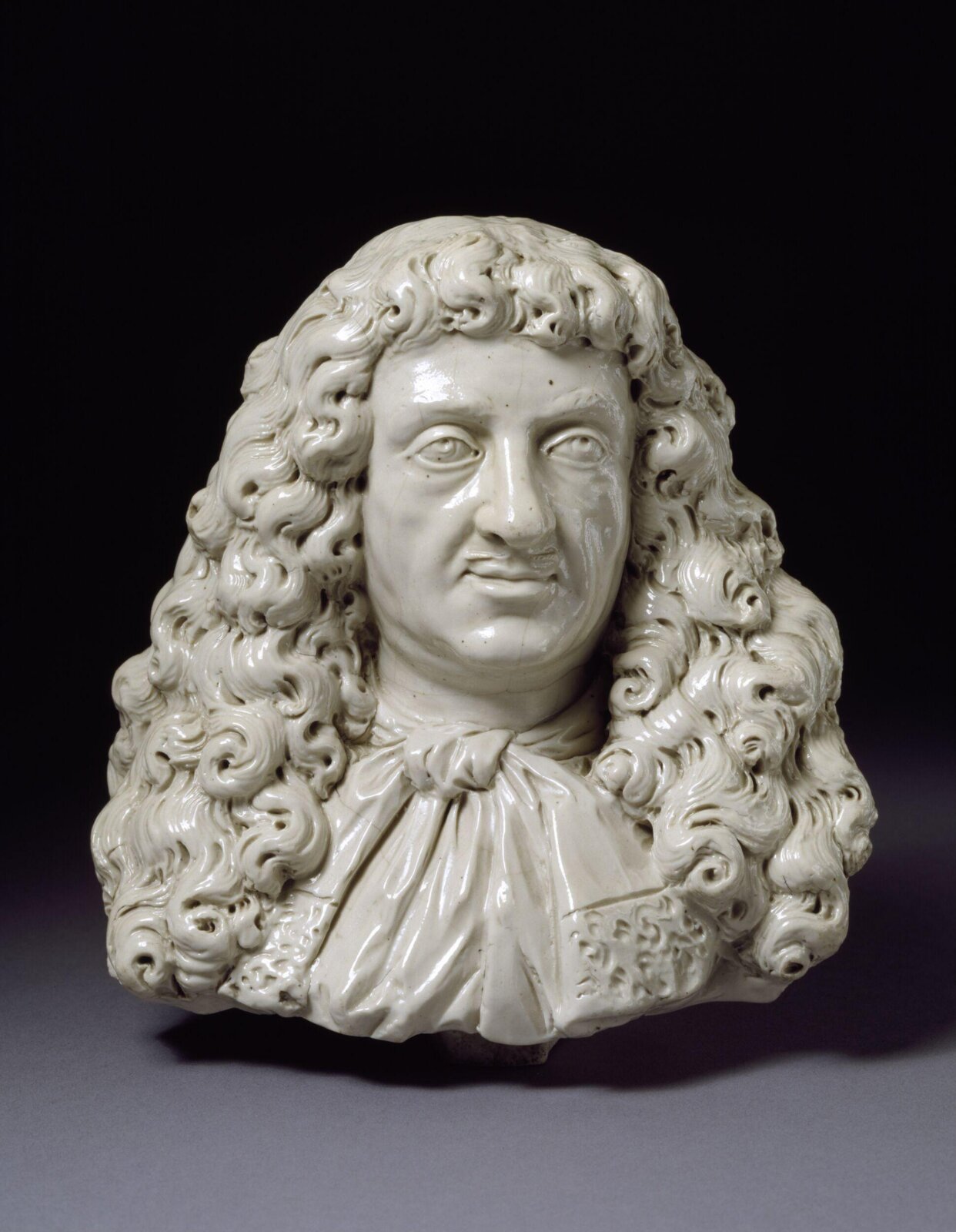
Bust
Si può ammirare?
Sì, riceve visite

Esposta al pubblico. Chi lo garantisce è indicato qui sotto.
- Verificato
- Ultimo cambio di stato
- Fonte
- I dati di collezione del museo stesso
About the sculpture
Object Type
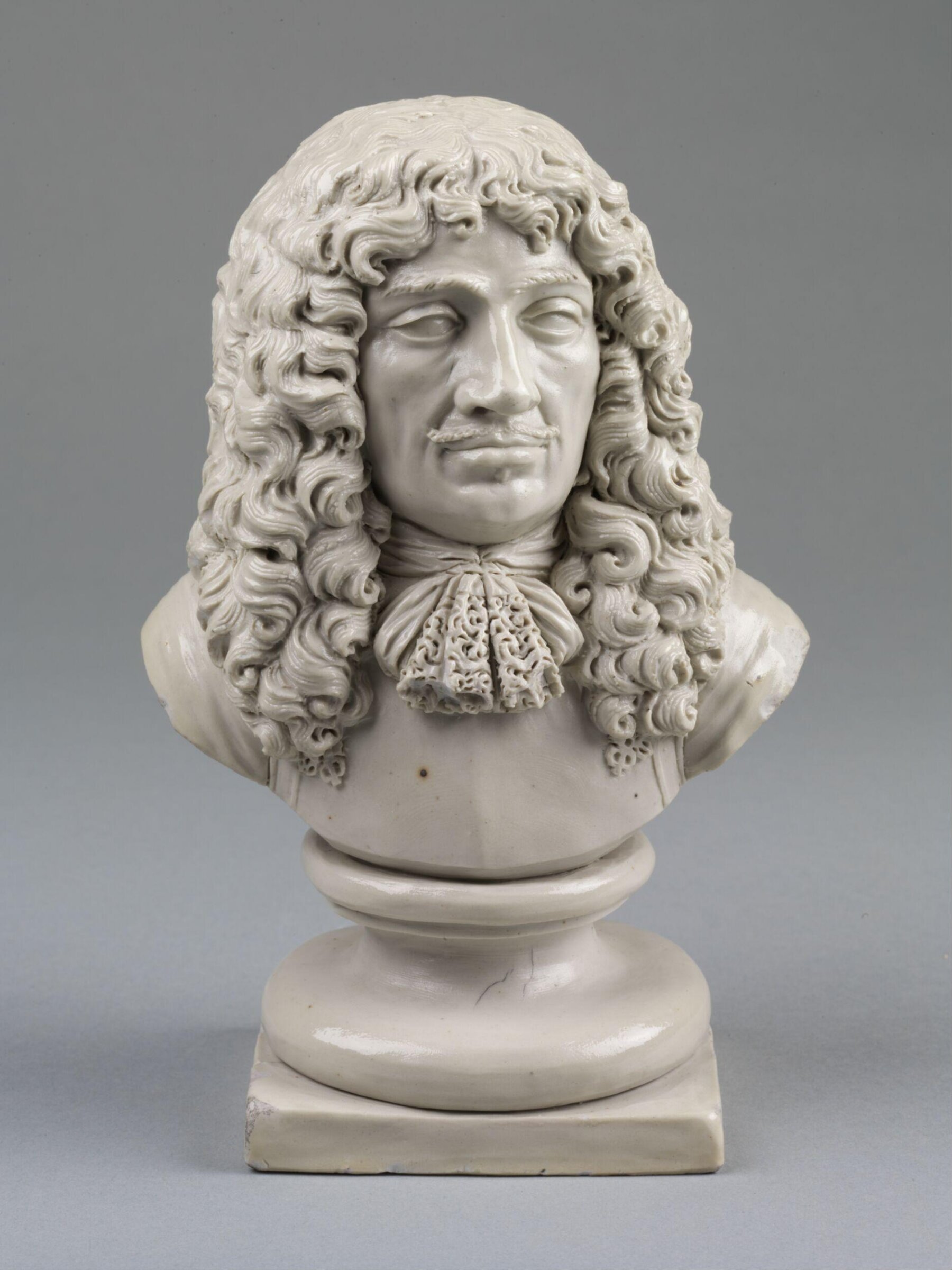
Possibly the earliest portrait bust to be modelled in salt-glazed stoneware anywhere in Europe, this bust was clearly modelled by an accomplished (but still unknown) sculptor familiar with working in terracotta or wax. As the founder of the Fulham Pottery, John Dwight had high hopes for his patented material and, like Josiah Wedgwood in the 18th century, intended that his humble pottery should become associated with the fine arts, and perhaps therefore with wealthy patronage.
People
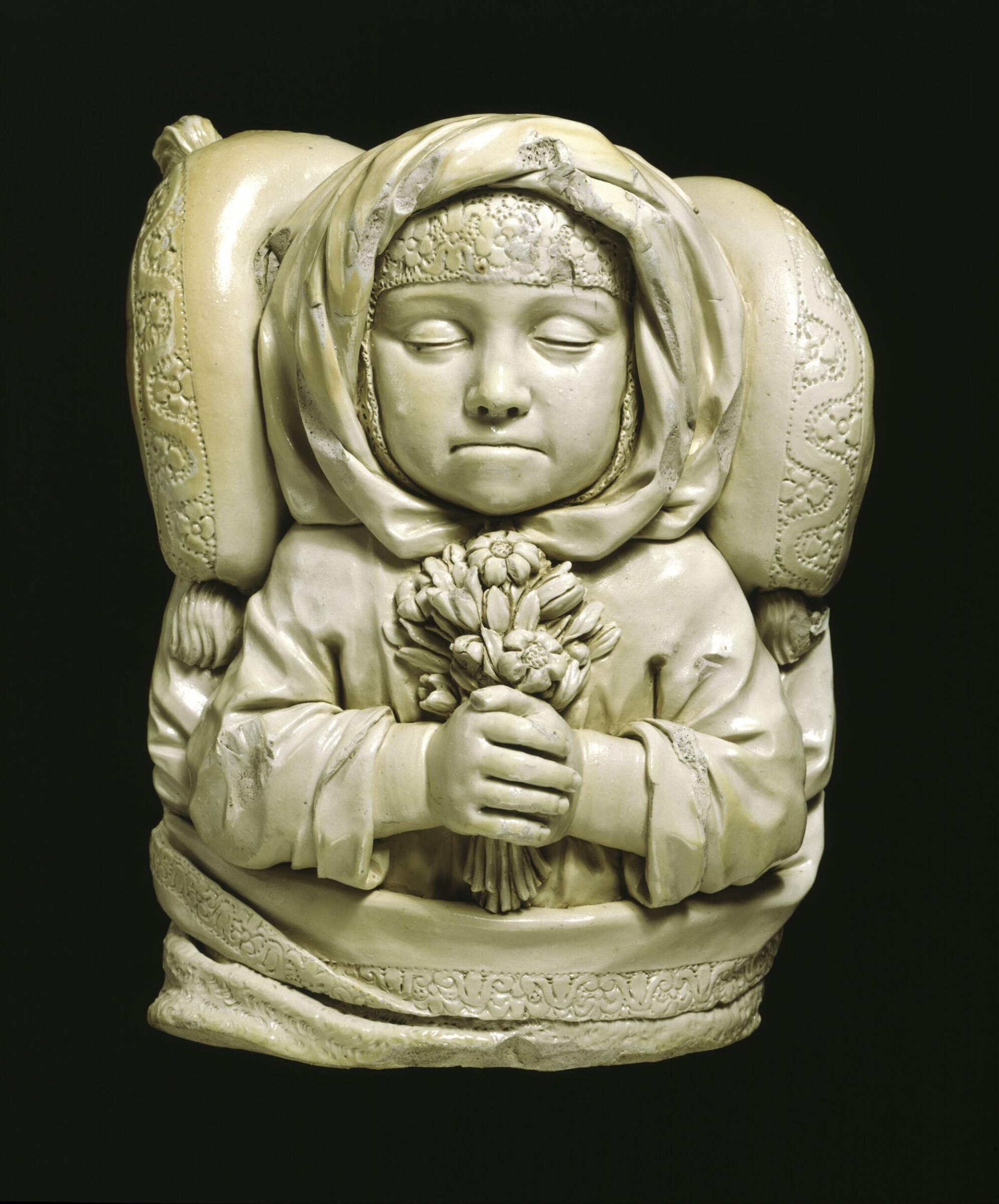
John Dwight, scholar and talented chemist, came from an Oxfordshire farming family. Like many upwardly mobile people in the Restoration period, he commissioned his family portraits, comprising stoneware busts of himself, his wife and recently-deceased daughter Lydia. These all survived within the Dwight family until their discovery on the death of his last descendant in 1859.
Materials & Making
Read on
Soft stoneware clay must have seemed ideal for modelling, because it could later be fired and made as hard as flint. Some of Dwight's figures were even painted with brown iron slip to resemble bronze. Almost a century passed, however, before the English pottery figure became popular, and then it was the mass-produced moulded type rather than individual figures made by professional modellers.
Victoria and Albert Museum
Scheda
- Numero di inventario
- 1053-1871
In catalogo
Fonti
- Victoria and Albert Museum: the museum's own open data · acquisita 10 giorni fa
- Immagine: Victoria and Albert Museum — © Victoria and Albert Museum, London