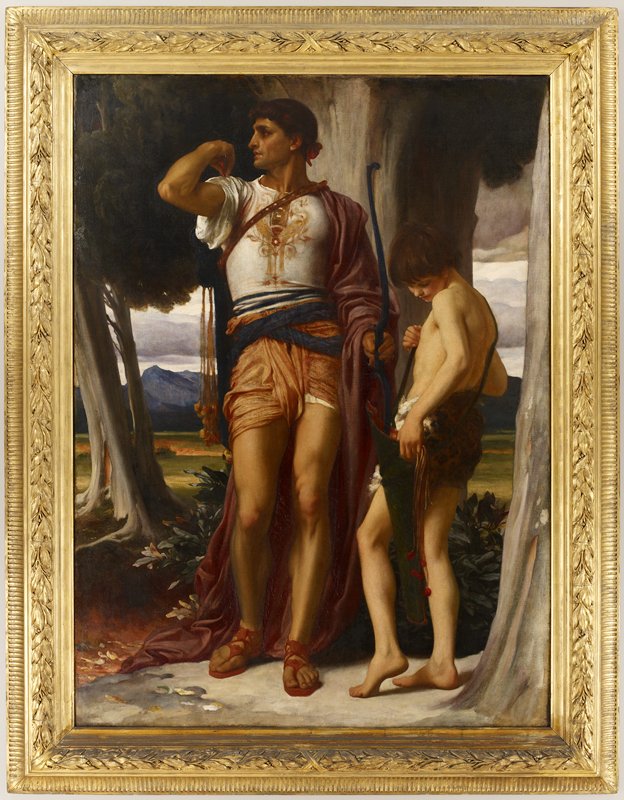
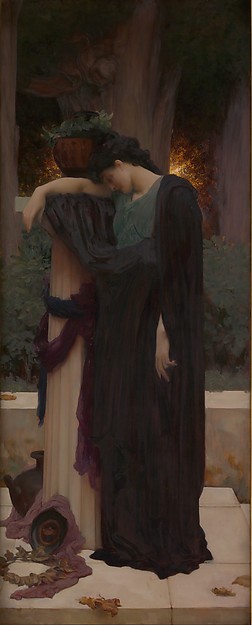
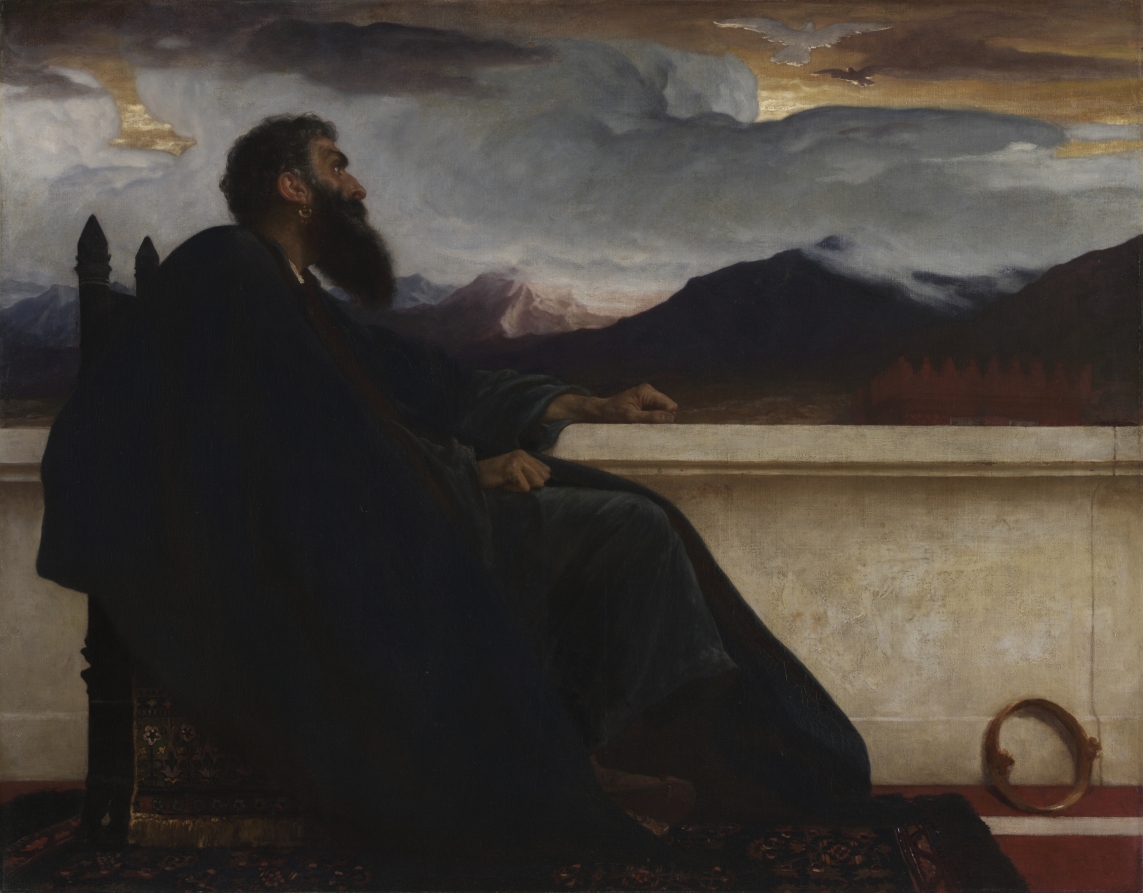
Frederic, Lord LeightonRegno Unito, 1830–1896
Blank page; verso: Hanging Basket
Si può ammirare?
Al momento non riceve

Cambridge, Stati Uniti
Appartiene alla collezione, ma al momento non è esposta.
- Verificato
- Ultimo cambio di stato
- Fonte
- Il museo
Scheda
- Numero di inventario
- 1946.35.21
In catalogo
Fonti
- Harvard Art Museums
- Immagine: Harvard Art Museums — © President and Fellows of Harvard College
Nel frattempo, nella vita di Frederic, Lord Leighton
Tutta la vita3 dicembre 1830
Born
1852
His first journey on his own, to Rome
To immerse himself in the art of the great Italian painters, in 1852 Leighton made his first journey on his own and by November was in Rome, where the opera singer Adelaide Sartoris introduced him to society. In her salon he met William Thackeray and became close friends with the Brownings, as well as with Jean-Léon Gérôme and William Bouguereau.
1855
Queen Victoria buys “Cimabue’s Madonna”
In 1855 Leighton finished “Cimabue’s Madonna” and sent it to London for the Royal Academy exhibition. The picture was a success, Queen Victoria bought it for 600 guineas, and the artist became the talk of England’s aristocratic circles.
1857
A trip to Algeria starts his passion for the East
In 1857 Leighton made his first trip outside Europe, to Algeria. The journey started his fascination with Eastern culture, whose motifs he would often use in his paintings; later he visited Syria, Egypt and Turkey.
1859
London: the Prince of Wales buys his picture
By 1859 Leighton was in London (by other accounts he moved there in 1860), where he associated with the Pre-Raphaelites. That same year the Prince of Wales bought one of his pictures and became the artist’s patron and loyal friend.
25 gennaio 1896
Died