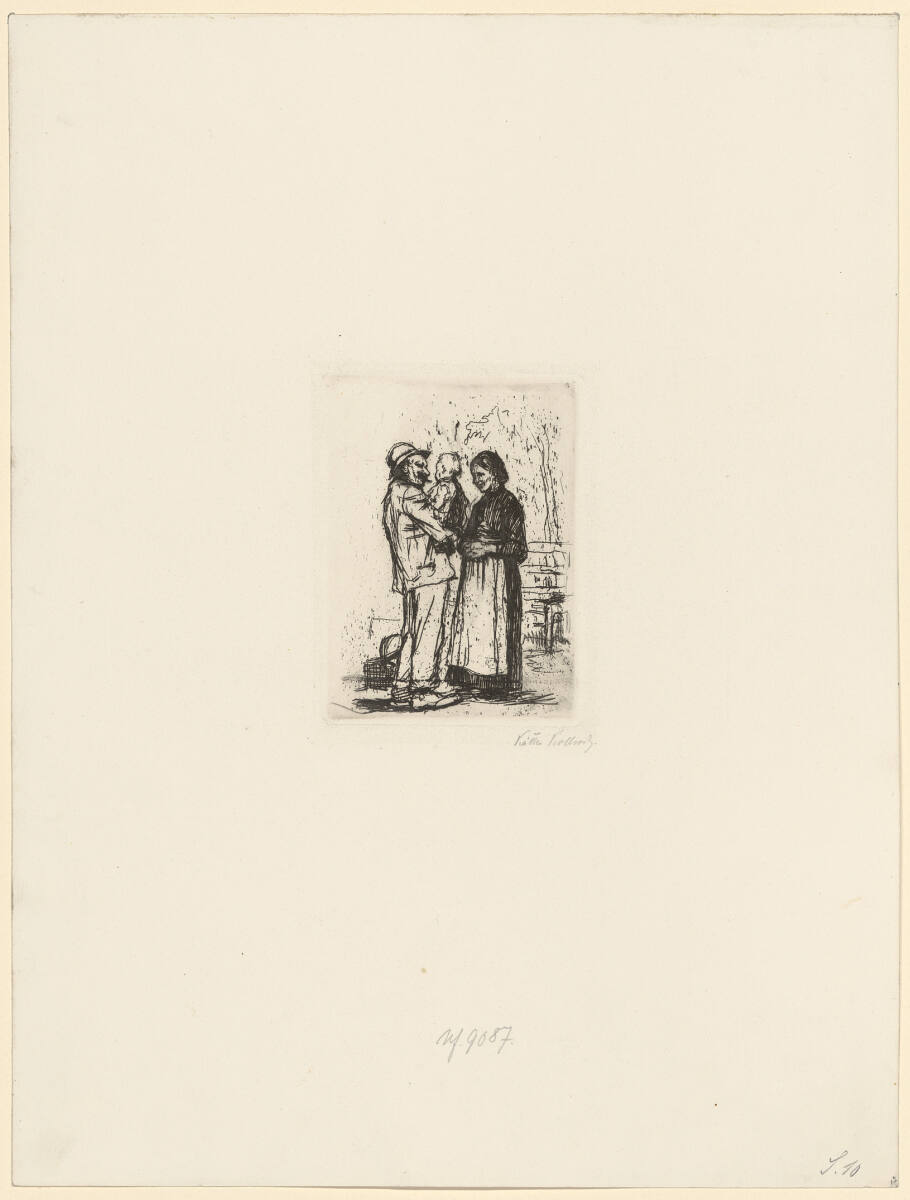
 Käthe KollwitzGermania, 1867–1945
Begrüßung
Si può ammirare?
Non si sa: il museo mantiene il riserbo

Albertina
Vienna, Austria
Il proprietario è noto. Se oggi sia esposta, il museo non lo dice, e a indovinare non ci hanno insegnato.
- Ultimo cambio di stato
- 27 set 2026
- Fonte
- I dati di collezione del museo stesso
Scheda
Fonti
- Albertina: the museum's own open data · acquisita 5 giorni fa
- Immagine: Albertina — Public Domain Mark 1.0
Nel frattempo, nella vita di Käthe Kollwitz
Tutta la vita1890
Back in Königsberg: her first studio
In 1890 she returned to Königsberg, rented her first studio and went on depicting the harsh labour of the working class, a subject that inspired her work for years.
1890
Her first etchings
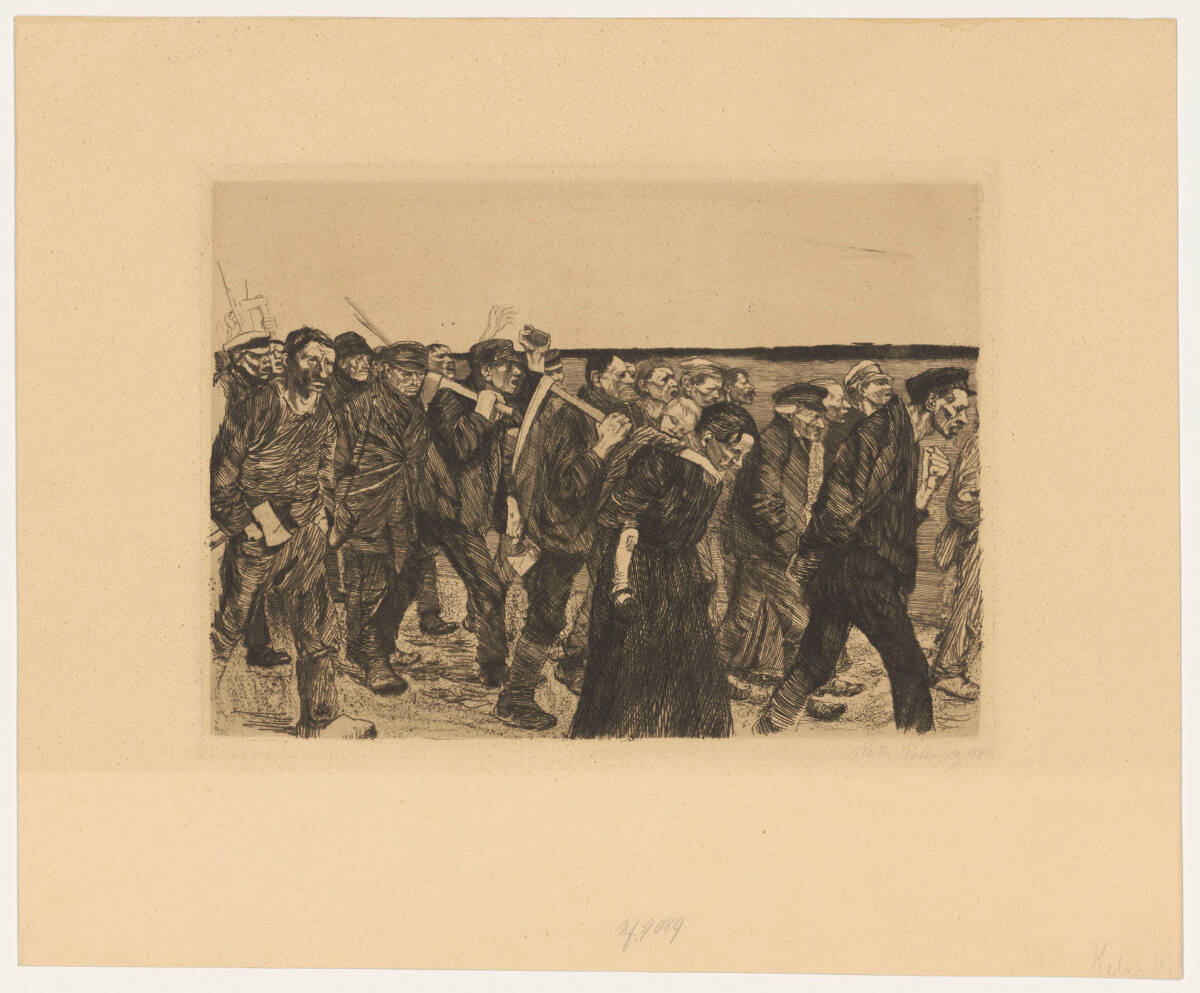
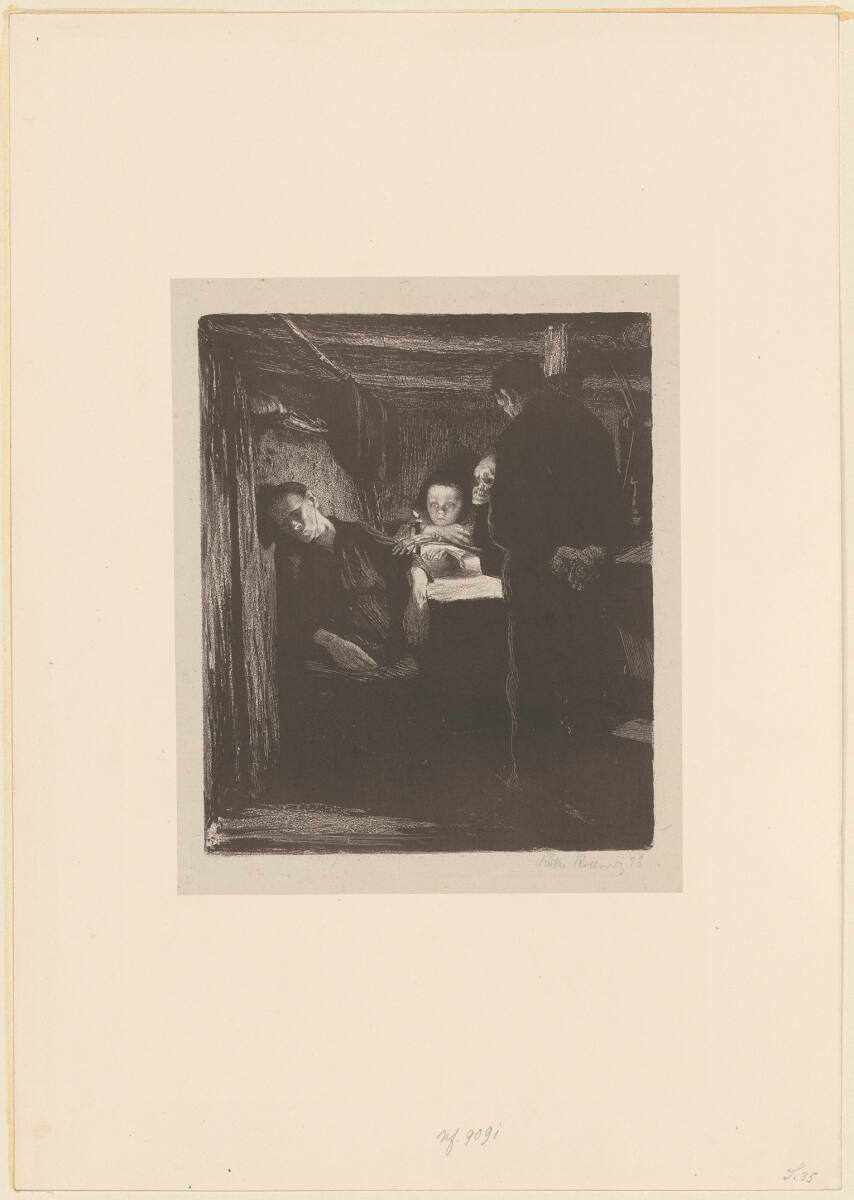
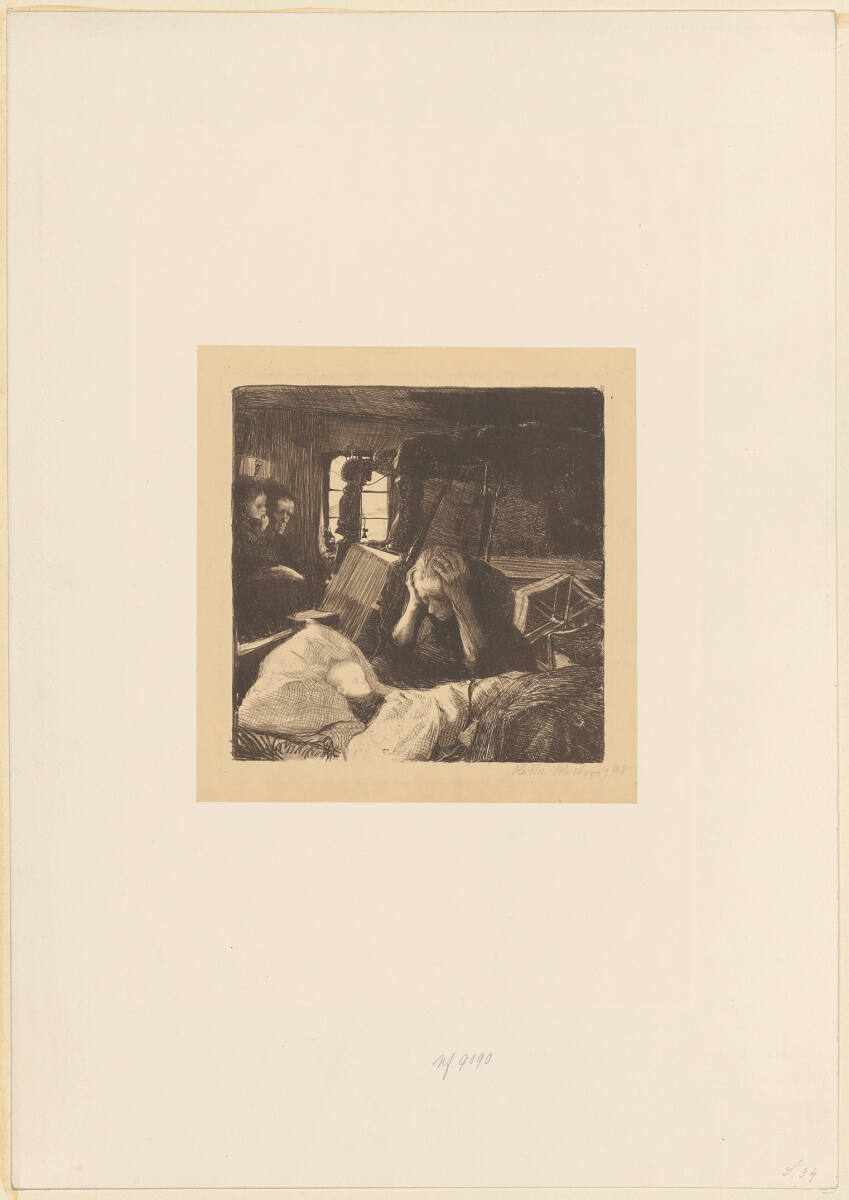
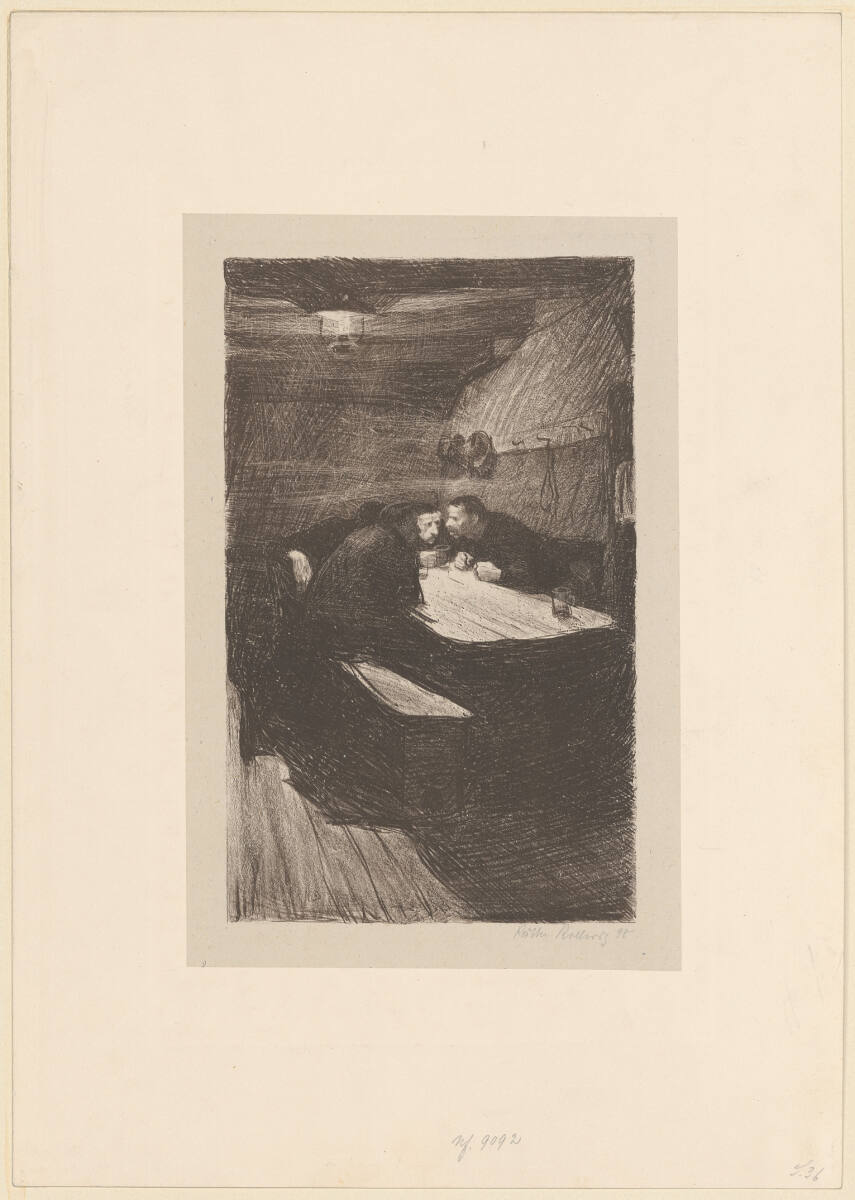
Her first etchings date from 1890, the technique in which she would later make sheets of The Weavers and the whole Peasant War cycle.
1891
Marries the physician Karl Kollwitz
She married Karl Kollwitz, a doctor who tended the poor of Berlin; the couple moved into a large apartment that remained her home until it was destroyed in the Second World War. Her husband’s nearby practice supplied motifs from the lives of workers, which, in her own words, she found beautiful.
13 giugno 1891
Married: Karl Kollwitz
1892
Birth of her son Hans
In 1892 Käthe and Karl Kollwitz’s elder son, Hans, was born.
1892–1896
Hauptmann’s “The Weavers” inspires a new cycle
Between the births of her sons Hans and Peter she saw Gerhart Hauptmann’s play The Weavers, about the failed revolt of the Silesian weavers in Langenbielau in 1844. It inspired her to drop a series of etchings she had planned to illustrate Émile Zola’s Germinal and to produce a cycle on the weavers instead.