ART WIKI33.040 in sala
MappaCollezioneArtistiMuseiMostreRivista
Accedi

ART WIKI

Dove è appeso il capolavoro, e quando si può entrare.

Collezioni: Art Institute of Chicago, Cleveland Museum of Art, Ermitage, Galleria Tret'jakov, Getty Museum, Harvard Art Museums, Hirshhorn Museum and Sculpture Garden, Metropolitan Museum of Art, Minneapolis Institute of Art, Museo del Louvre, Museo Puškin delle belle arti, Museo russo, Museum of Modern Art, National Gallery of Art, National Museum of Asian Art, National Portrait Gallery, Rijksmuseum, Smithsonian American Art Museum, Statens Museum for Kunst, Victoria and Albert Museum, Villa Getty, Whitney Museum of American Art, Catalogo statale del fondo museale russo (274 musei), Europeana (19 musei), Wikidata (6 musei), Paris Musées (12 musei) e Joconde, la banca dati dei musei del Ministero della Cultura francese (495 musei). Le immagini appartengono ai titolari dei diritti.

Sezioni

  • Mappa
  • Ricerca
  • Collezione
  • Capolavori
  • Esposte ora
  • Artisti

Altro

  • Musei e gallerie
  • Mostre
  • Rivista
  • Da dove vengono i dati
  • Privacy e cookie
HomeMappaCatalogo
  1. Collezione/
  2. Museo d'Orsay/
  3. Bathers with Red Cow
Bathers with Red Cow, Émile Bernard, 1889

Bathers with Red Cow

1889 · Painting · 92 × 73 cm

Scheda

1889 · a 21 anni
18681941
Numero di inventario
RF 1984 21

Nel frattempo, nella vita di Bernard, Emile

Tutta la vita
  1. 1887

    Cloisonnism, developed together with Anquetin

    In 1887 Bernard and Louis Anquetin develop cloisonnism — bold forms separated by dark contours; in the spring they “turn against Neo-Impressionism”. Many, however, credit Anquetin with the technique, and Bernard was probably also influenced by the works of Cézanne he had seen.

  2. 1887–1888

    An exhibition in the restaurant on the Avenue de Clichy

    Back in Paris, Bernard attends the Académie Julian and meets van Gogh, who is impressed by his work. He finds a restaurant on the Avenue de Clichy where his work is shown alongside that of van Gogh, Anquetin and Toulouse-Lautrec; van Gogh calls the group the “School of the Petit Boulevard”.

  3. 1888

    On foot to Pont-Aven: friendship with Gauguin

    A year later Bernard again sets out for Pont-Aven on foot and sees Gauguin; their friendship and artistic partnership quickly grow strong. Bernard wants an art of the most extreme simplicity, accessible to all and practised collectively, and Gauguin is impressed by his ability to put his ideas into words. Other accounts have him living in Pont-Aven in 1886–1888 and joining the Pont-Aven group.

  4. 1890

    A religious crisis and a turn to the Middle Ages

    In 1890 Bernard goes through a religious crisis and turns to the subjects and themes of medieval art. In the same year he sets out to revive symbolism, which he saw as Christian in essence — the invisible expressed through the visible.

  5. 1891

Altre opere di Bernard, Emile

Tutte le opere

Dalla collezione: Museo d'Orsay

Pagina del museo

The break with Gauguin

In 1891 Bernard breaks off his friendship with Gauguin. It was always his great frustration that Gauguin never named him as an influence on pictorial symbolism; one writer says his rivalry with Gauguin led him “out of spite” towards classicism.

  • 1891

    Among the Symbolists and the Nabis

    In 1891 Bernard joins the group of Symbolist painters that includes Odilon Redon and Ferdinand Hodler, and in the same year becomes a member of the Nabis.

  • Bernard, Emile, ritrattoBernard, EmileFrancia, 1868–1941

    Si può ammirare?

    Non si sa

    Museo d'Orsay

    Parigi, Francia

    Il proprietario è noto; non si sa se oggi sia esposta.

    Ultimo cambio di stato
    29 set 2026
    Fonte
    Il museo
    Sulla mappaPagina del museo

    In catalogo

    DipintiPittura franceseImpressionismoXIX secolo

    Fonti

    • Wikidata
    • Immagine: Museo d'Orsay — Émile Bernard · Public domain · Wikimedia Commons
    Still Life (Cup, Compote Dish, Teapot, and Fruit) 1890, Émile Bernard

    Still Life (Cup, Compote Dish, Teapot, and Fruit) 1890

    Van Gogh Museum

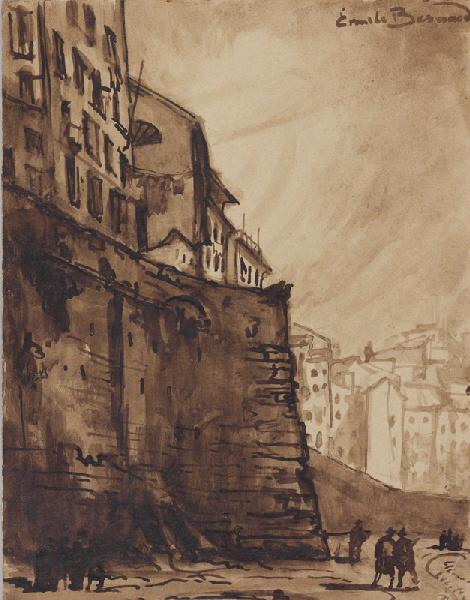
    Les remparts, Emile Bernard, 4e quart 19e siècle, 1ère moitié 20e siècle

    Les remparts

    4e quart 19e siècle, 1ère moitié 20e siècle · musée des Beaux-Arts de Brest

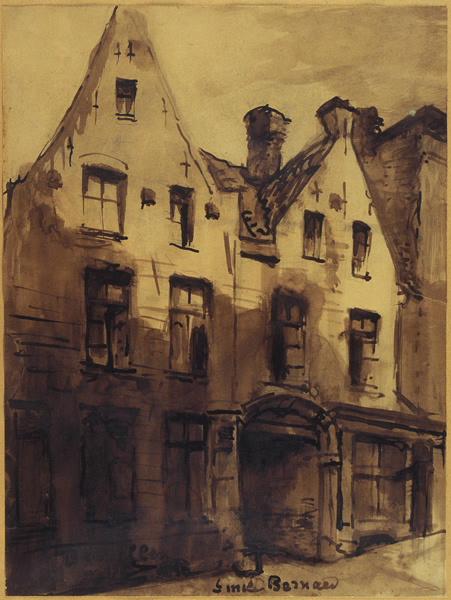
    Maisons flamandes, Emile Bernard, 4e quart 19e siècle, 1ère moitié 20e siècle

    Maisons flamandes

    4e quart 19e siècle, 1ère moitié 20e siècle · musée des Beaux-Arts de Brest

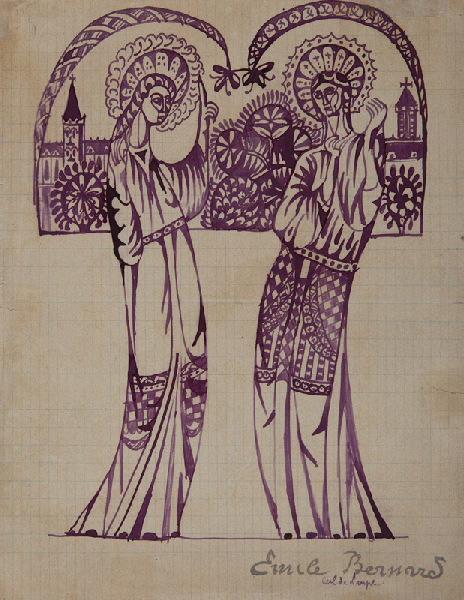
    Personnages sur fond d'église, Emile Bernard, 4e quart 19e siècle, 1ère moitié 20e siècle

    Personnages sur fond d'église

    4e quart 19e siècle, 1ère moitié 20e siècle · musée des Beaux-Arts de Brest

    Breton Woman (Les Bretonnes), Émile Bernard, (1883)

    Breton Woman (Les Bretonnes)

    (1883) · Non esposta · Museum of Modern Art

    Fisherman and Boat, Émile Bernard, 1885

    Fisherman and Boat

    1885 · Van Gogh Museum

    Bretonne walking near a canal, Émile Bernard, 1886

    Bretonne walking near a canal

    1886 · Van Gogh Museum

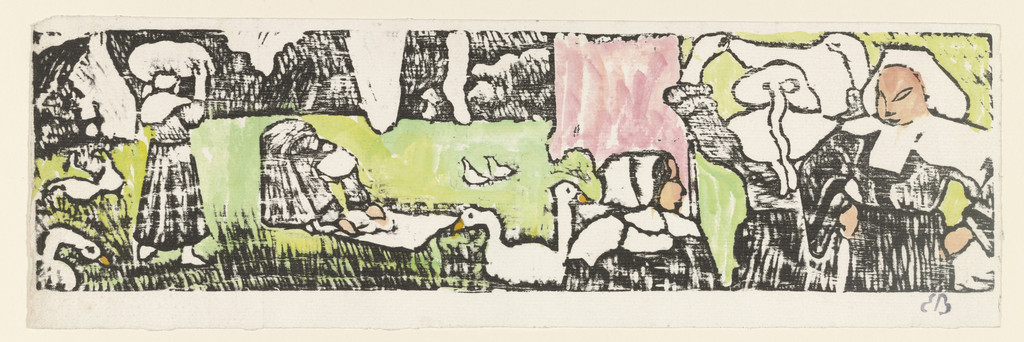
    Two Breton women in a meadow, Émile Bernard, 1886

    Two Breton women in a meadow

    1886 · Van Gogh Museum

    Still Life: Japanese Vase with Roses and Anemones, Vincent van Gogh, 1890

    Vincent van Gogh

    Still Life: Japanese Vase with Roses and Anemones, 1890

    Chaumes de Cordeville, Vincent van Gogh, 1890

    Vincent van Gogh

    Chaumes de Cordeville, 1890

    Doctor Gachet's Garden in Auvers, Vincent van Gogh, 1890

    Vincent van Gogh

    Doctor Gachet's Garden in Auvers, 1890

    Two Children, Vincent van Gogh, 1890

    Vincent van Gogh

    Two Children, 1890

    The siesta (after Millet), Vincent van Gogh, 1890

    Vincent van Gogh

    The siesta (after Millet), 1890

    Marguerite Gachet in the Garden, Vincent van Gogh, 1890

    Vincent van Gogh

    Marguerite Gachet in the Garden, 1890

    The Church at Auvers, Vincent van Gogh, 1890

    Vincent van Gogh

    La chiesa di Auvers, 1890

    Portrait of Dr. Gachet, Vincent van Gogh, 1890

    Vincent van Gogh

    Portrait of Dr. Gachet, 1890