Vasily Polenov1844–1927
Барка. Этрета
Si può vedere?
Non si sa
Dove si trova «Барка. Этрета» oggi? Collezione: Abramcevo, Abramcevo. Non si sa.
Abramcevo, Russia
Il proprietario è noto; non si sa se oggi sia esposta.
- Ultimo cambio di stato
- Fonte
- Il museo
Sul dipinto
Con le parole del museo — in russo
На первом плане парусная барка с тремя человеческими фигурами, расположенная по диагонали картины, после вглубь, - к линии горизонта, расположенной над водной поверхностью, синей в глубине, сине - зеленой на первом плане, изрезанной волнами с белыми гребнями пены. Лица и фигуры людей затенены парусом. Внизу справа подпись - монограмма и дата: ВП 75.
Abramcevo
Scheda
- Numero di inventario
- Ж 264
In catalogo
Fonti
- Il Catalogo statale del fondo museale della Russia
- Immagine: Abramcevo — © Абрамцево · Госкаталог музейного фонда РФ
Nella vita di Vasily Polenov
Tutta la vita1873
Meeting Savva Mamontov in Rome
In Rome Polenov had a fruitful meeting with the entrepreneur and patron Savva Mamontov; already in Italy they planned to create a circle of artists of different disciplines with studios and a theater at Abramtsevo.
summer 1874
Plein Air in Normandy with Repin
In the summer of 1874 Polenov worked in the Norman village of Veules-les-Roses at Repin's invitation; there he discovered new challenges of landscape painting (The Normandy Coast; Fishing Boat. Étretat. Normandy).
1876
Volunteer in the Serbian-Turkish War
Returning to Russia in 1876, Polenov went off to the Serbian-Montenegrin-Turkish War in the army of General Chernyayev; for his part in the fighting he was awarded the Serbian Medal for Bravery and the Order of the Cross of Takovo.
1876
Title of Academician
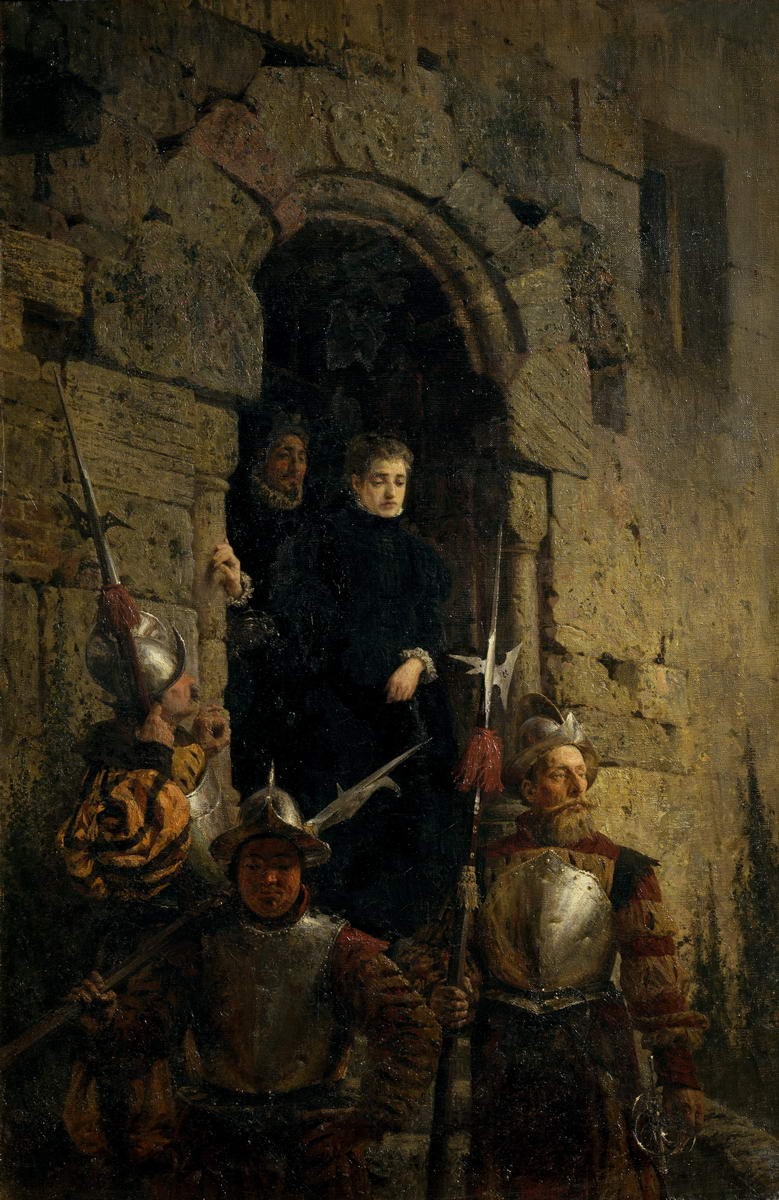
The painting The Arrest of the Comtesse d'Etremont, painted in Paris, secured Polenov the title of academician of the Imperial Academy of Arts in 1876.
1877
Artist in the Russo-Turkish War
In 1877, during the Russo-Turkish War, Polenov was attached to the staff of the Ruse detachment under the command of the tsesarevich, the future Alexander III; he sent sketches and studies to the illustrated magazine Pchela (The Bee).
1877
Move to Moscow
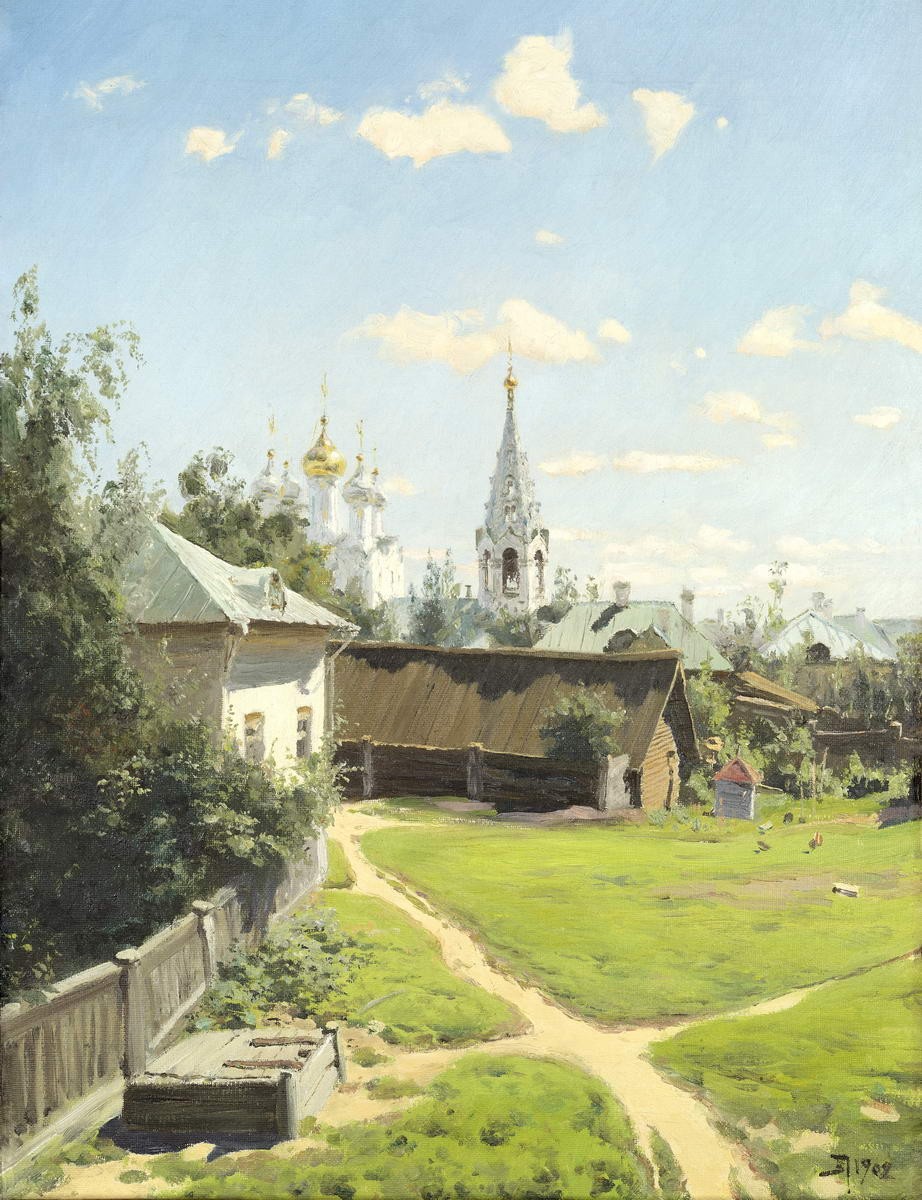
In 1877 Polenov settled in Moscow; from June 1877 to July 1878 he rented an apartment in a wing of the Baumgarten estate at the corner of Trubnikovsky and Durnovsky lanes, where he found the motif of Moscow Courtyard.