 Berenice AbbottStati Uniti, 1898–1991
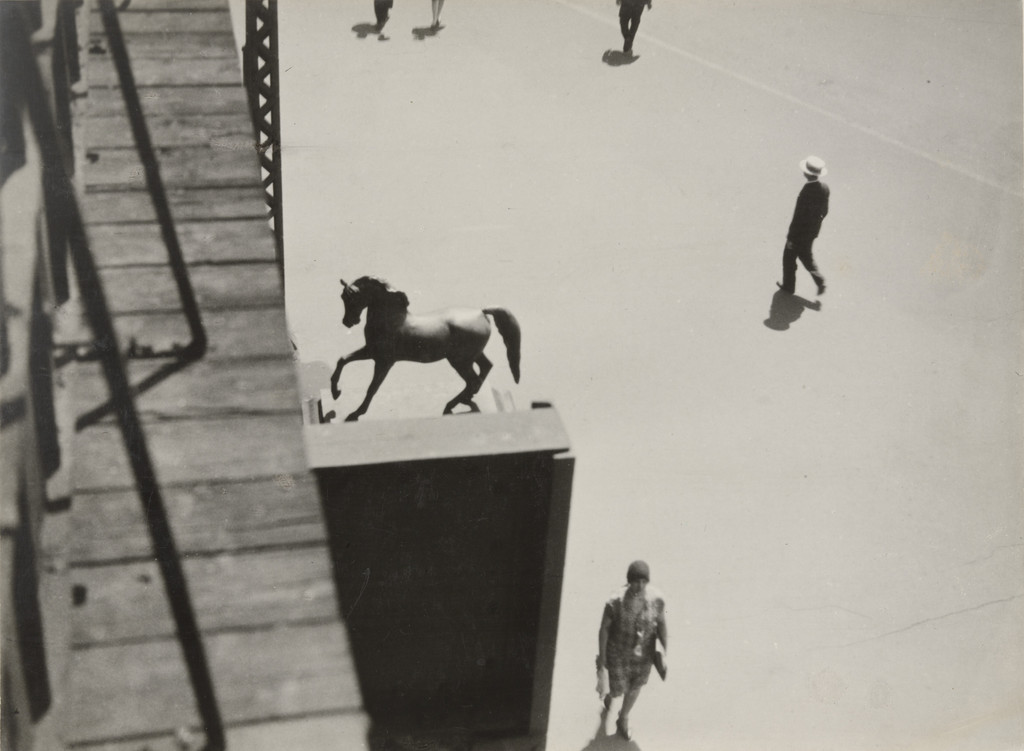
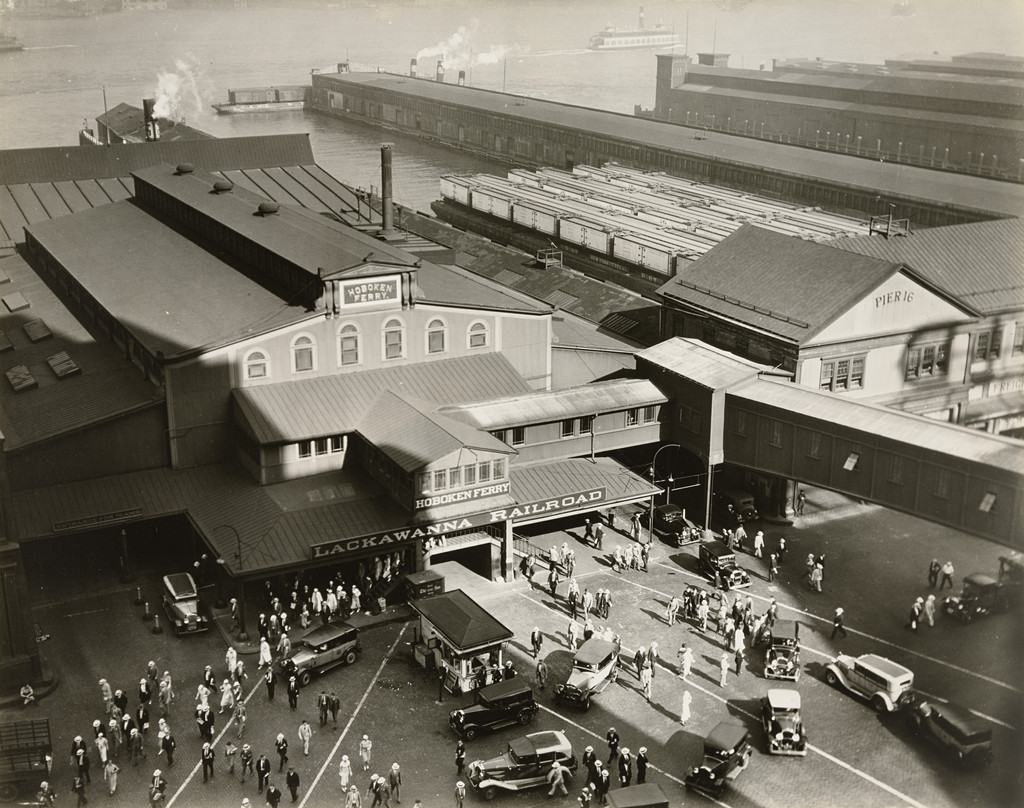
Barclay Street, Hoboken Ferry
Si può vedere?
Non esposta al momento
Dove si trova «Barclay Street, Hoboken Ferry» oggi? Collezione: Museum of Modern Art, New York. Non esposta al momento. Verificato 22 settembre 2026.

New York, Stati Uniti
Appartiene alla collezione, ma al momento non è esposta.
- Verificato
- Fonte
- Il museo
Scheda
- Numero di inventario
- 311.1974
In catalogo
Fonti
- Museum of Modern Art
- Immagine: Museum of Modern Art — © the artist or rights holder
Nella vita di Berenice Abbott
Tutta la vita1928–1929
Exhibitions of modernist photography in Brussels and Germany
Her portraiture stands out as unusual within the exhibitions of modernist photography held in 1928–1929 in Brussels and Germany. Her work was also shown in Paris alongside that of Man Ray, André Kertész and others, in the “Salon de l’Escalier” (the Premier Salon Indépendant de la Photographie) on the staircase of the Théâtre des Champs-Élysées.
early 1929
Travels to New York to find a publisher for Atget
In early 1929 she visits New York, ostensibly to find an American publisher for Atget’s photographs, and on seeing the city again recognises its photographic potential.
1929
Closes her Paris studio and returns to New York
Back in Paris she closes up her studio and in September 1929 returns to New York, where over the next decade she focuses on documentary photography and on portraying the city as it transforms into a modern metropolis. She brings over a large part of Atget’s archive; her first photographs are taken with a hand-held Kurt-Bentzin camera, soon replaced by a Century Universal producing 8 × 10-inch negatives.
1930
The book “Atget, photographe de Paris” is published
An early tangible result of her efforts is the 1930 book “Atget, photographe de Paris”, in which she is described as photo editor.
1930s
The idea behind “Changing New York”
Her project is primarily a sociological study embedded within modernist aesthetic practices, meant to show the interaction between the city’s diverse people, the places where they live, work and play, and their daily activities. Lewis Mumford’s historical writings of the early 1930s strongly influence her, and buildings of the “paleotechnic era” often look downright menacing in her photographs.
1933
Begins teaching at the New School for Social Research
From 1933 she supports herself with commercial work and teaching gigs at the New School for Social Research; for six years she works on her New York project independently, unable to get financial support from organizations such as the Museum of the City of New York, foundations such as the Guggenheim Foundation, or individuals.