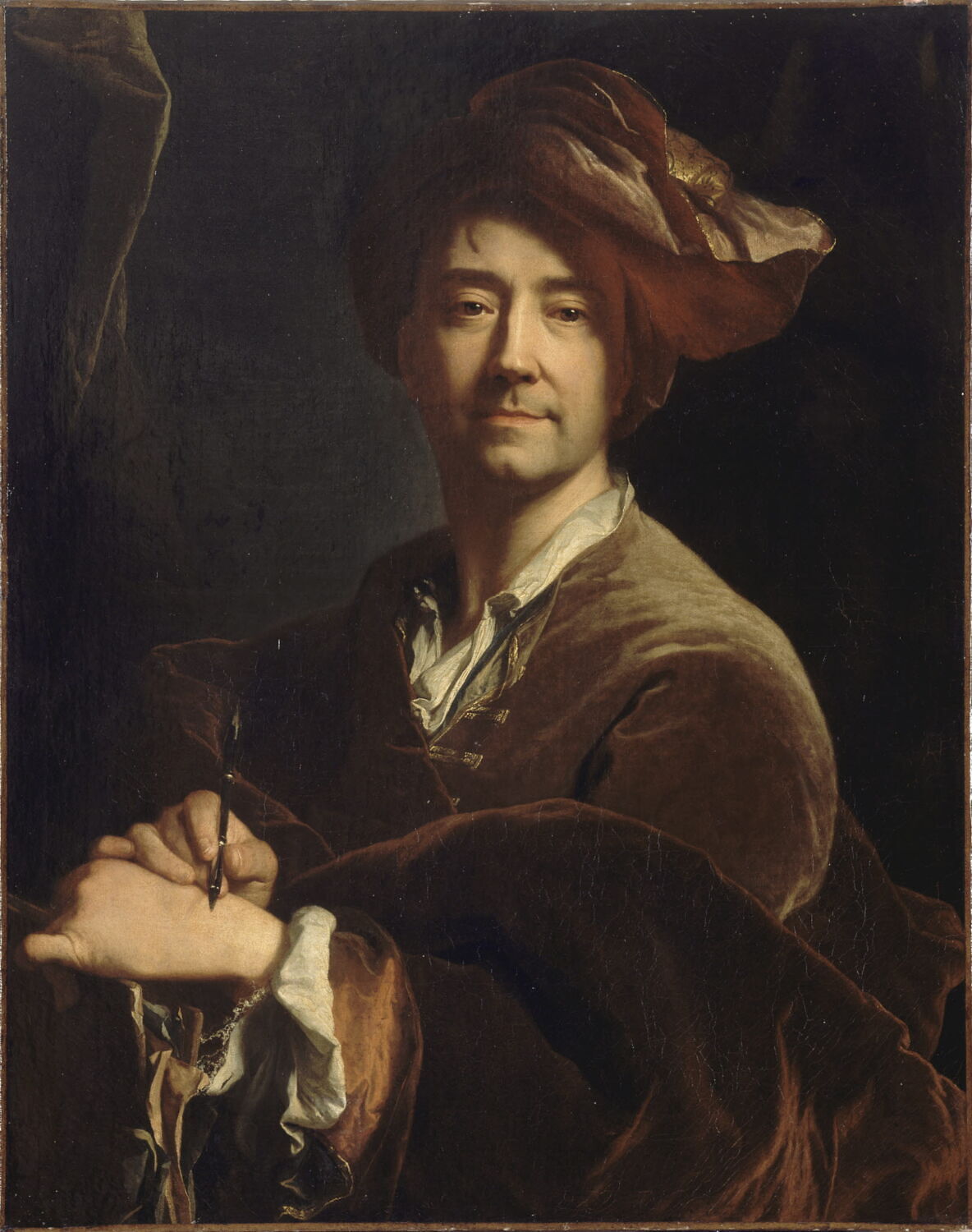
 Hyacinthe RigaudFrancia, 1659–1743
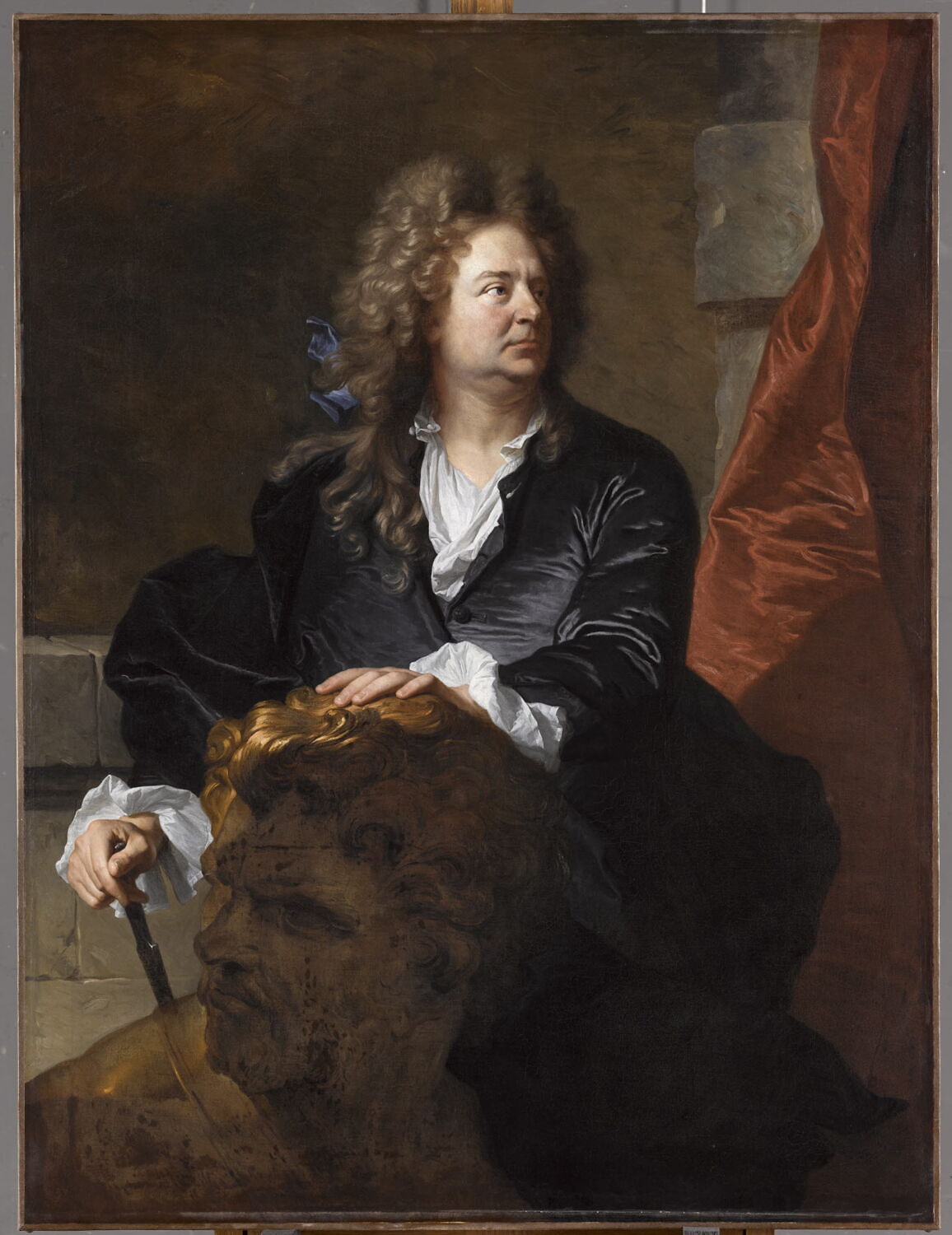
Autoportrait
Si può ammirare?
Non si sa: il museo mantiene il riserbo

Museo del Louvre
Parigi, Francia
Il proprietario è noto. Se oggi sia esposta, il museo non lo dice, e a indovinare non ci hanno insegnato.
- Ultimo cambio di stato
- 26 set 2026
- Fonte
- I dati di collezione del museo stesso
Scheda
- Numero di inventario
- INV 7516
Fonti
- Museo del Louvre: the museum's own open data · acquisita 5 giorni fa
- Immagine: Museo del Louvre — © GrandPalaisRmn (Château de Versailles) / Gérard Blot
Nel frattempo, nella vita di Hyacinthe Rigaud
Tutta la vita1690
Le Brun dies; Mignard becomes First Painter
In 1690 Charles Le Brun died, and the post of First Painter to the King went to Pierre Mignard rather than to Rigaud.
1695
The 1695 journey and his mother's portrait
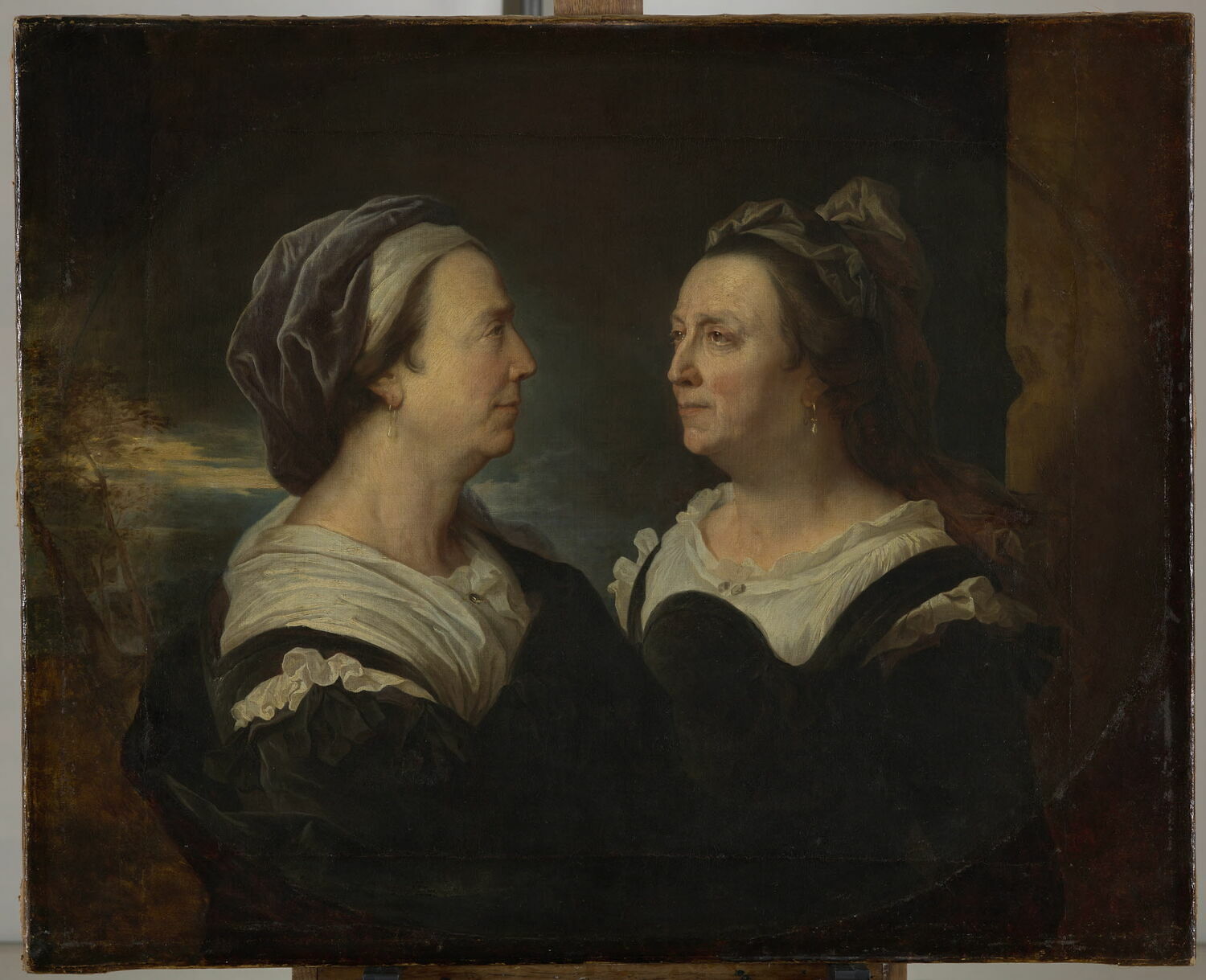
One of the main reasons given for his journey of 1695 was the wish to paint his mother's portrait. Rigaud painted Maria Serra from several angles and had a marble bust of her made by his loyal friend, the sculptor Antoine Coysevox; it adorned his study for the rest of his life.
1700
Elected to the Royal Academy
An associate member of the Academy of Painting and Sculpture since 1684, Rigaud was elected a full academician in 1700 for a portrait of M. de la Chapelle submitted to the committee. Other accounts date this to 1710.
1700
Friendship with the engraver Pierre Drevet
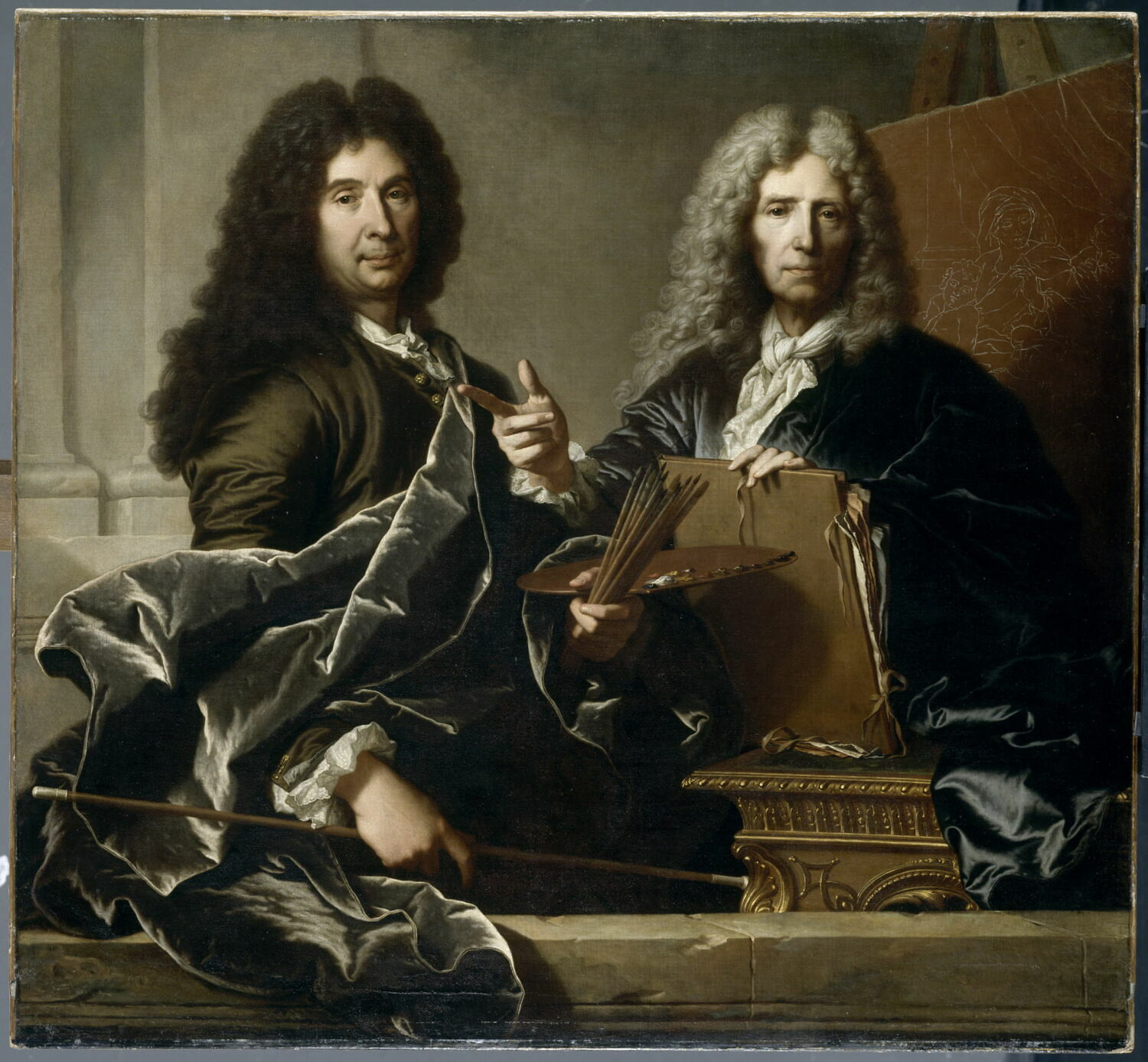
Rigaud's close friendship with the engraver Pierre Drevet grew especially out of Rigaud's portrait of Drevet (1700), in which the painter also depicted himself. From then on Drevet engraved many of Rigaud's portraits — of the architect Robert de Cotte, of Charles Le Brun and of the sculptor Antoine Coysevox; Jean Daullé was another engraver of his paintings and a friend.
1709
Ennobled by Perpignan
Rigaud's hometown of Perpignan conferred nobility on him.
1712
Drevet's engraving of the Louis XIV portrait
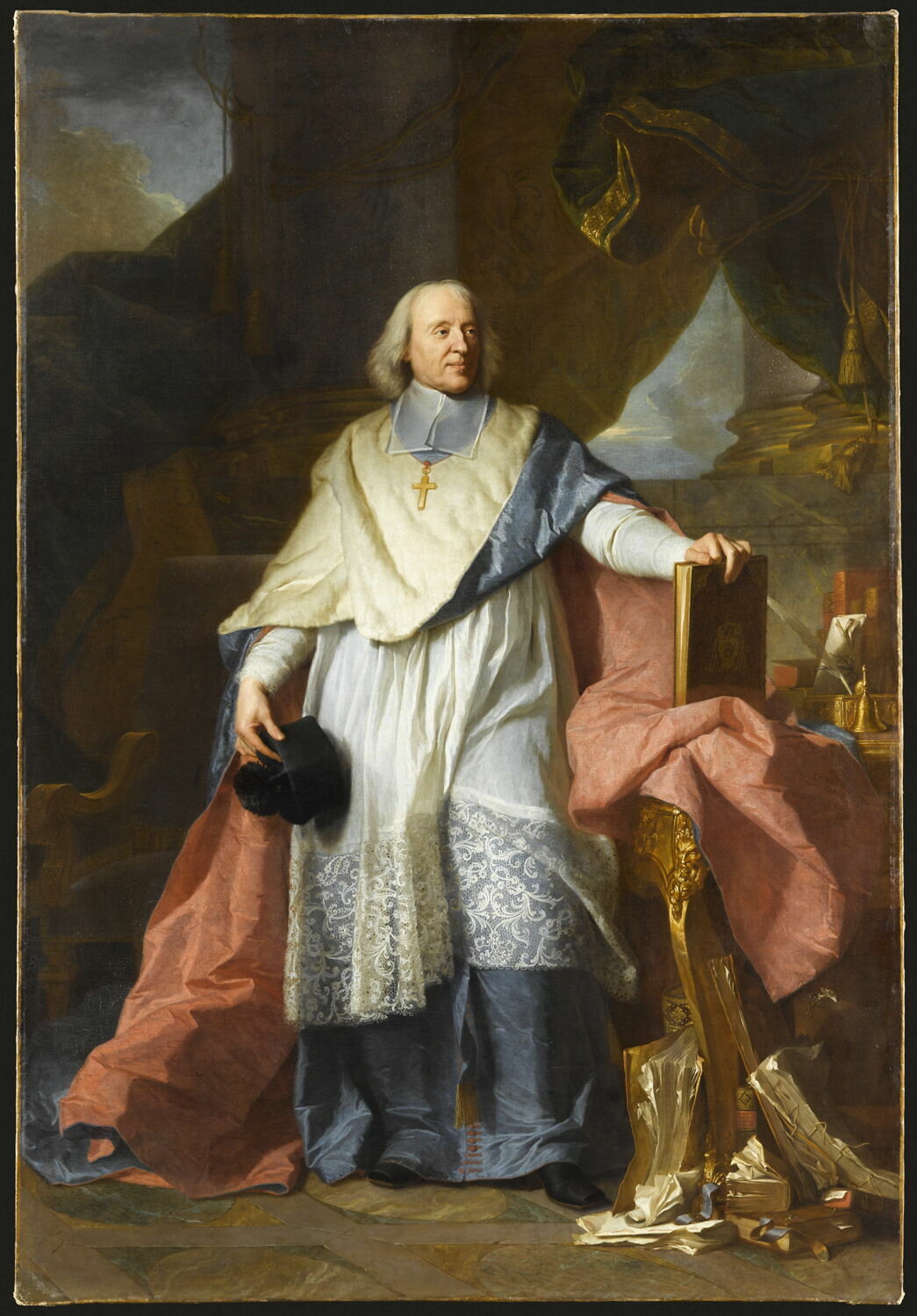
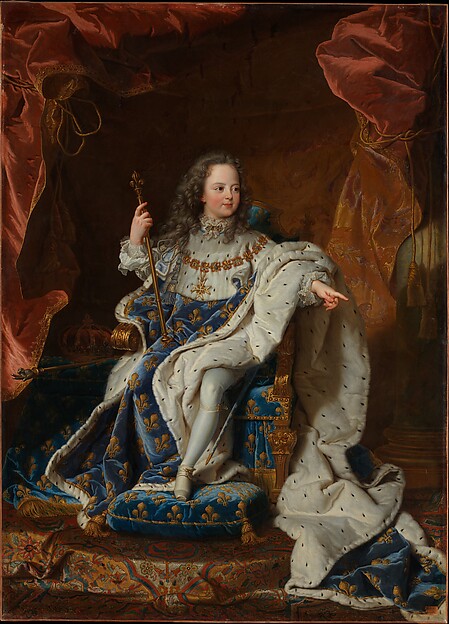
Pierre Drevet engraved Rigaud's portraits in copper — forty-one prints are known, among them the famous portrait of Louis XIV (1712). For his large formal oil portraits Rigaud prepared drawings in Italian pencil and chalk on toned paper; Drevet engraved from those drawings, while Rigaud supervised the work and often corrected it.