Peter Paul RubensFiandre, 1577–1640
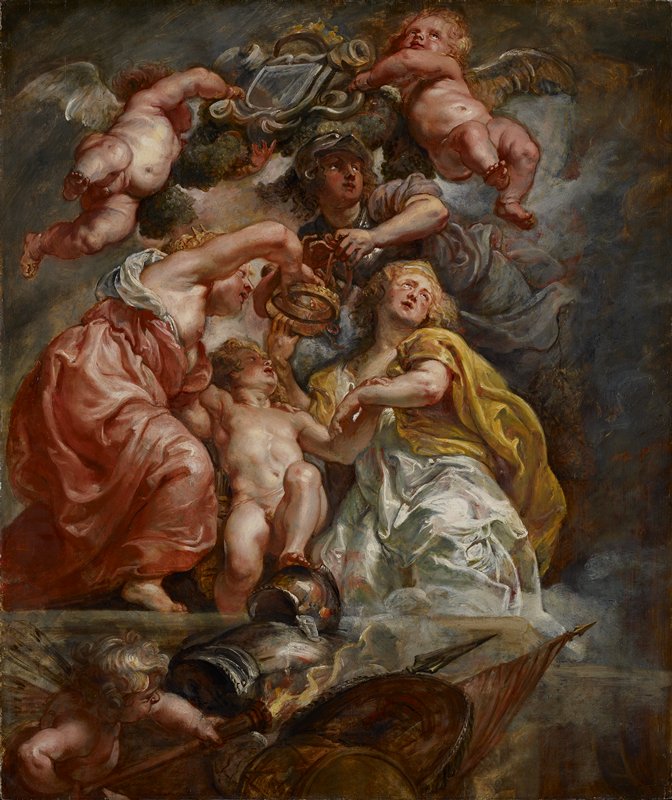
Aurora abducting Cephalus
Si può vedere?
Non si sa
Dove si trova «Aurora abducting Cephalus» oggi? Collezione: National Gallery, Londra. Non si sa.

Londra, Regno Unito
Il proprietario è noto; non si sa se oggi sia esposta.
- Ultimo cambio di stato
- Fonte
- Il museo
Scheda
- Numero di inventario
- NG2598
In catalogo
Fonti
- Wikidata
- Immagine: National Gallery — Peter Paul Rubens · Public domain · Wikimedia Commons
Nella vita di Peter Paul Rubens
Tutta la vita1627–1630
Diplomatic Missions between Spain and England
Rubens was active as a diplomat, shuttling between the courts of Spain and England in an effort to achieve peace between the Catholic Spanish Netherlands and the Protestant Dutch Republic; he also made several trips to Holland.
1628–1629
Eight Months in Madrid, Friendship with Velázquez
During an eight-month stay in Madrid, Rubens, in addition to diplomatic negotiations, executed important works for Philip IV, studied and copied Titian anew, and became friends with the court painter Diego Velázquez.
1629 – April 1630
Diplomatic Journey to London
After a brief stay in Antwerp, Rubens traveled to London, where he remained until April 1630, continuing the peace negotiations between Spain and England.
1630
Marriage to Helena Fourment
Four years after the death of Isabella Brant, the 53-year-old Rubens married the 16-year-old Helena Fourment; she became the artist's muse and the inspiration for the sensuous figures in many of his paintings of the 1630s, including The Three Graces and The Judgment of Paris.
6 dicembre 1630
Married: Helena Fourment
30 maggio 1640
Died