Spettatori nell'arena
Arena in Arles
Sul dipinto
Spettatori nell'arena è un dipinto a olio su tela (73x92 cm) realizzato nel 1888 dal pittore Vincent van Gogh.
È conservato nel Museo dell'Ermitage di San Pietroburgo.
È rappresentata l'arena romana di Arles, con un pubblico in subbuglio per la corrida.
Qui si nota chiaramente l'acuta osservazione con cui il pittore si concentra sul pubblico, anziché sull'evento sportivo, che viene relegato in fondo alla scena e vagamente accennato con qualche indefinita pennellata. I toreri stanno salutando il pubblico dopo aver abbattuto il toro, e gli uomini si accalcano ai bordi dell'arena per rendergli omaggio; viceversa, le donne (in costume tipico arlesiano) già hanno incominciato ad imboccare le uscite, lasciando gli spalti semivuoti: chi chiacchierando in gruppo, chi in solitaria, magari accennando qualche occhiata "storta" verso il pittore.
Continua a leggere
Questo dipinto, insieme alla serie dei Les Alyscamps, è l'unico in cui il pittore raffigura una delle tante rovine romane presenti ad Arles, ma da lui quasi sempre ignorate. Ancora oggi, in estate, nell'arena romana di Arles vengono organizzate corride e corse di carri.
Con le parole del museo — in russo
Картина, написанная во Франции, в Провансе, изображает древний амфитеатр, в котором устраивались бои быков. Арена с участниками корриды едва намечена. Главное "действующее лицо" - публика, собравшаяся на любимое зрелище, пестрая людская толпа. Среди зрителей - знакомые художника, изображенные им и в других произведениях. В период, когда создавалась картина, в Арле с Ван Гогом работал Гоген, увлекший друга своей манерой. Это сказалось в уплощении пространства, замене мазка обобщенными цветовыми пятнами, обведенными широким темным контуром. А экспрессию живописи придают мощный темперамент Ван Гога, его глубоко драматическое мироощущение. Пережив увлечение импрессионизмом, мастер создал свой напряженный художественный язык.
Nel frattempo, nella vita di Vincent van Gogh
Tutta la vitaFebruary 1886
Moves to Paris to join his brother Theo
Van Gogh left Antwerp to join his brother Theo, an art dealer, in Paris. So began a very fruitful and eventful Paris period: he painted some two hundred and thirty pictures there, more than anywhere else.
February 1888
To Arles, dreaming of a “Studio of the South”
The public still neither accepted nor bought his paintings, and in February 1888 Van Gogh left for Arles in the south of France to found a “Studio of the South”, a brotherhood of like-minded artists in which he gave Gauguin the leading role. Theo backed the plan with money.
23 October 1888
Gauguin arrives in Arles
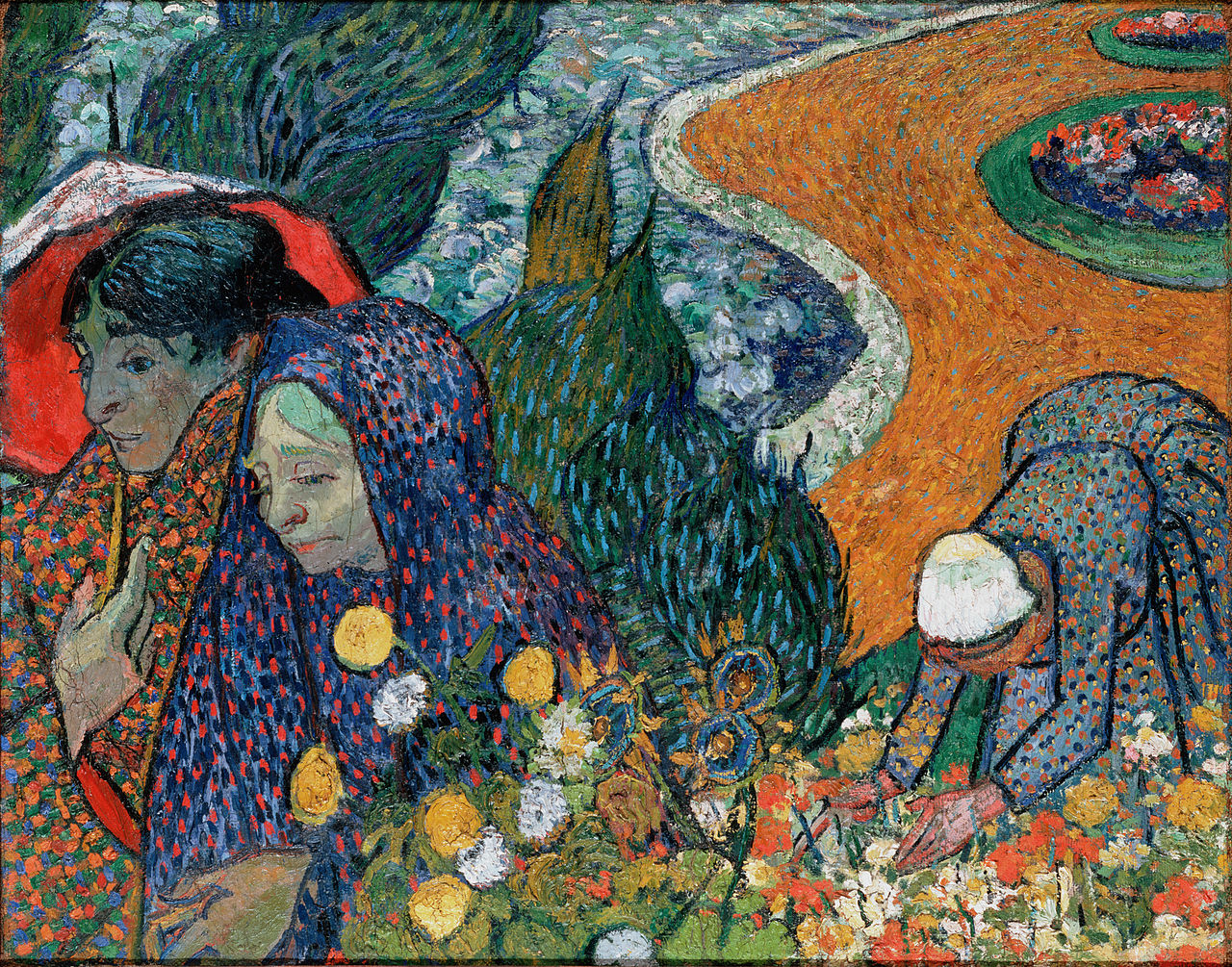
After much pleading Gauguin arrived in Arles, and in November the two painted together: Gauguin portrayed Van Gogh in “The Painter of Sunflowers”, and their first joint outing was to the Alyscamps. At Gauguin's suggestion Vincent painted from memory, producing “Memory of the Garden at Etten”.
23 December 1888
The severed ear
After an altercation on the evening of 23 December, Van Gogh, seemingly hearing voices, severed his left ear, wholly or in part, with a razor and delivered it, wrapped in paper, to a woman at a brothel. Next morning a policeman found him unconscious; in hospital he was diagnosed with “acute mania with generalised delirium”.
May 1889
Voluntarily into the Saint-Paul asylum

.jpg?width=96)