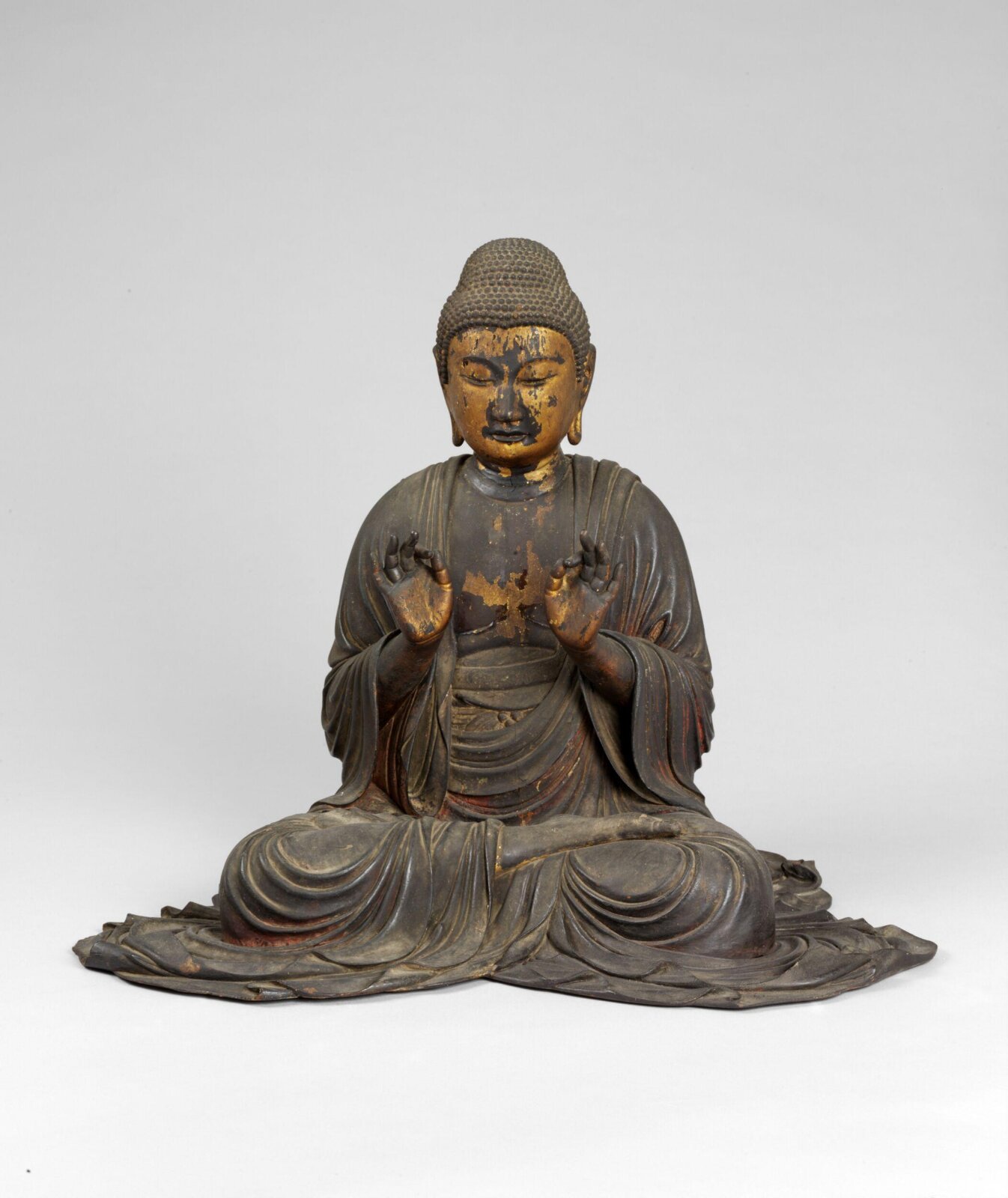
Amida Nyorai
Si può ammirare?
Sì, riceve visite

Victoria and Albert Museum
SalaJapan, Room 45, The Toshiba GalleryLondra, Regno Unito
Esposta al pubblico. Chi lo garantisce è indicato qui sotto.
- Verificato
- 8 giorni fa
- Ultimo cambio di stato
- 25 set 2026
- Fonte
- I dati di collezione del museo stesso
About the sculpture
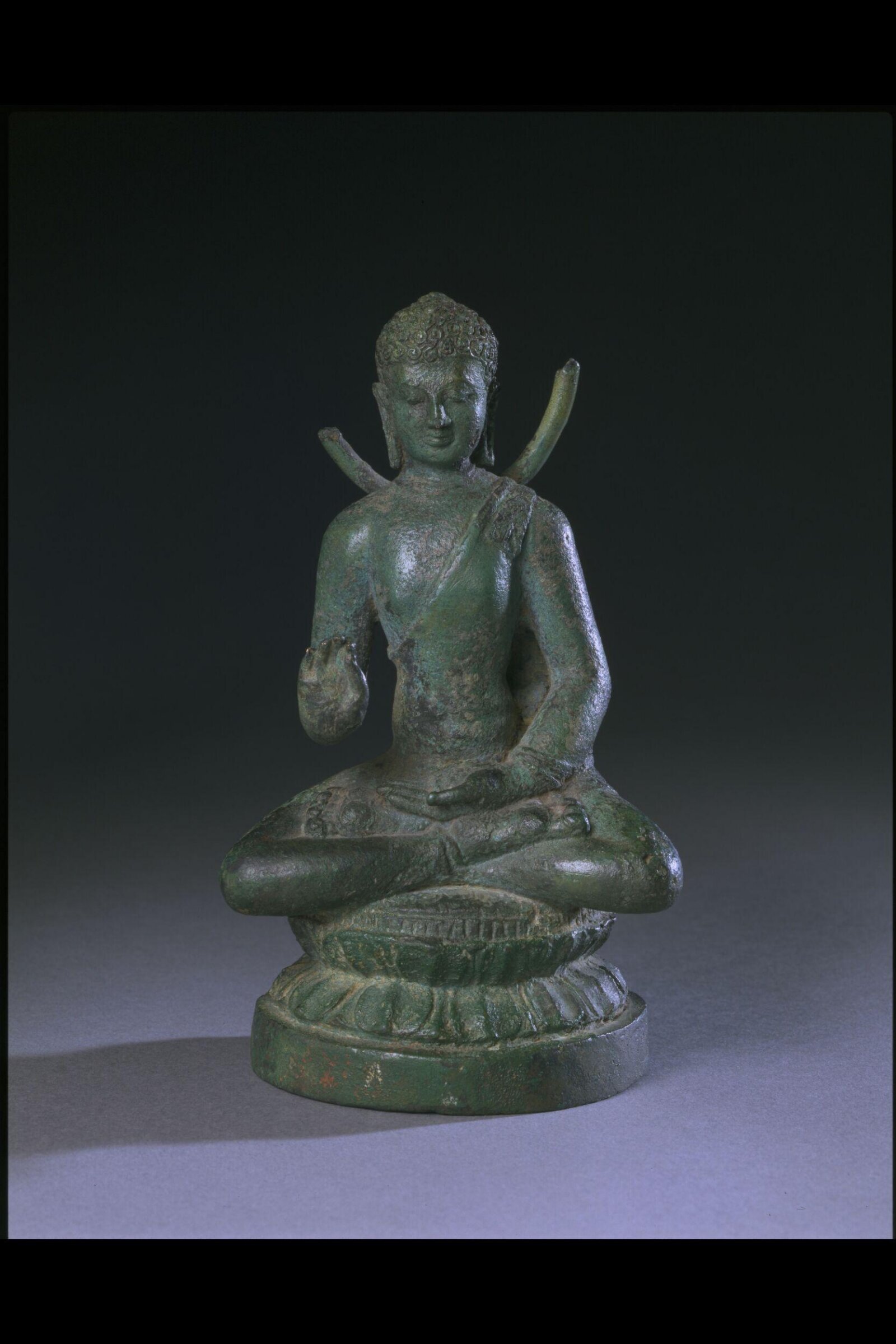
This serenely beautiful carving of a seated Buddha can be identified as Amida (Amitabha in Sanskrit), by the tightly interlocking legs, the eyes almost closed in meditation, and the hands raised in the gesture for expounding the Buddhist law. It is one of the best examples of classic Buddhist art in the Museum's collection. The Buddhist religion was introduced to Japan during the 6th century. The earliest Buddhist images were mostly made of bronze, clay or lacquer, but from the late 8th century carved wood became the most common medium. In the later Heian period (898-1185), a number of religious sects came into being that emphasised personal salvation through faith in Amida, the form of Buddha who rules the Pure Land of the Western Paradise.
Victoria and Albert Museum
Scheda
- Numero di inventario
- FE.5-1972
What it shows
In catalogo
Fonti
- Victoria and Albert Museum: the museum's own open data · acquisita 8 giorni fa
- Immagine: Victoria and Albert Museum — © Victoria and Albert Museum, London