Gustav KlimtAustria, 1862–1918
Alter Mann auf dem Totenbett
Si può vedere?
Non si sa
Dove si trova «Alter Mann auf dem Totenbett» oggi? Collezione: Österreichische Galerie Belvedere, Vienna. Non si sa.

Vienna, Austria
Il proprietario è noto; non si sa se oggi sia esposta.
- Ultimo cambio di stato
- Fonte
- Il museo
Sul dipinto
Con le parole del museo — in tedesco
Totendarstellungen tauchen in Klimts Schaffen immer wieder auf, doch werden sie aufgrund der sehr persönlichen Thematik selten der Öffentlichkeit präsentiert. Meist sind die dargestellten Personen eindeutig zu identifizieren. Nicht so im Fall dieses Bildnisses, bei dem die Identität des alten Mannes nicht restlos geklärt ist und der Forschung nach wie vor Rätsel aufgibt. Oftmals fertigt Klimt die Darstellungen unmittelbar nach dem Tod der Personen an, gelegentlich sogar noch am Tag des Ablebens. So könnte die Datierung des Werks mit der Jahreszahl 1900 auf das Sterbejahr des Mannes hindeuten. Das Werk dürfte wohl beschnitten worden sein. Heute sehen wir nur noch einen Ausschnitt der ursprünglichen Bildkomposition.
Österreichische Galerie Belvedere
Scheda
In catalogo
Fonti
- Österreichische Galerie Belvedere
- Immagine: Österreichische Galerie Belvedere — CC BY-SA 4.0
Nella vita di Gustav Klimt
Tutta la vita1897–1917
Society portraits of Viennese ladies
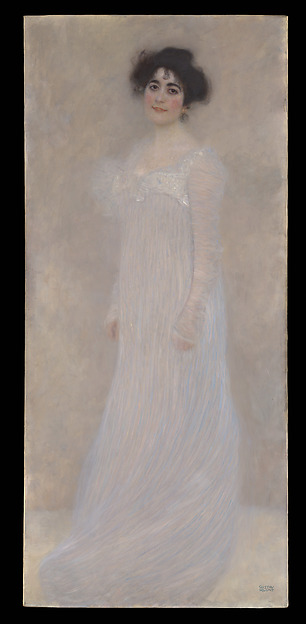
Over twenty years Klimt painted nearly twenty society portraits of women, which gave him financial independence; Carl Moll introduced him to many of the sitters, most of them from the Jewish upper bourgeoisie. In the portraits the ladies are hidden in sumptuous clothing, their heads and hands seeming to float detached from reality.
1898/1899
Son born: Gustav Ucicky
settembre 1899
Son born: Gustav Zimmermann
1900
“Philosophy” at the Secession: the scandal
First shown at the Secession's seventh exhibition, “Philosophy” provoked protests from the public and university professors, and a scandal unprecedented in Vienna brought the exhibition a record 35,000 visitors. Three weeks after the opening the painting went to the World Fair in Paris and won a gold medal.
1900–1907
He returns the advance and keeps the paintings
The state commission refused to accept the three “Faculty Paintings”; Klimt told the minister he would return the 60,000-krone advance, refused to work for the Austrian state again and kept the pictures. The ministry demanded them, but Klimt did not open the door to the removal men — and the affair ended in his victory.
1901
“Medicine”: accused of a “triumph of death”
The Secession's tenth exhibition showed “Medicine” with the goddess Hygieia; a feuilleton in the Neue Freie Presse accused Klimt of depicting a “triumph of death” instead of medicine's victories. In an interview about these scandals he declared that what mattered to him was not how many people liked a picture but who they were.