 René MagritteBelgium, 1898–1967
Utopia
Megnézhető?
Jelenleg nincs kiállítva
Hol van most a(z) „Utopia”? Gyűjtemény: The Cleveland Museum of Art, Cleveland. Jelenleg nincs kiállítva. Ellenőrizve 2026. november 2.

Cleveland, Amerikai Egyesült Államok
A gyűjteményhez tartozik, de jelenleg nincs kiállítva.
- Ellenőrizve
- Ebben az állapotban ettől kezdve
- Forrás
- A múzeum
A műről
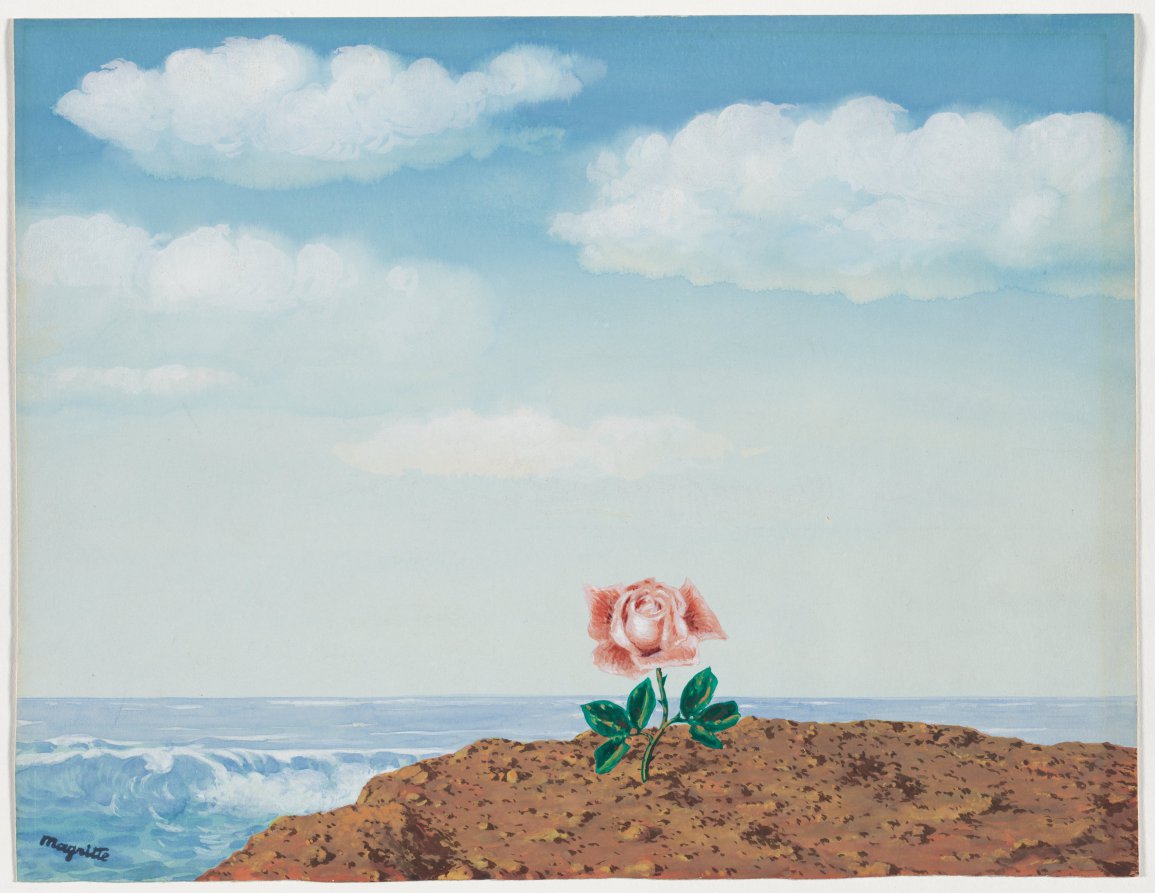
A rocky island bears a rose in René Magritte’s Utopia (1945), at the Cleveland Museum of Art in Cleveland. Open water surrounds the barren ground, beneath blue sky and enormous white clouds. The flower’s unlikely survival in such an inhospitable place makes its presence difficult to explain. Magritte often placed recognizable objects in improbable settings to unsettle ordinary perception. Made as the Second World War ended, this image might suggest a fresh beginning. He nevertheless declined to give it a fixed interpretation.
A múzeum szavaival
René Magritte was among the leading figures of the Surrealist movement, whose work emphasized dreams, the subconscious, and a break from reason and logic during the early 20th century. Magritte, in particular, often situated realistic imagery within ridiculous or unusual situations in order to question perception. Here, a rose grows on a rocky island amid a vast sea, set against a blue sky filled with large white clouds. By situating the flower within a barren and inhospitable setting, Magritte invites the viewer to question its purpose and survival. Created as World War II came to an end, the enigmatic image could symbolize a new beginning, although Magritte avoided assigning it a specific meaning.
The Cleveland Museum of Art
Adatok
- Leltári szám
- 1992.275
A katalógusban
Források
- The Cleveland Museum of Art
- Kép: The Cleveland Museum of Art — © C. Herscovici / Artists Rights Society (ARS), New York
René Magritte életében
A teljes életút1930–1954 · Lakóhely
René Magritte House
after 1945
Real commercial success arrives
By Magritte’s own account, real commercial success came only after 1945, and from then on he did not worry about money; in an interview in 1962 he declared that he would rather stop selling and live in poverty than become a businessman.
1945
Joins the Party a third time; writes an “Explanation”
In 1945 — according to Georgette, out of gratitude to the Russians — he joined the Communist Party again and the same year wrote a confidential “Explanation” to communist intellectuals. He feared that art would be reduced to propaganda for Marxism through easily understood styles and subjects, and equated such an approach with the methods of Nazi propaganda.
1946
The manifesto “Surrealism in Full Sunlight”
Renouncing the violence and pessimism of his earlier work, he signed, with several other Belgian artists, the manifesto “Surrealism in Full Sunlight”.
1947–1948
Fake Picassos and forged banknotes
During the lean postwar years Magritte supported himself by producing fake Picassos, Braques and de Chiricos, later expanding into the printing of forged banknotes; he did it together with his brother Paul and the Surrealist Marcel Mariën, his “surrogate son”, who was left with the task of selling it all.