El LissitzkyOroszország, 1890–1941
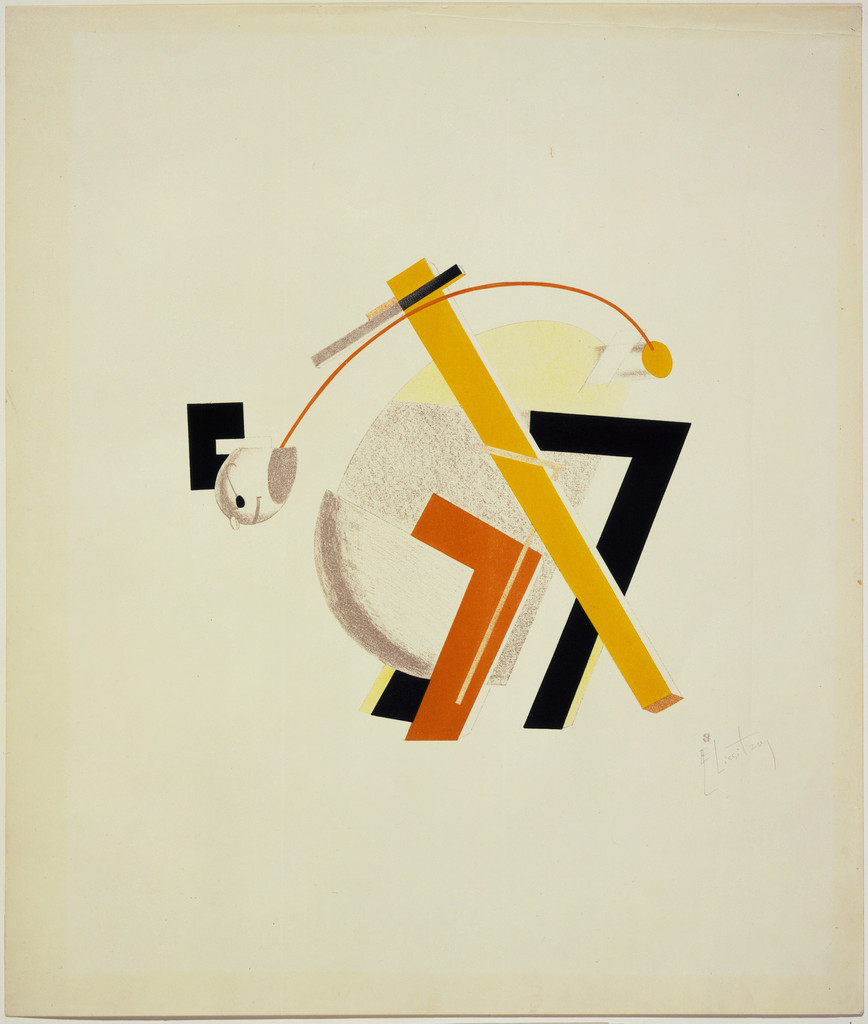
The Constructor
Megnézhető?
Nem tudjuk
Hol van most a(z) „The Constructor”? Gyűjtemény: Yale University Art Gallery, New Haven. Nem tudjuk, hogy ma ki van-e állítva.
New Haven, Amerikai Egyesült Államok
A tulajdonos ismert; azt nem tudjuk, hogy ma ki van-e állítva.
- Ebben az állapotban ettől kezdve
- Forrás
- A múzeum
Adatok
- Leltári szám
- 2009.19.1
A katalógusban
Források
- Yale University Art Gallery
- Kép: Yale University Art Gallery — Image: Yale University Art Gallery
El Lissitzky életében
A teljes életút1922
First solo exhibition in Hanover
The year after the publication of his first Proun series in 1921, Kurt Schwitters introduces Lissitzky to the Hanover gallery Kestnergesellschaft, where he holds his first solo exhibition. The second Proun series, printed in Hanover in 1923, is a success.
1923
The Proun Room at the Great Berlin Art Exhibition
In 1923, for the Great Berlin Art Exhibition, Lissitzky transforms a small room (about 3 by 3 by 2.5 m) into a single work of art, the Proun Room, which lets viewers “walk into an image” and become active participants. He violates the unwritten rule of rejecting the commercialization of art by putting price tags on three elements of the room; the price tags, together with his “half-dance” during the demonstration of the room, alienate his friend Theo van Doesburg.
1923–1924
Tuberculosis and a Swiss hospital
In 1923–1924 Lissitzky is severely ill with tuberculosis and stays in a Swiss hospital; at this time he is reported even to have considered suicide. He will die of tuberculosis in 1941.
1925
Return to the USSR
Lissitzky's years in Germany and Switzerland run from 1921 to 1925; it appears that in 1925 he returns to the Soviet Union.
1927
The All-Union Polygraphic Exhibition in Moscow
In 1927 the All-Union Typographic (Polygraphic) Exhibition takes place in Moscow under Lissitzky's direction and to his design; one of its aims is to show the paths humanity has travelled in conveying thought by means of symbolic and graphic signs. He develops new principles of exhibition display, treating an exhibition as a whole organism.
1941. december 30.
Died