Apollinary Vasnetsov1856–1933
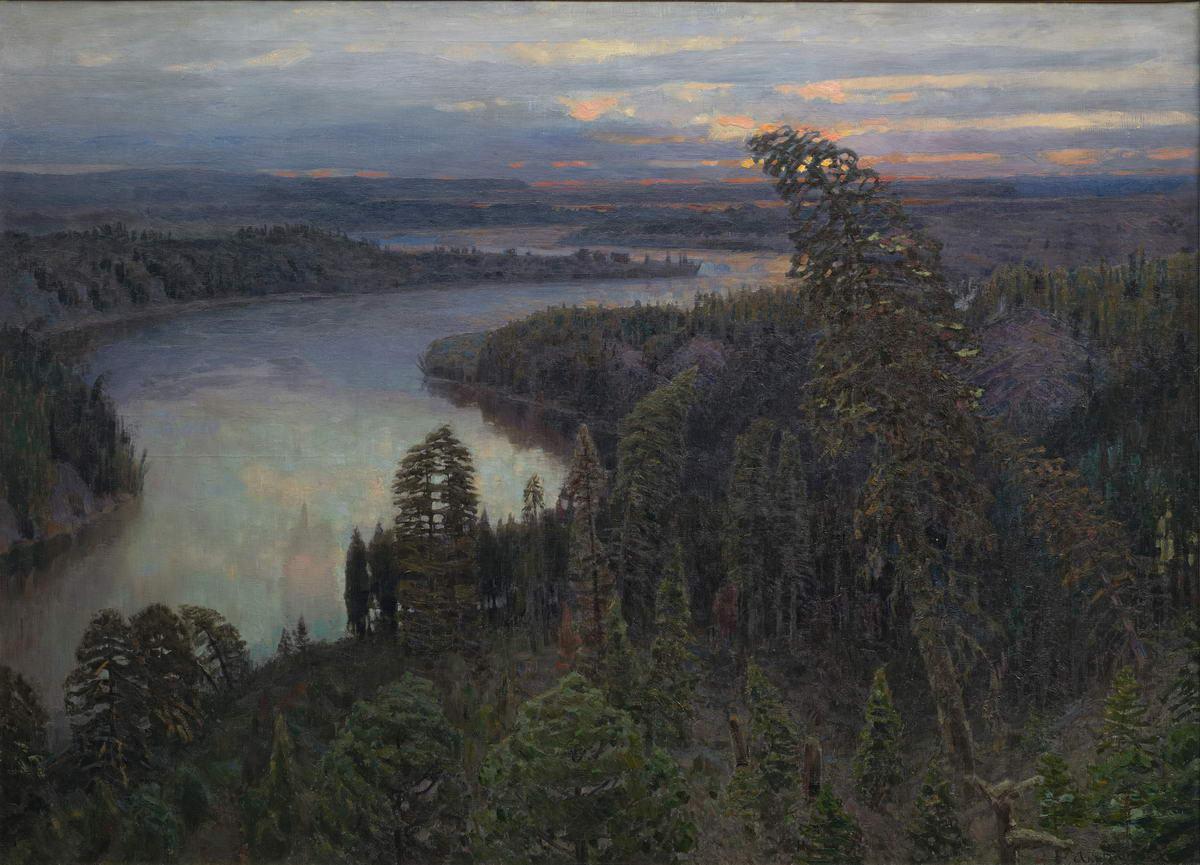
Сосны. Абрамцево
Megnézhető?
Nem tudjuk
Hol van most a(z) „Сосны. Абрамцево”? Gyűjtemény: Rostov Regional Fine Arts Museum, Rosztov-na-Donu. Nem tudjuk, hogy ma ki van-e állítva.
Rosztov-na-Donu, Oroszország
A tulajdonos ismert; azt nem tudjuk, hogy ma ki van-e állítva.
- Ebben az állapotban ettől kezdve
- Forrás
- A múzeum
A festményről
Múzeumi szöveg, nyelv: orosz
На фоне голубого темно-зеленая старая сосна с густой кроной и искривленными ветвями. Справа и слева деревья. Справа внизу подпись неразборчиво: ... ецовЪ
Rostov Regional Fine Arts Museum
Adatok
- Leltári szám
- Ж-249
A katalógusban
Források
- Oroszország múzeumi állományának állami katalógusa
- Kép: Rostov Regional Fine Arts Museum — © Ростовский областной музей изобразительных искусств · Госкаталог музейного фонда РФ
Apollinary Vasnetsov életében
A teljes életút1878
Move to Moscow
He left the countryside for Moscow to join his brother Viktor, and from then on devoted himself entirely to art.
from 1882
The Abramtsevo Circle
From 1882 he spent every summer at his brother's dacha in the village of Akhtyrka near Abramtsevo, Savva Mamontov's estate, and associated closely with members of the Abramtsevo circle.
from 1883
Debut at the Peredvizhniki Exhibitions
He began showing his works at the exhibitions of the Peredvizhniki (Society for Travelling Art Exhibitions); he became a member of the Society in 1899.
1885–1886
Travels in Ukraine and the Crimea
He traveled around the Russian Empire, visiting Ukraine and the Crimea.
1885–1914
Work as a Theatre Designer
He began working as a theatre designer in 1885 at Savva Mamontov's Private Russian Opera; in the early 1900s he created sets for operas including Rimsky-Korsakov's "Sadko" and "The Legend of the Invisible City of Kitezh" for the Mariinsky Theatre (1908) and the final scene of "A Life for the Tsar" for the Bolshoi Theatre (1914).
1886
"Motherland" at the 14th Peredvizhniki Exhibition
At the 14th Peredvizhniki exhibition in St. Petersburg the painting "Motherland" was shown, inspired by memories of his childhood in the village of Ryabovo in Vyatka Province.