Guido ReniOlaszország, 1575–1642
Nativity (recto); Turbaned Woman (verso)
Megnézhető?
Jelenleg nincs kiállítva
Hol van most a(z) „Nativity (recto); Turbaned Woman (verso)”? Gyűjtemény: J. Paul Getty Museum, Los Angeles. Jelenleg nincs kiállítva. Ellenőrizve 2026. október 7.
Los Angeles, Amerikai Egyesült Államok
A gyűjteményhez tartozik, de jelenleg nincs kiállítva.
- Ellenőrizve
- Ebben az állapotban ettől kezdve
- Forrás
- A múzeum
A műről
Guido Reni drew Nativity around 1640–42; the double-sided sheet is in the J. Paul Getty Museum, Los Angeles. Mary cradles her infant with the intimacy of an ordinary mother. In a later painting, Reni made these figures more imposing to emphasise their sacred role. Scratchy red strokes describe her face, the middle of the group and a foot; touches of white suggest light shimmering on the clothing. On the reverse, a turban, faint earrings and a scarf suggest a woman dressed like a sibyl.
A múzeum szavaival
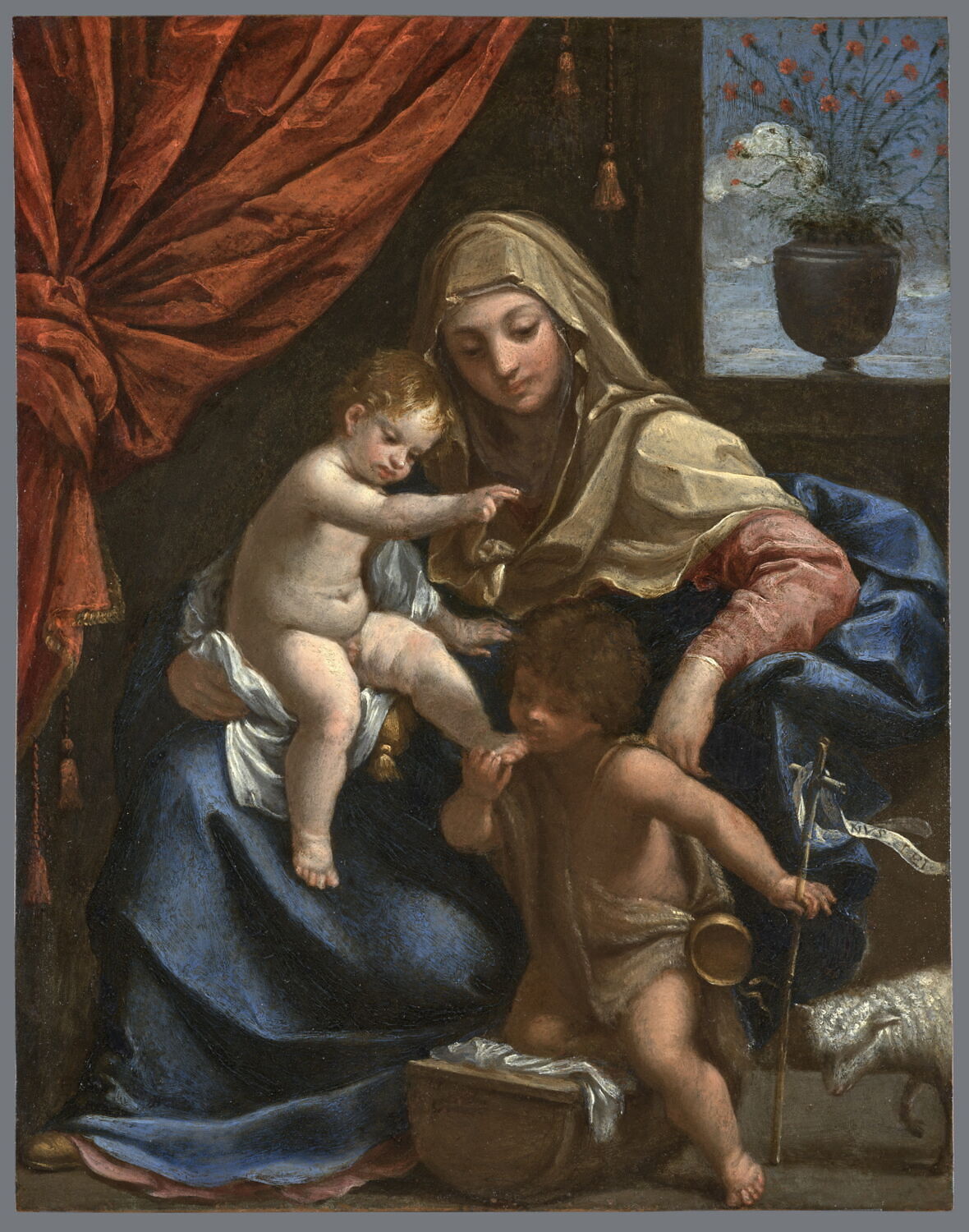
Though drawing the holy subject of the Virgin and Child, Guido Reni simply captured the intimacy of a woman cradling her infant. Other than their attractiveness, he gave no indication that this baby or this woman was divine. When he later painted the group as *The* *Holy Family Adored by Saints Elizabeth and John the Baptist* , he idealized the figures more and made them more majestic to indicate their biblical importance. Using sharp, rather scratchy strokes and a somewhat irregular use of red chalk, Reni sketched the Virgin's face, the center of the group, and her foot. Artists often combined red and black chalks to suggest color distinctions associated with faces, hair, costumes, and other details. Reni's judicious use of white against the light paper gives the effect of the Virgin's drapery shimmering in the light. On the verso, Reni sketched a turban such as a sibyl might wear, with the barest indication of earrings and a scarf.
J. Paul Getty Museum
Adatok
- Leltári szám
- 89.GB.43
A katalógusban
Források
- J. Paul Getty Museum
- Kép: J. Paul Getty Museum — Open Content
Guido Reni életében
A teljes életútfrom the 1630s
The late years: debts and hurried work
By the 1630s Reni's style becomes looser: the paint is less thickly applied and the colours lighter. A compulsive gambler, he was often short of money and, according to his biographer Malvasia, hurried his work and let his workshop produce many copies; the paintings of his last years include many unfinished works.
1640–1642 · Munkahely
Naples
1642. augusztus 18.
Died