Thomas LawrenceEgyesült Királyság, 1769–1830
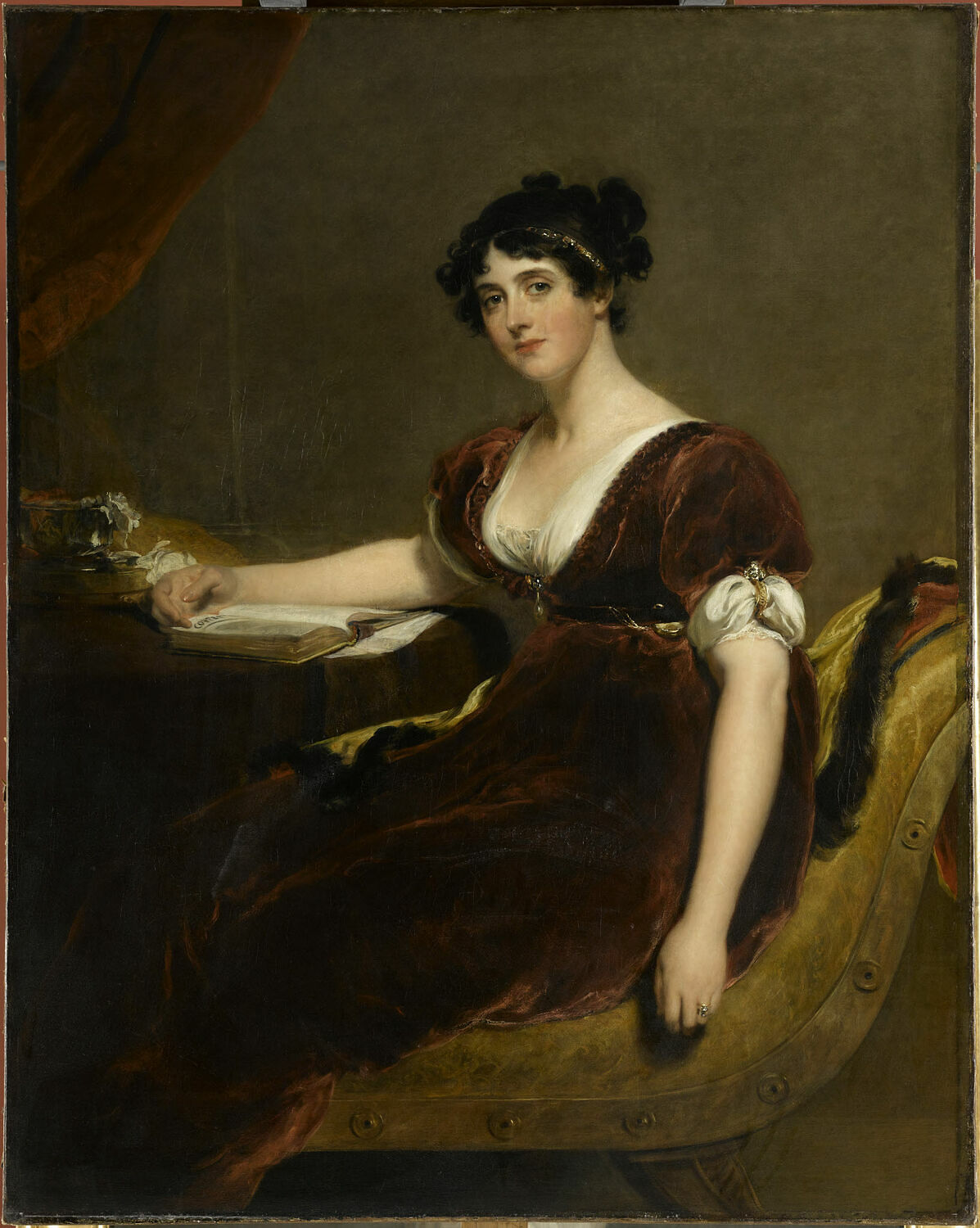
Mrs Siddons
Megnézhető?
Nem tudjuk
Hol van most a(z) „Mrs Siddons”? Gyűjtemény: Tate, City of Westminster. Nem tudjuk, hogy ma ki van-e állítva.
City of Westminster, Egyesült Királyság
A tulajdonos ismert; azt nem tudjuk, hogy ma ki van-e állítva.
- Ebben az állapotban ettől kezdve
- Forrás
- A múzeum
A festményről
Portrait of Sarah Siddons is an 1804 portrait painting by the English artist Thomas Lawrence depicting the actress Sarah Siddons.
Siddons was the leading tragedienne of the early Regency era. She was a member of the Kemble family of actors, that included her brothers John Philip Kemble and Charles Kemble. Lawrence was romantically involved with two of her daughters and had known her since his days as a child prodigy in Bath.
Lawrence depicts Siddons in full-length during a dramatic reading. She is shown with volumes of plays by Thomas Otway and William Shakespeare.
The painting was commissioned by Charlotte FitzHugh, wife of William FitzHugh MP, and hung at their house Banisters, near Southampton. FitzHugh presented it to the National Gallery in 1843, and today it is in the collection of Tate Britain in London.
Adatok
- Leltári szám
- N00188
A katalógusban
Korábbi kiállítási állapotok
Nem tudjuk, hogy ma ki van-e állítva
Tate · 2026. okt. 13. — most · Nincs megerősítve
Nem tudjuk, ki volt-e állítva
National Gallery · 2026. szept. 29. — 2026. okt. 13. · Nincs megerősítve
Források
- Wikidata
- Kép: Tate — Thomas Lawrence · Public domain · Wikimedia Commons
Thomas Lawrence életében
A teljes életút1800s
A witness in the “Delicate Investigation” into the Princess
The King commissions portraits of his daughter-in-law Caroline, the estranged wife of the Prince of Wales, and of his granddaughter Charlotte; while painting them Lawrence stays at Montagu House, the princess’s residence in Blackheath, and becomes implicated in the “delicate investigation” into Caroline’s morals. He swears an affidavit that although he had sometimes been alone with her the door was never locked or bolted, and, expertly defended by Spencer Perceval, he is exonerated.
from 1802
The studio: assistants for replicas of his portraits
To keep up with the demand for replicas of his portraits, Lawrence employs studio assistants: Samuel Lane works for him from 1802 until the master’s death, and the assistants also include William Etty and George Henry Harlow.
1803
Meeting Isabella Wolff
Isabella, wife of the Danish consul Jens Wolff, sits for her portrait and becomes one of the two women who provide Lawrence with companionship, along with his friend Elizabeth Croft; in 1810 she separates from her husband. Lawrence was famed for the time he took over his paintings: Isabella waits twelve years for her portrait to be finished.