Fernand LégerFranciaország, 1881–1955
Mechanical Forms
Megnézhető?
Jelenleg nincs kiállítva
Hol van most a(z) „Mechanical Forms”? Gyűjtemény: Art Institute of Chicago, Chicago. Jelenleg nincs kiállítva. Ellenőrizve 2026. november 2.

Chicago, Amerikai Egyesült Államok
A gyűjteményhez tartozik, de jelenleg nincs kiállítva.
- Ellenőrizve
- Ebben az állapotban ettől kezdve
- Forrás
- A múzeum
A műről
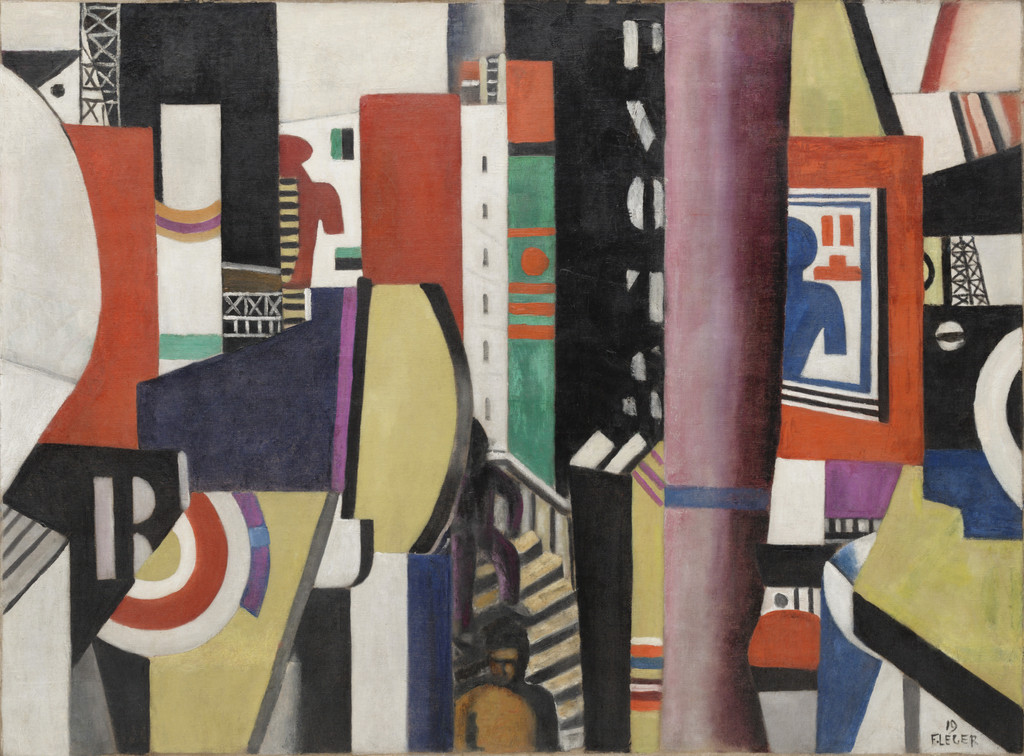
Mechanical Forms shows a woman from the shoulders up, in near profile and facing right, with one hand covering the lower part of her face. The background is a grid of dark bands, circles, and curved elements.
The drawing’s title refers to the logic of industrial order that Fernand Léger claimed for his work even when it did not directly depict machines. The highly finished Mechanical Forms is only an intermediate stage in the artist’s evolving conception of this figure, which resulted in three paintings over a span of six years.
Art Institute of ChicagoCC BY 4.0
Adatok
- Leltári szám
- 2022.83
A katalógusban
Források
- Art Institute of Chicago
- Kép: Art Institute of Chicago — © the artist or rights holder
Fernand Léger életében
A teljes életút1921
Meeting van Doesburg and Mondrian
In 1921 Léger meets van Doesburg and Mondrian.
1921
Gance's “La Roue” and Malraux's “Lunes en papier”
In 1921, together with Blaise Cendrars, Léger works on Abel Gance's film “La Roue” and illustrates André Malraux's book “Lunes en papier”. He is so drawn to cinema that he considers for a time giving up painting for filmmaking.
1922–1924
Stage and screen: the Swedish Ballet and “L'Inhumaine”
In 1922 Léger designs sets, costumes and the curtain for “Skating Rink” (music by Milhaud) for Rolf de Maré's Swedish Ballet, and in 1923 for the ballet “La Création du monde” (Milhaud, libretto by Cendrars). In 1923–24 he designs the laboratory set for Marcel L'Herbier's film “L'Inhumaine”.
1924
Through Italy with Rosenberg: Ravenna
In 1924 Léger travels through Italy with Rosenberg and is enraptured by Ravenna. In the same year he gives a lecture at the Sorbonne.
1924
A free academy with Ozenfant, and the pupil Nadia Khodossevitch
In 1924 Léger, with Amédée Ozenfant, Marie Laurencin and Alexandra Exter, sets up the Académie Moderne, a free school where he teaches. Among its students from 1924 is Nadia Khodossevitch, a cousin of the poet, later Léger's assistant and wife; other accounts place the opening of a “Modern Academy” with Ozenfant in 1929.
1925–1927
The international decorative arts exhibition and shows in the USA
In 1925–1927 Léger manages, with some difficulty, to exhibit an abstract panel at the International Exhibition of Modern Decorative and Industrial Arts — in Le Corbusier's pavilion and in the Mallet-Stevens pavilion, which shows designs for a French embassy building. His work is shown at the Anderson Galleries in New York, at the Brooklyn Museum and at the Galerie des Quatre Chemins in Paris, and there is a solo retrospective at the Indépendants.